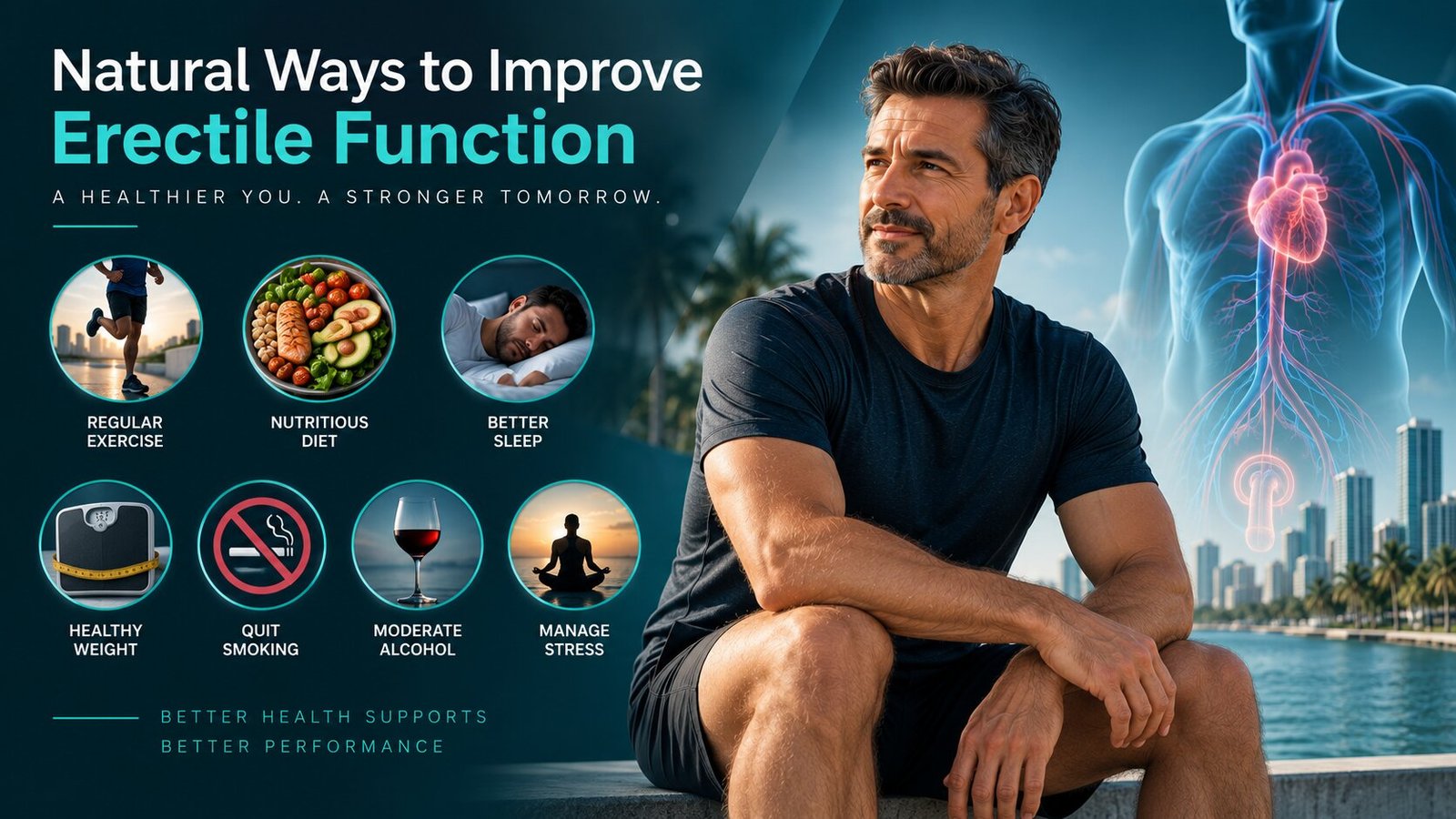
Key Takeaways: Natural Ways to Improve Erectile Health
- Multisystem Process: Erections depend on the coordinated interaction between cardiovascular blood vessels, autonomic nerves, hormones, penile smooth muscle, and psychological state.
- Strong Clinical Evidence for Exercise: Meta-analyses confirm that regular aerobic exercise (30–60 mins, 3–5 times/week) significantly improves erectile function scores by enhancing endothelial nitric oxide production.
- Mediterranean Nutrition: Heart-healthy dietary patterns emphasizing vegetables, fruits, legumes, whole grains, nuts, and olive oil support long-term vascular flexibility.
- Sleep & Stress Management: Restorative REM sleep maintains natural testosterone production, while chronic stress and performance anxiety trigger vasoconstriction that opposes erectile mechanics.
- Integrative Clinical Care: When natural strategies are insufficient, clinical evaluations for erectile dysfunction treatment in Miami help identify underlying conditions and determine whether therapies like shockwave therapy or P-Shot are appropriate.
Erectile function is often treated as though it were an isolated issue involving one part of the body. In reality, an erection depends on a surprisingly complicated interaction between the cardiovascular system, nervous system, hormones, blood vessels, penile tissue, psychological arousal, and overall metabolic health. When those systems are working well, blood can flow into the erectile tissue, the smooth muscle can relax appropriately, and an erection can develop and remain firm enough for sexual activity. When something interferes with that process, erectile difficulties can appear.
That is why the most useful natural ways to improve erectile function are rarely quick fixes. There is no single food, supplement, breathing technique, or exercise that reliably solves every case of erectile dysfunction. Instead, the bigger opportunity is to improve the underlying conditions that allow erections to happen in the first place. Regular physical activity, nutritious food, adequate sleep, healthy weight management, smoking cessation, sensible alcohol intake, and stress reduction can all contribute to better overall health—and, for some men, better sexual function.
The American Urological Association (AUA) and European Association of Urology (EAU) recommend discussing lifestyle modifications with men who have erectile dysfunction, including healthier dietary habits and increased physical activity. These changes are valuable even when medication or another treatment is eventually needed because erectile function and general health are closely connected.
At P-Shot Miami, erectile dysfunction is best approached as a comprehensive health concern rather than simply a penile problem. Lifestyle changes can be an important part of that process, but persistent or unexplained ED should also receive appropriate medical evaluation. Sometimes erectile difficulty is connected to diabetes, high blood pressure, cardiovascular disease, medication side effects, low testosterone, sleep disorders, or psychological factors. Addressing those contributors can be just as important as addressing the erection itself.
Why Lifestyle Changes Can Affect Erectile Function
An erection begins with communication between the brain, nerves, blood vessels, and erectile tissues. Sexual stimulation triggers a series of signals that ultimately promote the release of nitric oxide and relaxation of smooth muscle within the penile blood vessels and erectile tissue. As blood enters the corpora cavernosa, pressure increases and mechanisms that reduce venous outflow help maintain rigidity.
That process requires healthy circulation.
If blood vessels are damaged or less responsive, adequate blood flow may become more difficult. Conditions such as hypertension, diabetes, high cholesterol, obesity, insulin resistance, and cardiovascular disease can all affect vascular function. Smoking can also damage the endothelium, the delicate inner lining of blood vessels that plays an important role in regulating circulation.
There are neurological and psychological components too. Nerve damage can interfere with the signals necessary for an erection, while anxiety and chronic stress can disrupt sexual arousal. Hormonal factors, including low testosterone in appropriately diagnosed men, can also influence libido and sexual function.
This explains why learning how to improve erectile function naturally is really a broader health question. Improving cardiovascular fitness, metabolic health, sleep quality, and psychological well-being may help create a better environment for normal erectile function.
Understanding the Connection Between Blood Flow and Erections
Think of an erection as a circulation test that happens to occur during intimacy. The penis needs sufficient arterial blood flow, healthy vascular signaling, functional nerves, and appropriate smooth-muscle relaxation. If any part of that chain becomes less efficient, the result may be an erection that takes longer to develop, feels less firm, or disappears before sexual activity is complete.
This is one reason erectile dysfunction and cardiovascular health share so many risk factors. The blood vessels supplying the penis are relatively small, so vascular problems can sometimes become noticeable through erectile symptoms before a man experiences obvious cardiovascular symptoms.
Why Erectile Dysfunction Can Be an Early Health Warning
A man may notice changes in erectile firmness long before he notices a change in his general physical health. That makes ED an opportunity to look more closely at factors such as blood pressure, blood glucose, cholesterol, weight, physical activity, smoking, and family history. Learn more in our guide on ED and cardiovascular health.
When a broader health issue is identified and treated early, erectile function may improve as one part of the overall benefit. Even when it does not completely resolve the ED on its own, improving cardiovascular and metabolic health can make other clinical treatments safer and more effective.
Exercise for Better Erectile Function
If you want to make one lifestyle change that has particularly strong evidence behind it, start with movement. Regular exercise supports many of the same systems erections depend on, including cardiovascular fitness, endothelial function, insulin sensitivity, blood pressure regulation, body composition, and stress management.
A 2023 systematic review and meta-analysis published in The Journal of Sexual Medicine examined aerobic exercise as an intervention for erectile dysfunction. The researchers found a statistically significant improvement in erectile-function scores compared with non-exercising controls, with greater improvements tending to occur among men who initially had more severe ED.
The Best Types of Exercise for Erectile Health
Brisk Walking & Jogging
Accessible, low-barrier cardiovascular exercise that elevates heart rate, enhances shear stress on blood vessels, and stimulates nitric oxide production.
Swimming & Rowing
Excellent low-impact, full-body cardiovascular workouts ideal for men with joint sensitivity or back pain seeking systemic conditioning.
Cycling (With Ergonomic Fit)
Great aerobic conditioning, but requires careful attention to saddle design to avoid pudendal nerve compression. See our guide on cycling and erectile dysfunction.
Resistance & Strength Training
Supports lean muscle mass, insulin sensitivity, bone density, and metabolic health, providing a vital complement to aerobic conditioning.
How Often Should You Exercise?
Clinical studies frequently involve approximately 30–60 minutes of moderate aerobic activity three to five times per week. If that sounds intimidating, start smaller with 15–20 minutes of daily brisk walking and gradually build. Consistency matters far more than extreme exertion.
Eat for Better Vascular and Sexual Health
There is no officially proven “erection food” that instantly cures erectile dysfunction. If someone promises that eating one particular fruit, nut, spice, or vegetable will cure ED, skepticism is warranted. The stronger approach is to improve your overall dietary pattern.
Mediterranean-Style Foods to Prioritize
A 2026 comprehensive review on Mediterranean dietary patterns and sexual function reported favorable associations with erectile health. Emphasize:
- Leafy Greens & Vegetables: Spinach, arugula, kale, and broccoli rich in dietary nitrates and antioxidants.
- Berries & Citrus: Blueberries, strawberries, and oranges rich in anthocyanins and flavonoids.
- Healthy Fats: Extra virgin olive oil, avocados, walnuts, almonds, and pumpkin seeds.
- Lean Proteins & Omega-3s: Wild salmon, mackerel, sardines, legumes, lentils, and chickpeas.
Foods and Habits to Limit
Highly processed foods, excessive added sugars, refined carbohydrates, and large amounts of processed meats make it harder to maintain healthy blood pressure and insulin sensitivity. Sustainable nutrition is built on what you eat consistently most of the time.
Reduce Abdominal Fat and Improve Metabolic Health
Excess visceral abdominal fat increases circulating inflammatory cytokines and elevates aromatase activity (which converts testosterone into estrogen). Obesity also increases the likelihood of type 2 diabetes, chronic hypertension, dyslipidemia, and sleep apnea.
The objective is not chasing an extreme cosmetic physique. Meaningful progress in waist circumference, blood pressure, fasting glucose, and cardiovascular fitness provides substantial benefits for erectile responsiveness.
Improve Sleep for Better Sexual Health
Sleep is one of the easiest pieces of the erectile-health puzzle to overlook. The body produces the majority of its daily testosterone during deep REM sleep cycles. Most adults should aim for 7 to 9 hours of quality sleep per night.
The Connection Between Sleep Apnea and ED
Obstructive sleep apnea (OSA) causes nocturnal oxygen desaturation and chronic sympathetic nervous system activation. Men who snore loudly, wake up gasping, suffer morning headaches, or experience severe daytime fatigue should be screened for sleep apnea, as CPAP therapy often improves both cardiovascular and erectile markers. Explore our article on morning erections and erectile health.
Manage Stress and Performance Anxiety
The brain plays a central role in sexual function. Chronic psychological stress triggers adrenaline and cortisol release, constricting blood vessels and dampening sexual desire.
Breaking the Performance-Anxiety Cycle
When a man experiences an unsuccessful erection, he often begins "spectatoring"—internally scrutinizing his penis instead of enjoying intimacy. Breaking this cycle involves stress-management techniques, open communication with partners, mindfulness, and, when appropriate, sex therapy or counseling.
Stop Smoking and Limit Excessive Alcohol
Smoking damages the endothelial lining of blood vessels, impairing nitric oxide production. Quitting smoking is one of the most effective interventions for protecting penile and coronary microvasculature.
While a moderate drink may reduce social inhibition, heavy alcohol consumption suppresses the central nervous system, impairs erectile rigidity, disrupts sleep, and lowers testosterone.
Manage Blood Pressure, Blood Sugar and Cholesterol
Know your health numbers. Regular primary care screening for blood pressure, HbA1c (blood sugar), lipid panels, and hormonal markers (like total and free testosterone) ensures that silent systemic risk factors are caught and managed before they cause irreversible microvascular changes. If low testosterone is confirmed, physician-supervised Testosterone Replacement Therapy (TRT) may be considered.
Can Natural Strategies Replace ED Treatment?
Lifestyle modifications form an indispensable foundation for every man, but not every cause of ED responds to lifestyle changes alone. Conditions such as severe pelvic nerve injury, advanced arterial disease, or post-prostatectomy changes require dedicated clinical care.
The European Association of Urology and AUA recommend implementing lifestyle modifications alongside established medical therapies such as PDE5 inhibitors (sildenafil, tadalafil).
When Medical Evaluation Is Important
Seek professional medical evaluation if erectile difficulties persist for several weeks or months, worsen progressively, occur suddenly, or appear alongside diabetes, high blood pressure, or low libido.
Where the P-Shot and Clinical Therapies Fit Into ED Care
The Priapus Shot® (P-Shot®) is a platelet-rich plasma (PRP)-based procedure that uses autologous growth factors derived from the patient's own blood. While some clinical studies have reported positive improvements in erectile function scores, PRP remains an investigational therapy under current urological guidelines. It should be discussed realistically rather than marketed as a guaranteed cure.
Similarly, low-intensity shockwave therapy has demonstrated modest benefits in selected men with vasculogenic ED by encouraging microvascular blood flow. A comprehensive consultation helps determine which evidence-informed options match your health profile.
A Practical 30-Day Plan for Improving Erectile Function
| Health Area | 30-Day Actionable Goal |
|---|---|
| Aerobic Exercise | Build toward 30–45 minutes of brisk walking, swimming, or cycling on most days. |
| Strength Training | Incorporate resistance training 2–3 times weekly for metabolic support. |
| Mediterranean Nutrition | Emphasize leafy greens, berries, legumes, whole grains, nuts, wild fish, and olive oil. |
| Restorative Sleep | Protect 7–9 hours of sleep per night; screen for sleep apnea if snoring heavily. |
| Stress Reduction | Practice 10 minutes of daily mindfulness, controlled breathing, or therapy. |
| Smoking & Alcohol | Begin a structured cessation plan; limit alcohol to occasional moderate intake. |
| Health Monitoring | Check blood pressure, fasting blood glucose, lipid panels, and hormones. |
| Medical Consultation | Seek clinical evaluation if erectile difficulties persist after 30 days. |
Frequently Asked Questions
Erectile Dysfunction Treatment in Miami
Improving erectile function often starts with fundamentals that have nothing to do with a procedure: move more, eat for heart health, sleep consistently, manage stress, stop smoking, and monitor cardiovascular markers.
At our specialized practice, Dr. Nina Gupta, MD evaluates erectile concerns within the context of your whole-body health. Depending on your individual situation, consultations may cover lifestyle optimization, established therapies, hormone balancing, and advanced clinical options for erectile dysfunction treatment in Miami.
Conclusion
The most effective natural ways to improve erectile function are not exotic supplements. They are the daily habits that support a healthier cardiovascular system, better metabolic function, improved sleep, and stronger psychological well-being.
The smartest strategy is not natural versus medical care. It is understanding the root cause, improving the factors you can control, and choosing appropriate medical treatment when lifestyle changes alone are not enough.
Medical References
- American Urological Association (AUA). Erectile Dysfunction: AUA Guideline. Lifestyle modification recommendations for erectile health.
- European Association of Urology (EAU). Guidelines on Sexual and Reproductive Health: Management of Erectile Dysfunction.
- Khera M, et al. Effect of aerobic exercise on erectile function: systematic review and meta-analysis of randomized controlled trials. The Journal of Sexual Medicine. 2023;20(12):1369–1375.
- Silva AB, et al. Physical activity and exercise for erectile dysfunction: systematic review and meta-analysis. British Journal of Sports Medicine.
- Di Francesco S, Tenaglia RL. Mediterranean diet and erectile dysfunction: a current perspective. Central European Journal of Urology. 2017;70(2):185–187.
- Esposito K, et al. Dietary factors, Mediterranean diet and erectile dysfunction. The Journal of Sexual Medicine.
- Defeudis G, et al. The influence of the Mediterranean dietary pattern on male and female sexual dysfunctions: an updated review. Hormones. 2026.