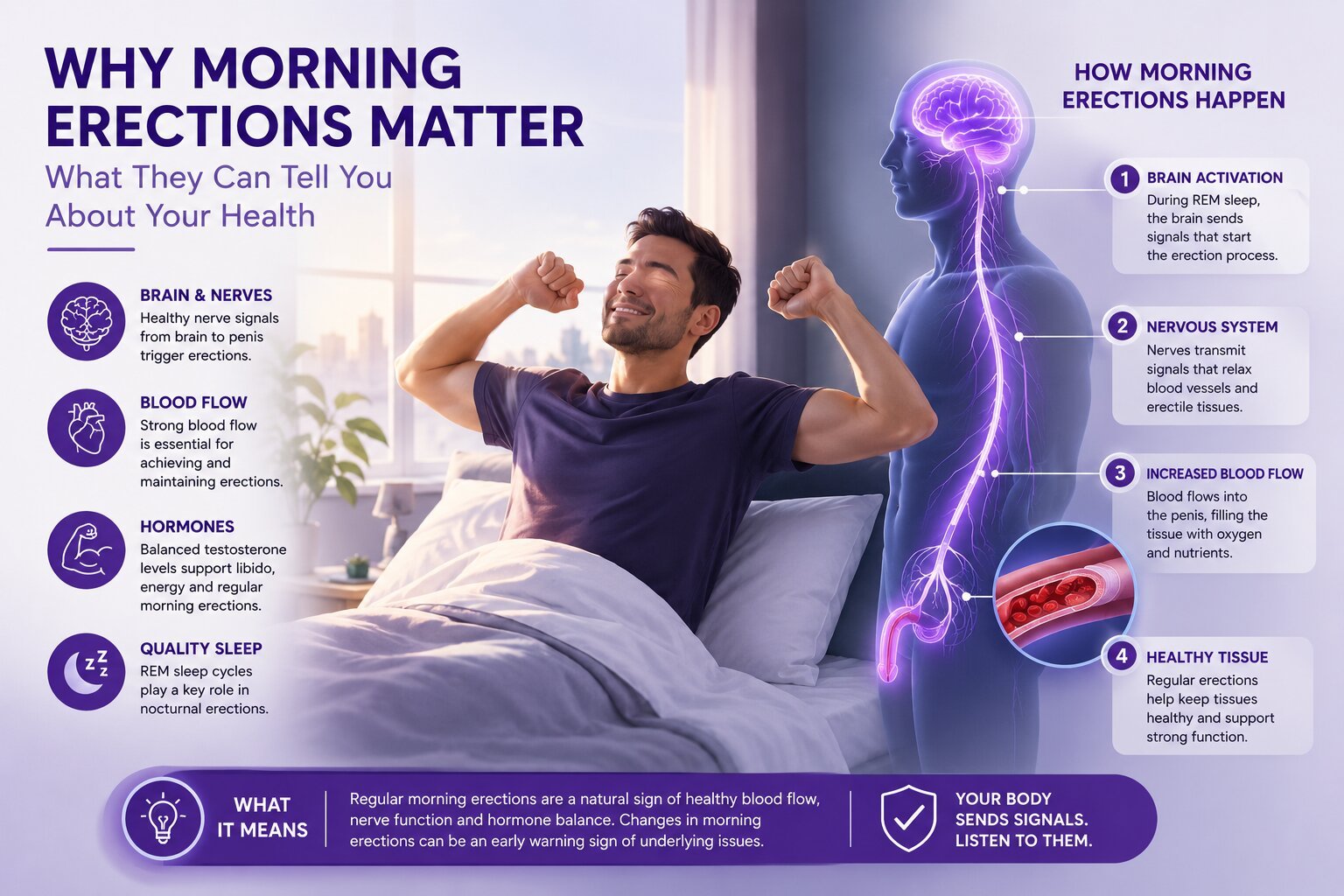
Understanding Morning Erections
What Is a Morning Erection?
Many men don't give much thought to morning erections until they suddenly notice they're no longer happening. If you've experienced no morning erection for several days or even weeks, it's understandable to wonder whether something is wrong. While an occasional absence is completely normal, consistently waking up without one may signal changes in your body's overall health that deserve attention.
A morning erection, commonly known as morning wood, is medically referred to as nocturnal penile tumescence (NPT). These erections occur naturally during sleep or shortly before waking and are not necessarily triggered by sexual thoughts, dreams, or arousal. Instead, they are a reflection of healthy communication between your brain, nervous system, hormones, blood vessels, and erectile tissues.
Throughout the night, men cycle through different stages of sleep. During Rapid Eye Movement (REM) sleep, the nervous system promotes increased blood flow to the penis while temporarily suppressing certain inhibitory signals that normally keep erections from occurring. This automatic process helps maintain healthy penile tissue by delivering oxygen-rich blood on a regular basis.
Because the longest REM cycle typically happens in the early morning hours, many men wake up with an erection. Rather than being an embarrassing inconvenience, it is actually considered an important indicator of healthy erectile function. Physicians who specialize in men's sexual health often ask patients about morning erections because they provide valuable clues about vascular, neurological, and hormonal health long before symptoms become obvious during sexual activity.
How Many Nighttime Erections Are Normal?
Healthy adult men generally experience three to five nocturnal erections every night. Each episode typically lasts 20 to 40 minutes, although the duration varies depending on age, sleep quality, hormone levels, and overall health.
Younger men usually experience stronger and more frequent nighttime erections because testosterone levels tend to be higher and blood vessels are generally healthier. As men grow older, the number and firmness of these erections often decline gradually. However, aging alone does not usually cause them to disappear entirely. Many healthy men in their 60s and 70s continue experiencing regular nocturnal erections.
A complete or persistent absence of morning erections should not automatically be dismissed as "just getting older." In fact, urologists frequently consider changes in spontaneous erections to be one of the earliest indicators of underlying health conditions. Because the penile arteries are significantly smaller than coronary arteries, problems affecting blood flow often appear in erectile function years before symptoms of heart disease develop.
Several lifestyle factors can temporarily reduce nocturnal erections, including stress, illness, alcohol consumption, travel, jet lag, poor sleep, and certain medications. These short-term fluctuations are usually harmless. However, if no morning erection becomes a consistent pattern over several weeks, a medical evaluation may help identify the underlying cause before more serious health complications develop.
Why Morning Erections Happen
The Role of Blood Flow, Nerves, Hormones, and REM Sleep
Morning erections occur because multiple body systems work together with remarkable precision. Healthy erectile function depends on proper circulation, responsive nerves, balanced hormones, quality sleep, and well-functioning blood vessels. If any one of these systems becomes impaired, spontaneous erections may become weaker or disappear altogether.
- Blood Flow: Plays the central role. During REM sleep, arteries supplying the penis naturally relax and widen, allowing blood to fill the erectile tissues. At the same time, veins temporarily restrict blood from leaving the penis, creating an erection. This entire process happens without conscious effort.
- Healthy Nerve Function: Is equally important. Signals originating in the brain travel through the spinal cord and peripheral nerves to trigger relaxation of smooth muscle inside the penis. Conditions such as diabetes, spinal injuries, pelvic surgery, or neurological disorders can interrupt these signals and reduce nocturnal erections.
- Hormones: Also contribute. Testosterone levels naturally peak during the early morning hours. Although testosterone alone does not directly create an erection, it supports libido, healthy erectile tissue, nitric oxide production, and overall sexual function. Men with significantly low testosterone often report fewer spontaneous erections, decreased sexual desire, fatigue, and reduced energy.
- Sleep Quality: Is another major factor. Since most nocturnal erections occur during REM sleep, disorders such as insomnia, obstructive sleep apnea, or irregular work schedules can dramatically reduce the number of erections experienced overnight.
Why Nitric Oxide and Healthy Blood Vessels Matter
One of the most important—but often overlooked—players in erectile health is nitric oxide. This naturally produced molecule is released by the endothelium, the thin inner lining of blood vessels. Nitric oxide tells the smooth muscles surrounding arteries to relax, allowing blood to flow freely into the erectile tissue.
When the endothelium becomes damaged, nitric oxide production decreases. Without sufficient nitric oxide, the arteries cannot widen effectively, making it more difficult to achieve or maintain an erection. This is why conditions such as diabetes, smoking, obesity, high cholesterol, and hypertension often contribute to erectile dysfunction long before they cause other noticeable symptoms.
Healthy blood vessels are essential not only for sexual performance but also for cardiovascular wellness. Research published in the Journal of Urology and recommendations from the Princeton IV Consensus highlight erectile dysfunction as an early marker of cardiovascular disease. In many men, erectile changes appear two to five years before symptoms of heart disease become apparent.
Because penile arteries measure only 1–2 millimeters in diameter, even small amounts of plaque buildup can reduce circulation. Coronary arteries are much larger, so cardiovascular disease may remain silent while erectile function begins to decline. This explains why physicians routinely ask about morning erections during men's health evaluations. A persistent no morning erection may be more than a sexual health concern—it can serve as an early warning sign of broader vascular disease.
What Does No Morning Erection Mean?
When It's Normal—and When It's Not
Waking up without an erection once in a while is completely normal. Factors like a stressful week at work, poor sleep, illness, alcohol consumption, travel, dehydration, or even certain medications can temporarily affect morning erections. These short-term changes usually resolve on their own as your body recovers. For most healthy men, there's no reason to panic if a morning erection is absent occasionally.
The situation changes when no morning erection becomes the norm rather than the exception. If you've noticed that spontaneous erections have disappeared for several weeks—or if they're becoming less frequent, less firm, or shorter in duration—it may be your body's way of signaling that something needs attention. Unlike erections during sexual activity, which can be influenced by emotions, performance anxiety, or relationship dynamics, nocturnal erections occur automatically. Because they are largely independent of conscious thought, they provide physicians with valuable insight into how well the body's vascular, hormonal, and neurological systems are functioning.
A persistent lack of morning erections doesn't automatically mean you have erectile dysfunction, but it does warrant a closer look. In many cases, the underlying issue is highly treatable, especially when identified early. Whether the cause is poor circulation, hormone imbalance, diabetes, sleep apnea, or medication side effects, early diagnosis often leads to better outcomes. Instead of ignoring the change or assuming it's simply part of aging, consider it an opportunity to evaluate your overall health. Many chronic conditions that affect erectile function can be managed successfully before they progress.
Common Causes of No Morning Erection
Erectile Dysfunction
ED develops when blood flow cannot adequately enter or remain within the erectile tissues. Many men first notice subtle warning signs long before intercourse becomes difficult. Morning erections may become less frequent, erections during intimacy may feel less rigid, or maintaining an erection may require greater effort. These early symptoms often reflect changes in vascular health rather than a complete loss of sexual function.
Poor Blood Flow & Cardiovascular Disease
Conditions such as high blood pressure, high cholesterol, obesity, smoking, and a sedentary lifestyle gradually damage blood vessels. Because penile arteries are much smaller than coronary arteries, erectile symptoms often develop years before chest pain or other cardiovascular symptoms appear. This is why cardiologists often recognize ED as an early warning sign of heart disease.
Low Testosterone
Hormonal changes can reduce libido, contribute to fatigue, and result in fewer spontaneous erections. Although testosterone deficiency isn't the sole cause of ED, optimizing hormone levels when clinically appropriate can improve overall sexual health. Blood testing is the only reliable way to determine whether low testosterone is contributing.
Diabetes
Chronic conditions like diabetes affect both blood vessels and nerves simultaneously. Elevated blood sugar gradually damages the small arteries responsible for penile blood flow while also impairing nerve signals that trigger erections. Men with diabetes commonly experience reduced rigidity and fewer nocturnal erections over time.
Sleep Disorders
Since most nocturnal erections occur during REM sleep, disorders such as sleep apnea, chronic insomnia, and irregular shift work can significantly reduce spontaneous erections. Treating sleep disorders often improves not only overall health but also erectile function.
Mental Health & Lifestyle
Stress, anxiety, depression, and certain medications increase adrenaline levels, causing blood vessels to constrict. Additionally, smoking damages the endothelium and reduces nitric oxide production, while excessive alcohol consumption suppresses hormone production and impairs nerve signaling.
Morning Erections and Overall Health
Can You Have Morning Erections and Still Have ED?
Yes. While the absence of morning erections may suggest an underlying physical issue, the opposite is also true—some men continue experiencing regular nocturnal erections while struggling with erections during sexual activity. This distinction is important because it often helps physicians identify whether the cause is primarily physical, psychological, or a combination of both.
When morning erections remain intact but erectile difficulties occur mainly during intimacy, emotional factors such as performance anxiety, stress, depression, relationship concerns, or past negative experiences may be contributing. In these situations, blood vessels and nerves are often functioning normally, but psychological stress interferes with the brain's ability to initiate or maintain an erection during sexual activity. Medication side effects can also create this pattern.
On the other hand, men who experience both no morning erection and difficulty achieving erections during intercourse are more likely to have an underlying physical condition affecting circulation, hormones, or nerve function. This doesn't necessarily mean the problem is permanent. Modern evaluation techniques allow physicians to identify contributing factors and develop individualized treatment plans.
A comprehensive assessment by an experienced ED specialist Miami can help distinguish between physical and psychological causes. Rather than simply prescribing medication, today's evidence-based approach focuses on identifying the root cause so treatment addresses the underlying condition instead of merely masking symptoms.
Can Lack of Morning Erections Be Reversed?
In many cases, yes. Whether spontaneous erections return depends largely on the underlying cause and how early it's addressed. Lifestyle modifications remain one of the most effective first-line strategies. Regular aerobic exercise, maintaining a healthy weight, following a Mediterranean-style diet, quitting smoking, limiting alcohol intake, and prioritizing seven to nine hours of quality sleep each night all support healthier blood vessels and improved erectile function.
Managing chronic medical conditions is equally important. Better control of diabetes, hypertension, and high cholesterol improves circulation and helps preserve the health of the small arteries supplying the penis. Hormonal evaluation may reveal testosterone deficiency in some men, and carefully monitored hormone therapy may be appropriate when clinically indicated.
For many patients, PDE5 inhibitors such as sildenafil or tadalafil remain effective treatment options. These medications enhance nitric oxide signaling and improve blood flow, helping many men achieve firmer erections when prescribed appropriately.
Some men may also be candidates for regenerative therapies. At P-Shot Miami, physician-led treatment plans may include platelet-rich plasma (PRP) therapy, commonly known as the P-Shot®, as part of a comprehensive approach to men's sexual health. PRP uses components derived from the patient's own blood and is discussed on an individual basis according to current medical evidence. While many patients report improvements, outcomes vary, and treatment decisions should always be made in consultation with a qualified physician. You can also explore options like Shockwave Therapy for ED.
Diagnosis, Treatment & Prevention
What Happens During an ED Evaluation?
A thorough evaluation focuses on identifying why erectile changes are occurring rather than simply treating symptoms. During an assessment for erectile dysfunction treatment Miami, physicians typically review medical history, current medications, lifestyle habits, cardiovascular risk factors, sleep quality, and sexual health concerns. A physical examination is often combined with laboratory testing that may include testosterone levels, blood glucose, Hemoglobin A1c, cholesterol profile, and blood pressure measurements. Additional testing may be recommended depending on individual circumstances.
Because erectile function reflects the health of multiple body systems, this comprehensive approach often uncovers conditions that might otherwise go unnoticed. Identifying diabetes, hypertension, hormonal deficiencies, or cardiovascular risk early allows treatment to begin before more serious complications develop.
When Should You See a Physician?
You should consider scheduling an evaluation if you experience:
- No morning erections for several weeks.
- Difficulty obtaining or maintaining erections.
- Reduced erection firmness.
- Low libido or decreased sexual desire.
- Persistent fatigue.
- Newly diagnosed diabetes, hypertension, or high cholesterol.
- Changes following prostate surgery.
- Multiple cardiovascular risk factors.
Early intervention often produces better long-term outcomes than waiting until symptoms become severe.
Protecting Your Erectile Health
Healthy erections often reflect healthy blood vessels. Simple daily habits can make a significant difference in preserving erectile function and reducing the risk of future problems. Aim to:
- Exercise at least 150 minutes per week.
- Maintain a healthy body weight.
- Follow a heart-healthy Mediterranean-style diet.
- Control blood sugar and blood pressure.
- Manage cholesterol levels.
- Quit smoking.
- Limit excessive alcohol consumption.
- Sleep 7–9 hours each night.
- Reduce chronic stress through mindfulness, counseling, or regular physical activity.
- Schedule routine preventive medical checkups.
Taking care of your cardiovascular health doesn't just protect your heart—it also supports healthy erectile function and overall quality of life.
Frequently Asked Questions
Conclusion
Morning erections are much more than a routine part of male physiology. They offer valuable insight into your body's vascular health, nervous system, hormone balance, and sleep quality. While an occasional absence is completely normal, persistent no morning erection may be one of the earliest indicators of underlying conditions such as erectile dysfunction, diabetes, hormonal imbalance, sleep disorders, or even cardiovascular disease.
Rather than assuming these changes are simply a normal part of aging, it's important to recognize them as an opportunity to evaluate your overall health. Early diagnosis allows many conditions to be treated before they progress, improving both sexual wellness and long-term health outcomes.
If you're experiencing ongoing erectile changes, seeking guidance from an experienced physician is the best next step. At P-Shot Miami, confidential, physician-led evaluations help identify the root cause of erectile dysfunction and create personalized treatment plans designed to restore confidence, improve men's sexual health, and enhance overall well-being.