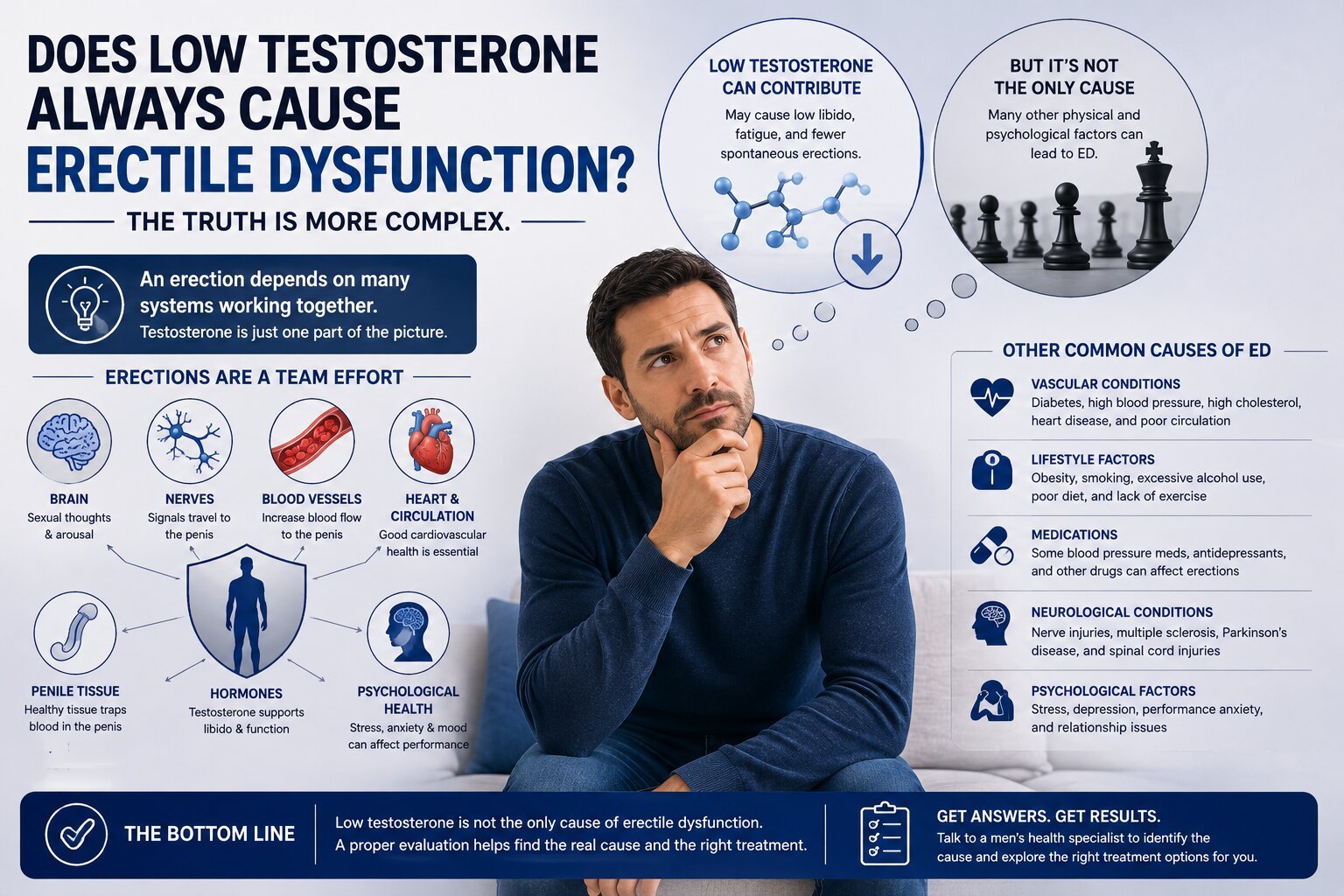
Erectile dysfunction, commonly called ED, and low testosterone are two conditions that often appear in the same conversation. That connection makes sense because testosterone plays an important role in male sexual health. But there is a common misconception that if a man has difficulty getting or keeping an erection, his testosterone must be low. That is not necessarily true. A man can have low testosterone and still have normal erections, while another man can have completely normal testosterone levels and experience significant erectile dysfunction.
The reason is simple: an erection is not controlled by testosterone alone. It depends on several systems working together, including the brain, nerves, blood vessels, heart and circulation, penile tissue, hormones, and psychological health. Think of an erection like a team sport. Testosterone may be one important player, but it cannot win the entire game by itself. If the blood vessels are not delivering enough blood, the nerves are not sending the right signals, or anxiety is interfering with sexual arousal, raising testosterone may not solve the problem.
Low testosterone can still contribute to sexual difficulties, particularly when a man has symptoms such as reduced sexual desire, fewer spontaneous erections, fatigue, and consistently low testosterone levels on properly performed blood tests. In men with genuine testosterone deficiency, treating the underlying hormonal problem may improve sexual symptoms and, in some cases, erectile function. However, treatment needs to match the actual cause rather than simply targeting a laboratory number.
This distinction is especially important because erectile dysfunction can sometimes be connected to cardiovascular and metabolic health. Conditions such as diabetes, high blood pressure, high cholesterol, obesity, smoking, and cardiovascular disease can interfere with the blood flow needed for an erection. Some medications and neurological conditions can also play a role. Psychological factors, including stress, depression, relationship difficulties, and performance anxiety, may contribute as well.
So, does low testosterone always cause erectile dysfunction? No. It can be one contributing factor, but it is only one piece of a much larger picture. Understanding that difference can help men avoid unnecessary treatments and encourage them to look for the actual reason their erections have changed.
Understanding the Link Between Testosterone and ED
Testosterone is the primary male sex hormone, and it has a broad influence on the body. It contributes to sexual desire, muscle development, bone health, red blood cell production, mood, energy, and reproductive function. Because sexual function is closely connected with testosterone, it is understandable that men may assume a testosterone problem is behind every sexual difficulty. The reality is more nuanced.
One of testosterone's most important effects on sexual function is its relationship with libido, or sexual desire. A man with testosterone deficiency may notice that he simply does not feel as interested in sex as he once did. He may have fewer sexual thoughts, less spontaneous desire, or fewer morning and spontaneous erections. If sexual desire is significantly reduced, there may be fewer situations in which the brain and nervous system initiate the chain of events that leads to an erection.
That does not mean testosterone is responsible for every physical aspect of erection quality. The penis needs healthy blood vessels to fill with blood. It also needs functioning nerves to transmit signals between the brain, spinal cord, and penile tissues. The smooth muscles and erectile tissues must respond appropriately, and blood must be retained within the penis long enough to maintain firmness. Testosterone can influence some of these processes, but it does not replace the need for healthy circulation and nerve function.
This is why a man with normal testosterone can still have ED. Imagine a car with a full tank of fuel but a damaged fuel pump. Having enough fuel does not mean the car will run properly. In a similar way, having adequate testosterone does not guarantee that the blood vessels and nerves involved in erections are working normally.
The reverse can also happen. A man may have low testosterone but not experience severe erectile problems. If his blood vessels, nerves, and erectile tissue are functioning well and his sexual desire remains adequate, he may still be able to achieve satisfactory erections. This is one reason doctors do not diagnose testosterone deficiency based on ED alone.
A proper evaluation looks at the whole picture. Symptoms, testosterone measurements, medications, medical conditions, cardiovascular risk factors, lifestyle, sleep, mental health, and sexual history can all provide useful clues about what is happening.
Why Low Testosterone and ED Are Often Confused
The confusion usually comes from the fact that low testosterone and ED can share some symptoms. For example, testosterone deficiency may be associated with reduced libido and fewer spontaneous erections, while ED is defined by difficulty achieving or maintaining an erection sufficient for satisfactory sexual activity. These problems can occur together, but they are not the same diagnosis.
A man might say, "My erections aren't as strong as they used to be, so my testosterone must be low." But several other explanations are possible. Perhaps he has developed high blood pressure. Maybe his cholesterol has increased. Perhaps he has gained considerable weight, stopped exercising, started taking a medication that affects sexual function, or developed diabetes. Stress and poor sleep can also affect sexual performance.
Age can add another layer of complexity. Testosterone levels tend to change with age, while the risk of vascular disease and other health conditions also increases. When sexual function changes later in life, it can be tempting to blame everything on testosterone. In reality, several factors may be changing at the same time.
The safest approach is therefore not to guess. Testosterone deficiency should be diagnosed when compatible symptoms or signs are present together with consistently low testosterone measurements. The Endocrine Society recommends confirming low testosterone with appropriately obtained repeat morning measurements rather than making the diagnosis from symptoms alone or from one isolated result.
That approach matters because unnecessary testosterone treatment is not harmless or appropriate for everyone. Testosterone therapy can affect fertility by suppressing sperm production and requires medical monitoring. Men considering treatment should understand both the potential benefits and limitations before starting it.
The key takeaway is straightforward: low testosterone and erectile dysfunction can be connected, but one does not automatically prove the other.
How an Erection Actually Happens
An erection may seem like a simple physical response, but biologically it is a coordinated process involving the brain, hormones, nerves, blood vessels, and penile tissues. Understanding this process makes it much easier to understand why testosterone is important without being the entire explanation for ED.
It starts with sexual stimulation and arousal. That stimulation can come from physical touch, visual or mental stimulation, emotional intimacy, or a combination of factors. The brain processes these signals and communicates with the nervous system. Nerves then release chemical signals that cause smooth muscles in the penile blood vessels and erectile tissue to relax.
As those vessels relax, blood flow into the penis increases. The erectile tissue, particularly the corpora cavernosa, fills with blood and expands. As the tissue becomes engorged, it compresses veins that normally allow blood to leave the penis. This helps trap blood inside the erectile tissue and produces the firmness associated with an erection.
That entire sequence requires the cardiovascular system to function properly. If arteries have become narrowed or damaged, the penis may not receive enough blood to produce a strong erection. This can happen with conditions such as diabetes, high cholesterol, high blood pressure, smoking-related vascular damage, and cardiovascular disease.
The nervous system is equally important. If nerve signals are disrupted because of diabetes, neurological disease, spinal cord injury, pelvic surgery, or certain medical treatments, the signals required to initiate an erection may be weakened. The erectile tissue itself can also be affected by conditions such as Peyronie's disease or other structural problems.
Then there is the psychological side. The brain is not simply an observer during sexual activity; it is part of the erection process. Anxiety, depression, relationship conflict, stress, and fear of sexual failure can interfere with arousal and make it harder to maintain an erection. Sometimes a man may begin with a physical problem, experience anxiety because of it, and then develop an additional psychological barrier that makes the ED worse.
The Role of Blood Flow, Nerves, and Sexual Stimulation
A useful way to think about erection health is as a chain. The brain provides the signal, the nerves carry the message, the blood vessels deliver blood, and the penile tissues respond. Hormones help support the system, particularly sexual desire and aspects of reproductive and sexual health. If one major link is disrupted, erection quality can suffer.
This explains why simply increasing testosterone does not automatically fix ED. Suppose a man has normal testosterone but significant arterial disease. His hormonal signal may be perfectly adequate, but his penis still cannot receive enough blood. Giving additional testosterone would not necessarily repair those blood vessels.
The same principle applies to nerve-related ED. If a man's nerves have been damaged after certain pelvic procedures or by long-standing diabetes, testosterone may not restore normal nerve signaling. Similarly, if severe performance anxiety is preventing adequate arousal, the problem may require a psychological or behavioral approach rather than hormone treatment.
Healthy erections therefore depend on more than a single blood test. Good circulation, healthy nerves, responsive erectile tissue, adequate hormonal function, sexual stimulation, and psychological well-being all matter.
This broader understanding can also make ED less embarrassing. Erectile difficulties are not a sign that a man has somehow "failed" sexually. They are often a medical symptom with identifiable contributing factors. Just as chest pain can have many causes, erectile difficulties can have many causes too.
When ED continues to occur, particularly when it represents a noticeable change from previous sexual function, a medical evaluation can be worthwhile. Looking for the underlying cause may not only improve sexual health but can sometimes uncover health problems that deserve attention elsewhere in the body.
What Low Testosterone Can Do to Sexual Function
When testosterone is genuinely low, its effects can extend well beyond erections. Testosterone deficiency, sometimes referred to as male hypogonadism, can affect sexual desire, energy, mood, body composition, muscle mass, bone health, and reproductive function. Not every man experiences every symptom, and symptoms can vary considerably from person to person.
One of the most noticeable sexual symptoms may be a reduction in libido. A man may find that he thinks about sex less often or feels less interested in initiating sexual activity. This distinction is important because desire and erection are related but separate functions. A person can have an erection without having much sexual desire, and he can have sexual desire without being able to achieve an adequate erection.
Low testosterone may also be associated with fewer spontaneous or morning erections. Morning erections are not a perfect test of testosterone levels, but changes in spontaneous erections can provide useful information when considered alongside other symptoms. A healthcare professional may ask about these changes during a sexual health evaluation.
Other possible signs of testosterone deficiency include persistent fatigue, reduced energy, decreased muscle mass, increased body fat, changes in mood, difficulty concentrating, reduced body hair, and fertility problems. Some of these symptoms are nonspecific. Fatigue, for example, can result from poor sleep, depression, anemia, thyroid problems, chronic illness, medication effects, or simply an unhealthy lifestyle. That is why symptoms alone cannot establish the diagnosis.
Common Symptoms of Testosterone Deficiency
The most useful clue is often the combination of symptoms rather than one isolated complaint. A man who has reduced libido, fewer morning erections, fatigue, and repeatedly low morning testosterone measurements presents a very different clinical picture from a man who has normal libido but suddenly cannot maintain an erection.
Testosterone levels can also fluctuate. Illness, sleep disruption, certain medications, obesity, and other health conditions can influence hormone measurements. For that reason, a single low result should not automatically lead to testosterone replacement therapy.
The Endocrine Society recommends diagnosing hypogonadism when a man has symptoms or signs consistent with testosterone deficiency together with consistently low testosterone levels. Repeat early-morning testing is generally used to confirm the finding. Depending on the circumstances, clinicians may also measure other hormones to investigate why testosterone is low.
This matters because there can be different reasons for testosterone deficiency. In some cases, the problem originates in the testes. In others, the brain regions responsible for regulating testosterone production are involved. Tests such as LH and FSH can help clinicians distinguish between different patterns and guide further evaluation.
The important point is that low testosterone is a medical condition that should be evaluated rather than assumed. If a man has both low testosterone symptoms and ED, determining whether the hormone problem is actually contributing to his sexual difficulties can help guide treatment.
And even when testosterone deficiency is confirmed, the next question remains: Is it the main cause of the erection problem, or is something else happening at the same time?
Does Low Testosterone Directly Cause ED?
Low testosterone can contribute to erectile difficulties, but saying that it always directly causes ED would be inaccurate. The relationship is more complicated because testosterone affects sexual desire and several aspects of sexual physiology, while erections themselves depend heavily on vascular and neurological function.
A man with significant testosterone deficiency may have less interest in sexual activity. With reduced desire, there may be less sexual stimulation and fewer opportunities for the physiological processes that lead to an erection. Testosterone also supports normal sexual function at the tissue level, so severe deficiency can contribute to changes in erectile quality.
However, the degree of erectile dysfunction does not necessarily match the testosterone level. A mildly low testosterone result does not automatically explain severe ED. Likewise, a man with a very noticeable erection problem may have testosterone levels that fall within the normal range.
This is why the question should not simply be, "Is testosterone low?" A better question is, "What factors are contributing to this man's erectile dysfunction?"
For example, consider a man with diabetes and normal testosterone. High blood sugar over time can damage blood vessels and nerves, both of which are essential for erections. His ED may therefore have little to do with testosterone.
Now consider another man with confirmed testosterone deficiency, reduced libido, fewer morning erections, and no major cardiovascular risk factors. His hormonal condition may be a much more important contributor to his sexual symptoms.
A third man might have both. He could have obesity, high blood pressure, diabetes, low testosterone, and significant stress. In that situation, there may be no single cause. Treating only one factor could produce an incomplete result.
This is why ED should be evaluated as a whole-body health issue rather than automatically labeled a testosterone problem.
The distinction also matters when considering treatment. Testosterone replacement may be appropriate for carefully selected men with confirmed testosterone deficiency, but it should not be prescribed simply because a man has ED. Similarly, medications and established ED treatments may be more appropriate when vascular or other causes are responsible.
Ultimately, the goal is not merely to increase a hormone level or produce an erection temporarily. The goal is to identify the underlying factors and create a treatment strategy that addresses them safely.
How Doctors Diagnose Testosterone Deficiency
If erectile dysfunction is accompanied by symptoms that suggest low testosterone, the next step is not to guess. A proper evaluation starts with a conversation about what has changed, how long the symptoms have been present, and whether other health problems could be involved. A clinician may ask about sexual desire, morning erections, energy levels, sleep, mood, medications, alcohol use, exercise, weight changes, medical conditions, and fertility goals. These details can help distinguish a possible hormone problem from other causes of erectile dysfunction.
Blood testing is an important part of the evaluation. However, testosterone levels are not completely static. They can vary depending on the time of day, sleep, illness, medications, and other factors. Testosterone is generally highest in the morning, which is why testing is commonly performed during the early morning hours. If the result is low, repeating the measurement can help determine whether the finding is persistent rather than a temporary fluctuation.
This is an important point because one low testosterone result does not automatically mean a man has testosterone deficiency. The Endocrine Society recommends diagnosing hypogonadism when compatible symptoms or signs are present together with consistently low testosterone concentrations. In other words, the diagnosis combines the laboratory result with the man's actual clinical picture.
The evaluation may also look beyond total testosterone. In certain situations, a healthcare professional may consider free testosterone or other hormone measurements. If testosterone is confirmed to be low, additional testing can help determine why it is low. Measurements such as luteinizing hormone, or LH, and follicle-stimulating hormone, or FSH, can provide information about whether the problem is related primarily to the testes or to the hormonal signals coming from the brain.
At the same time, an ED evaluation should not stop at hormones. Blood pressure, blood sugar, cholesterol, medications, cardiovascular risk, neurological health, and psychological factors may all deserve attention. This broader approach prevents a common mistake: finding a slightly abnormal testosterone number and assuming it explains everything.
Why Morning Testosterone Testing Matters
Timing matters because testosterone follows a daily rhythm. For many men, levels are higher earlier in the day and can decline later. Testing at an inappropriate time can therefore make interpretation more difficult.
The Endocrine Society has emphasized the importance of appropriately obtained early morning testosterone measurements and confirmation with repeat testing when diagnosing testosterone deficiency. This is particularly useful when the first result is close to the lower end of the laboratory's reference range or does not fit the man's symptoms.
A practical example helps. Imagine a man has fatigue and ED, and his testosterone is measured late in the afternoon when the level happens to be low. It would be premature to conclude that testosterone deficiency is the cause. A properly timed repeat measurement may produce a different result and change the clinical picture.
This careful approach protects men from unnecessary treatment while also helping those with genuine hormone deficiency receive appropriate care.
When Testosterone Replacement Therapy May Help
Testosterone replacement therapy, or TRT, can be helpful for some men who have confirmed testosterone deficiency and related symptoms. The purpose of TRT is to restore testosterone to an appropriate physiological range and improve symptoms caused by the deficiency. It is not simply a treatment for getting older, feeling tired, or having an erection problem without evidence of low testosterone.
When a man truly has testosterone deficiency, treatment may improve symptoms such as reduced sexual desire and other androgen-related problems. Some men may also experience an improvement in erectile function, particularly when low testosterone is an important contributor to their sexual difficulties.
TRT is available in several forms, including injections and topical preparations. The most appropriate option depends on the individual, medical history, preferences, treatment goals, and clinical considerations. Treatment also requires follow-up because testosterone therapy is not something that should simply be started and forgotten.
One especially important consideration is fertility. Testosterone therapy can suppress the body's natural production of testosterone and sperm. For a man who is trying to have children, this can be a major issue. He should discuss fertility plans with a healthcare professional before starting TRT rather than assuming testosterone therapy will improve fertility.
TRT also is not appropriate for everyone. A clinician needs to consider medical history, risks, symptoms, laboratory results, and other factors before recommending it. Monitoring during treatment is part of responsible testosterone management.
The biggest misconception is that TRT is essentially a performance enhancer for men with ED. That is not how medically appropriate testosterone replacement should be viewed. It is a treatment for confirmed testosterone deficiency, not a universal solution for every type of erectile dysfunction.
Why TRT Is Not a Universal ED Treatment
Suppose a man has excellent testosterone levels but has severe narrowing of the blood vessels supplying his penis. Giving him additional testosterone would not necessarily remove those blockages or restore normal circulation. The same principle applies when ED is caused primarily by nerve damage, medication side effects, severe anxiety, or another condition unrelated to testosterone deficiency.
This is why men should be cautious about treatments marketed around the idea that every erection problem is caused by "low T." Sexual health is more complicated than that. Testosterone is important, but an erection depends on multiple biological systems working together.
Even when a man has low testosterone, TRT may not completely resolve his ED. Imagine that testosterone deficiency accounts for one part of the problem while diabetes and vascular disease account for another. Restoring testosterone could potentially improve libido while the blood-flow problem continues to interfere with erection quality.
This is not a failure of testosterone therapy. It simply means the original problem had more than one cause.
Men should also understand that testosterone treatment has potential risks and requires medical supervision. It can suppress sperm production, and clinicians need to consider individual contraindications and monitoring requirements. The decision should be based on confirmed deficiency and a discussion of expected benefits, risks, alternatives, and treatment goals.
If ED remains after testosterone deficiency has been appropriately treated, additional evaluation may be needed. Established ED treatments can be considered depending on the cause and the individual's health.
The right question is therefore not, "What can I take to raise testosterone?" It is, "Why am I having erectile dysfunction, and which treatment addresses that reason?"
When Poor Blood Flow Is the Main Cause of ED
Healthy blood flow is one of the most important requirements for a firm erection. During sexual arousal, the blood vessels supplying the penis need to relax so that blood can enter the erectile tissue. If those vessels are damaged, narrowed, or unable to respond normally, the erection may be weak, difficult to achieve, or difficult to maintain.
This is why vascular erectile dysfunction is so common. The same factors that damage blood vessels elsewhere in the body can affect penile circulation. High blood pressure, high cholesterol, diabetes, smoking, obesity, physical inactivity, and cardiovascular disease are all important risk factors.
Sometimes the change happens gradually. A man may notice that erections are not quite as firm as they were several years earlier. He may need more stimulation, lose the erection more easily, or notice that spontaneous erections have become less frequent. These changes should not automatically be blamed on testosterone.
Vascular health can also be influenced by lifestyle. Smoking, for example, can damage the lining of blood vessels and interfere with normal circulation. Physical inactivity and excess body weight can contribute to metabolic problems that affect both cardiovascular and sexual health.
This creates an interesting connection between erectile health and general health. The penis is not separate from the cardiovascular system. Its blood vessels respond to many of the same factors affecting arteries throughout the body.
That is why a medical evaluation of persistent ED can be valuable even when the man primarily wants help with sexual performance. Finding high blood pressure, diabetes, abnormal cholesterol, or another cardiovascular risk factor gives the opportunity to address a broader health problem.
Is Erectile Dysfunction a Warning Sign for Heart Health?
Persistent erectile dysfunction can sometimes be an early indicator of underlying vascular disease. This does not mean that every man with ED has heart disease, but the association is important enough that cardiovascular risk should not be ignored.
The relationship makes biological sense. The arteries supplying the penis are relatively small, so vascular problems can affect erectile function before symptoms become obvious in larger arteries. Erectile dysfunction may therefore appear before a man develops noticeable symptoms of cardiovascular disease.
The Princeton IV Consensus has emphasized the relationship between ED and cardiovascular health and supports appropriate cardiovascular risk assessment in men presenting with erectile dysfunction.
A clinician may consider factors such as blood pressure, cholesterol, blood sugar, weight, smoking, physical activity, family history, and existing cardiovascular conditions. The exact evaluation depends on the individual's age, symptoms, medical history, and overall risk.
This does not mean that every man with ED needs an extensive cardiac workup. It means ED can be an opportunity to take cardiovascular health seriously rather than treating the erection problem in isolation.
There is also a practical benefit. Improving cardiovascular health can support sexual health at the same time. Regular physical activity, healthier nutrition, weight management when appropriate, smoking cessation, and control of blood pressure, cholesterol, and diabetes can all be valuable components of a broader health strategy.
So if a man has ED and normal testosterone, he should not conclude that "nothing is wrong." There may be a completely different explanation, and vascular health is one of the important areas to investigate.
Can Low Testosterone and Vascular ED Happen Together?
Absolutely. In fact, this is one of the most important reasons not to think about ED as having only one possible cause.
Consider a man who has gained weight over the years, developed type 2 diabetes, has high blood pressure, and now has low testosterone. He may also report reduced sexual desire and difficulty maintaining an erection. Which one caused his ED? It may be impossible to point to a single factor because several are interacting.
Obesity and metabolic disease can be associated with changes in testosterone levels, while diabetes and cardiovascular risk factors can damage the blood vessels and nerves involved in erections. Reduced physical activity may add another layer. Stress caused by ongoing health problems can then contribute to sexual anxiety.
In this situation, treating testosterone alone may improve some symptoms without completely resolving the ED. Conversely, focusing exclusively on blood flow may leave significant testosterone deficiency untreated.
This is why individualized treatment matters. The goal is to identify the different factors that are realistically contributing to the problem and address them in a sensible order.
A healthcare professional may recommend improving metabolic health, reviewing medications, confirming testosterone levels, treating confirmed hormone deficiency when appropriate, and considering established ED therapies. Psychological support may also be useful if anxiety or relationship stress is part of the picture.
The good news is that multiple contributing factors do not mean the problem is hopeless. It simply means the solution may require more than one piece.
Other Physical Causes of Erectile Dysfunction
Blood flow and testosterone receive a lot of attention, but they are far from the only causes of erectile dysfunction. Nerve problems can interfere with the signals required to initiate an erection. This can occur with diabetes, certain neurological conditions, spinal injuries, or after some pelvic procedures.
Some medications can also affect sexual function. Depending on the drug and the individual, medications used for blood pressure, depression, and other conditions may sometimes contribute to sexual difficulties. That does not mean a man should stop taking prescribed medication on his own. Instead, medication-related sexual side effects should be discussed with the prescribing clinician.
Pelvic surgery and prostate cancer treatments can sometimes affect the nerves and blood vessels involved in erections. Peyronie's disease, which can cause curvature and structural changes in the penis, may also make erections difficult or uncomfortable.
Sleep disorders deserve attention too. Poor sleep can affect energy, mood, hormone regulation, and overall sexual function. Excessive alcohol use and certain recreational drugs can also interfere with sexual performance.
This list demonstrates why ED is a symptom rather than a single disease. Two men can have almost identical erection complaints while having completely different underlying causes.
A detailed history helps narrow down the possibilities. When did the problem begin? Is it constant or occasional? Are morning erections still present? Is sexual desire normal? Did symptoms start after a new medication or health problem? These questions can reveal patterns that a testosterone test alone cannot.
Psychological Factors That Can Affect Erections
Not every erection problem begins with a physical disease. The mind and body are closely connected during sexual activity, and psychological factors can interfere with erections even when blood vessels and hormones are healthy.
Performance anxiety is a classic example. A man may have difficulty getting an erection once, worry that it will happen again, and then become anxious during his next sexual encounter. That anxiety can make arousal more difficult, creating a frustrating cycle.
Stress can work in a similar way. Work problems, financial pressure, relationship conflict, lack of privacy, or major life changes can affect sexual desire and concentration. Depression can also reduce libido and interfere with sexual function.
Psychological and physical causes can occur together. A man may initially develop ED because of diabetes or vascular disease. After several unsuccessful sexual experiences, he may become worried about his performance. That anxiety then makes future erections even more difficult.
This is why saying "it's all in your head" is neither accurate nor helpful. Psychological factors can produce genuine physical effects, and physical ED can produce genuine psychological distress.
Treatment may therefore involve addressing both sides. Depending on the situation, medical ED treatment, relationship counseling, sex therapy, stress management, or mental health support may be useful.
How Lifestyle Habits Affect Testosterone and Erections
Lifestyle does not explain every case of ED, but it can have a meaningful effect on both hormone health and circulation. Regular physical activity, a nutritious diet, healthy weight management, adequate sleep, and avoiding tobacco can support overall health and may improve factors associated with sexual function.
Exercise is particularly valuable because it supports cardiovascular fitness and metabolic health. Better cardiovascular conditioning can help the body maintain healthy circulation. Physical activity can also support weight management, mood, energy, and general well-being.
Sleep should not be overlooked. Consistently poor sleep can affect energy, mood, and hormonal regulation. Men who snore heavily, wake frequently, or feel exhausted despite spending enough time in bed may benefit from discussing possible sleep disorders with a healthcare professional.
Smoking is another important factor. Tobacco use can damage blood vessels and is associated with an increased risk of erectile problems. Quitting can be difficult, but it can provide benefits far beyond sexual health.
Alcohol also deserves moderation. Heavy alcohol consumption can interfere with sexual performance and contribute to other health problems.
These changes should not be presented as a guaranteed cure for ED. A man with significant vascular disease, nerve damage, or another medical condition may need specific treatment. Still, improving lifestyle habits can complement medical care and address some of the risk factors associated with erectile dysfunction.
Where Does the P Shot Fit Into ED Treatment?
The P Shot is a term commonly used to describe penile injections involving platelet-rich plasma, or PRP. PRP is produced from a patient's own blood. A sample is processed to concentrate platelets, and the resulting preparation is injected into targeted penile tissue.
The idea behind PRP is based on the role of platelets in tissue repair. Platelets contain signaling substances and growth factors involved in healing processes. Because erectile function depends partly on healthy vascular and tissue function, researchers have investigated whether PRP could potentially improve aspects of erectile function.
This is an interesting area of research, but it is important to separate scientific interest from established medical evidence.
PRP injections for ED have been studied in clinical research, but the available evidence remains limited. Differences between studies, small sample sizes, variations in treatment protocols, and other methodological issues make it difficult to determine how effective PRP really is or which patients might benefit most.
The Sexual Medicine Society of North America has stated that evidence supporting PRP and other restorative therapies for ED remains insufficient and has characterized PRP treatment for ED as experimental.
That does not mean research should stop. New studies may provide better answers. It does mean patients should be cautious about claims that describe the P Shot as a proven cure or guarantee dramatic, permanent results.
Anyone considering PRP should be given realistic information about the current evidence, potential risks, costs, uncertainty around outcomes, and established alternatives.
Is the P Shot Proven to Treat Erectile Dysfunction?
At present, the P Shot should not be described as a proven cure for erectile dysfunction. Research into PRP is ongoing, but current sexual medicine guidance does not consider the evidence strong enough to establish it as a standard, proven ED treatment.
This distinction matters because medical marketing can sometimes make experimental therapies sound more established than they actually are. Words such as "regenerative," "natural," or "healing" may sound reassuring, but they do not replace high-quality clinical evidence.
For an ED treatment to become widely established, researchers generally want convincing evidence from well-designed clinical trials showing that patients experience meaningful benefits compared with appropriate control treatments. Longer-term safety and durability of results are also important.
The Sexual Medicine Society of North America has called for larger, well-designed, randomized, placebo-controlled trials to better evaluate restorative treatments such as PRP.
That means a patient considering a P Shot should approach it as an experimental option, not as a guaranteed alternative to established ED treatments.
TRT vs. P Shot: Understanding the Difference
TRT and the P Shot are sometimes discussed together because both are marketed in the sexual health space, but they address fundamentally different concepts.
TRT is hormone replacement. It is intended for men with clinically confirmed testosterone deficiency and appropriate symptoms. The treatment works systemically by replacing testosterone that the body is not producing adequately.
PRP injections are a local regenerative approach under investigation. The proposed mechanism involves using concentrated platelets and their signaling substances within penile tissue. However, evidence for meaningful and lasting improvement in ED remains limited.
These treatments should therefore not be viewed as interchangeable. A man with confirmed testosterone deficiency may have a legitimate medical reason to discuss TRT. A man with normal testosterone should not assume that TRT is appropriate simply because he has ED.
Likewise, someone considering PRP should understand that its evidence base is different from that of established ED treatments.
| Treatment | Main purpose | Evidence for ED | Important consideration |
|---|---|---|---|
| TRT | Treat confirmed testosterone deficiency | May improve sexual symptoms in appropriately selected men | Requires confirmed deficiency and medical monitoring |
| PRP/P Shot | Proposed local tissue-regenerative approach | Evidence remains limited | Considered experimental by sexual medicine guidance |
| Established ED treatments | Improve erectile function directly | Supported by clinical evidence for appropriate patients | Choice depends on health, cause, and contraindications |
The best treatment depends on the underlying cause, not on which option sounds newest or most advanced.
How ED Should Be Evaluated and Treated
A sensible ED evaluation begins with the basics. A healthcare professional will usually want to understand the sexual symptoms, when they started, whether they occur every time, whether morning erections are present, and whether sexual desire has changed.
The medical history is equally important. Diabetes, high blood pressure, cholesterol problems, cardiovascular disease, neurological conditions, pelvic surgery, medications, sleep problems, alcohol use, smoking, and mental health can all provide clues.
If symptoms suggest testosterone deficiency, appropriately timed testosterone testing can be performed and repeated when necessary. If testosterone is consistently low, additional evaluation may identify the underlying reason.
Treatment then depends on what the evaluation reveals. Confirmed testosterone deficiency may lead to a discussion about TRT. Vascular risk factors may require attention to cardiovascular and metabolic health. Established ED therapies may be considered when appropriate. Psychological or relationship factors may benefit from counseling or sex therapy.
The important thing is that treatment should follow diagnosis. Starting with a diagnosis helps prevent men from spending money on treatments that do not address their actual problem.
What to Do If You Have ED and Suspect Low Testosterone
If you are experiencing persistent erectile difficulties and also suspect that your testosterone is low, start by speaking with a qualified healthcare professional rather than self-diagnosing.
Write down the changes you have noticed. Has your sex drive decreased? Are morning erections less frequent? Have you experienced fatigue, reduced strength, mood changes, or changes in body composition? Are the erection problems occasional or happening most of the time?
It is also useful to review medications, sleep, alcohol use, smoking, exercise, weight changes, and existing medical conditions. These details can help create a more complete picture.
If testosterone testing is appropriate, remember that one abnormal result is not necessarily enough to diagnose testosterone deficiency. Current Endocrine Society guidance emphasizes symptoms or signs together with consistently low testosterone measurements and appropriately obtained repeat morning testing.
If low testosterone is confirmed, discuss whether treatment is appropriate and what the potential benefits and risks are. If fertility is important, mention this before starting TRT because testosterone therapy can suppress sperm production.
If testosterone is normal, that does not mean your ED has no explanation. It simply means the investigation should look at other possible causes, particularly vascular health, medications, nerve function, psychological factors, and other medical conditions.
The objective should always be the same: find the cause, treat the cause, and choose therapies based on evidence and individual health needs.