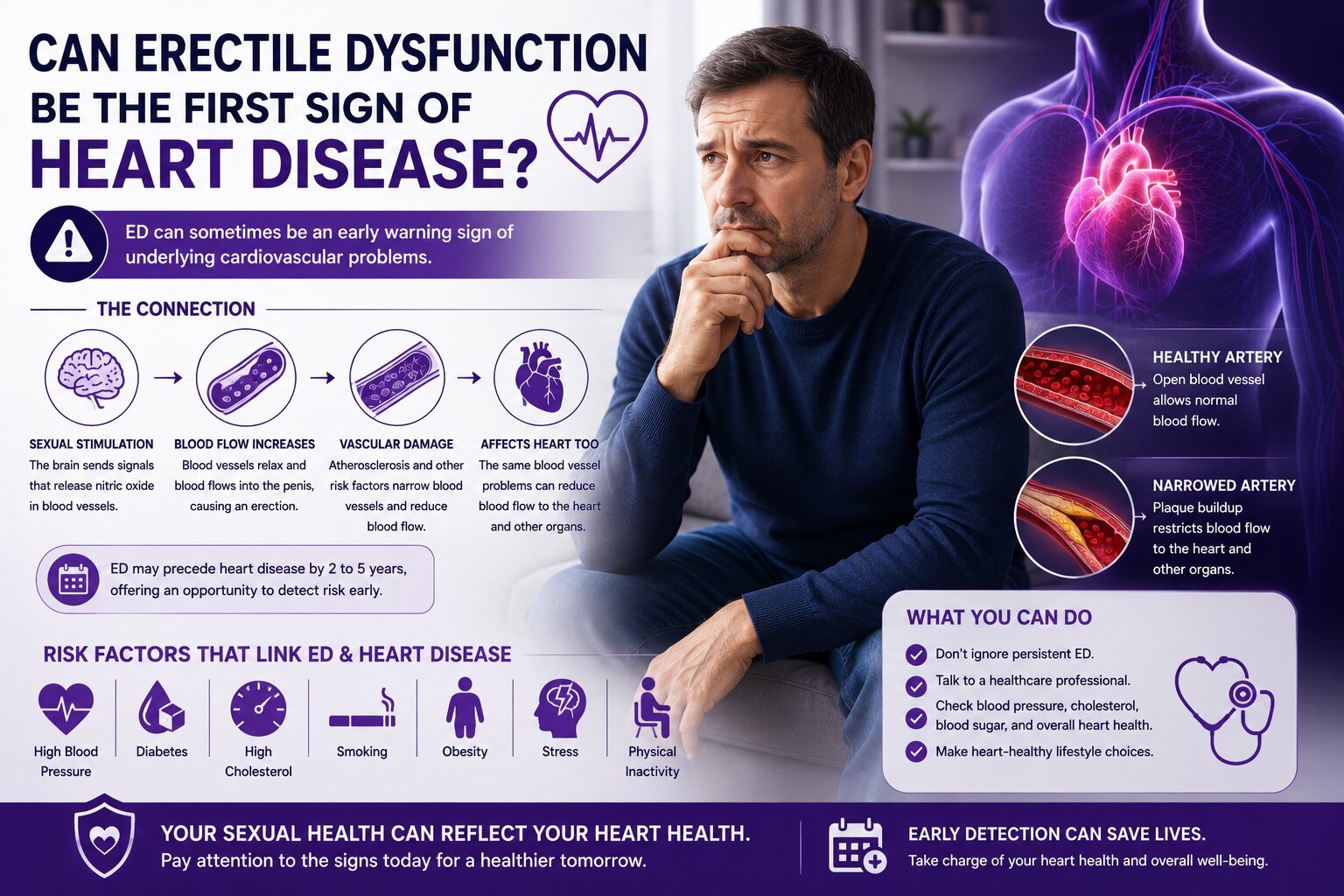
Understanding the crucial link between vascular health, blood flow, and men's sexual wellness.
Erectile dysfunction, commonly called ED, is often treated as an isolated sexual health issue. A man may notice that erections are less firm than they used to be, take longer to develop, or disappear before sexual activity is complete, and naturally assume the problem belongs entirely in the bedroom. Sometimes that is exactly what is happening. Stress, anxiety, relationship difficulties, medications, hormonal changes, neurological conditions, and a range of other issues can interfere with erections. Yet there is another side to the story that deserves attention: persistent erectile dysfunction can sometimes be an early sign that a man’s blood vessels are not functioning as well as they should.
The connection between ED and cardiovascular disease is not simply theoretical. Erections depend on a complicated interaction involving the brain, nerves, hormones, smooth muscle, and blood vessels. When sexual stimulation occurs, the body releases signaling molecules such as nitric oxide that help blood vessels in the penis relax and allow blood to flow into erectile tissue. If the vascular system is affected by atherosclerosis, endothelial dysfunction, diabetes, high blood pressure, smoking, or other cardiovascular risk factors, that blood-flow response can become less effective. The same broad vascular problems can also affect arteries supplying the heart and other organs. This is why contemporary medical thinking increasingly views vascular erectile dysfunction as a potential cardiovascular risk marker, rather than merely a quality-of-life concern.
That does not mean that every man who experiences ED has heart disease or is about to have a heart attack. The causes of erectile dysfunction are too diverse for such a conclusion. Instead, the important question is whether unexplained or persistent ED could be providing an opportunity to identify cardiovascular risk earlier. In some men, it can. Medical literature and professional guidance have reported that erectile dysfunction may precede clinically apparent cardiovascular disease by several years, creating a potentially valuable window for identifying high blood pressure, abnormal cholesterol, diabetes, smoking-related vascular damage, obesity, and other modifiable risks. So, can erectile dysfunction be the first sign of heart disease? Yes, it can be—but it should be understood as a possible warning signal, not a diagnosis.
At first glance, erectile dysfunction and heart disease may seem like completely different medical problems. One affects sexual performance, while the other affects an organ that keeps blood circulating throughout the body. Look more closely, though, and the connection becomes much easier to understand. Both erectile function and cardiovascular health depend heavily on healthy blood vessels and adequate blood flow. The penis is not simply responding mechanically to sexual stimulation; an erection requires blood vessels to widen, blood flow to increase, and erectile tissue to trap enough blood to maintain firmness. If those vascular processes become impaired, achieving or maintaining an erection can become increasingly difficult.
During sexual stimulation, the nervous system triggers a cascade of chemical signals that includes the release of nitric oxide. Nitric oxide helps relax the smooth muscle surrounding penile blood vessels, allowing those vessels to expand. More blood can then enter the erectile tissue, producing the pressure and rigidity associated with an erection. Healthy endothelial cells—the cells lining the inside of blood vessels—play an important role in this process because they help regulate vascular relaxation and blood flow. When endothelial function deteriorates, the vessels may not respond as efficiently. The result can be reduced erectile performance even before a man notices other obvious signs of vascular disease.
Heart disease can develop through several related processes, including atherosclerosis, in which plaque accumulates within artery walls, and endothelial dysfunction, in which the normal function of the vessel lining becomes impaired. Risk factors such as smoking, diabetes, high LDL cholesterol, hypertension, obesity, and physical inactivity can contribute to these processes over time. The arteries supplying different organs are not isolated systems; they are part of one interconnected vascular network. Consequently, a problem affecting blood-vessel health in one area may also indicate broader vascular problems elsewhere. Current European Association of Urology guidance recognizes erectile dysfunction as being associated with increased risks of cardiovascular disease, coronary heart disease, stroke, atrial fibrillation, cardiovascular mortality, and all-cause mortality.
That association changes how persistent ED should be approached. Instead of asking only, “What can be done to improve erections?” a clinician may also ask, “Why has erectile function changed?” That second question can uncover health problems that have been developing quietly. A man may discover that his blood pressure is higher than expected, his cholesterol is abnormal, his blood glucose suggests previously unrecognized diabetes, or his lifestyle is placing significant strain on his cardiovascular system. In that sense, ED can occasionally act like a check-engine light on a car: the warning does not tell you exactly which component has a problem, but ignoring it may mean missing an opportunity to find and address the underlying issue.
An erection is fundamentally a vascular event, even though the process begins with sexual desire and neurological stimulation. The brain and nervous system initiate the response, but blood vessels must then perform their part. Penile arteries need to dilate, blood needs to enter the erectile tissue efficiently, and the tissue needs to retain enough blood to produce and sustain rigidity. This is a remarkably coordinated process, and it leaves relatively little room for significant vascular dysfunction to go unnoticed. When blood vessels become less responsive, the erection may become weaker, less reliable, or more difficult to maintain.
The role of nitric oxide helps explain why vascular health matters so much. Nitric oxide promotes relaxation of smooth muscle in the penile circulation, which increases blood flow during sexual stimulation. The endothelium contributes to the body's ability to regulate this response. Conditions that damage endothelial function—such as hypertension, diabetes, smoking, abnormal cholesterol, and chronic metabolic dysfunction—can interfere with normal vascular signaling. A man may therefore experience a gradual change in erectile quality rather than an abrupt loss of function. Perhaps erections are no longer as firm in the morning, perhaps sexual stimulation takes longer to produce the desired response, or perhaps maintaining an erection becomes increasingly difficult.
The vascular system also responds to lifestyle and metabolic health. Regular physical activity generally supports cardiovascular conditioning and vascular function, while smoking, prolonged inactivity, excess visceral fat, poor metabolic control, and untreated hypertension can work in the opposite direction. This is one reason ED treatment should not always be reduced to a prescription for an erection-enhancing medication. Medication can be useful and effective for appropriate patients, but if vascular health is contributing to the problem, treating the underlying risk factors matters too. The goal is not simply to improve what happens during sex; it is to understand what the change in sexual function may be saying about the rest of the body.
This connection becomes especially relevant when ED develops without an obvious explanation. A temporary difficulty following a stressful week is not the same as a persistent decline occurring over months. Likewise, an erection problem associated clearly with anxiety may have a different explanation from progressive ED in a man with diabetes and high blood pressure. Context matters. A proper medical evaluation considers the entire picture rather than assuming every erectile problem is cardiovascular or, at the other extreme, assuming that no cardiovascular assessment is necessary.
Vascular disease does not necessarily block an artery completely before it begins affecting function. Blood vessels can lose some of their ability to expand and respond normally long before a person develops severe obstruction. Endothelial dysfunction is particularly important because the endothelium regulates vascular tone, inflammation, clotting, and other processes involved in maintaining healthy circulation. When this delicate system becomes impaired, blood vessels may become less responsive to signals that should cause them to relax. In the penis, where rapid increases in blood flow are necessary for an erection, even relatively subtle changes can become noticeable.
Atherosclerosis can also contribute. Over time, plaque formation can narrow arteries and interfere with efficient blood delivery. The precise effects vary from person to person, and erectile dysfunction can have multiple simultaneous causes, but vascular disease is a well-established contributor. This is why physicians often look at ED in the context of a man's overall cardiovascular profile. If someone has long-standing diabetes, uncontrolled hypertension, high LDL cholesterol, a history of smoking, abdominal obesity, and newly developed persistent ED, the combination deserves more attention than any one factor considered separately.
There is also a practical reason vascular ED can be clinically useful. Sexual function is often something a man notices personally, without needing specialized equipment or a formal screening program. He may not know that his blood pressure has been elevated or that his cholesterol has been unhealthy for years, but he may notice that his erections have changed. That symptom can become the reason he finally speaks with a healthcare professional. A conversation about ED can therefore open the door to a much broader health assessment. Instead of treating sexual function and cardiovascular health as separate boxes, clinicians can investigate whether both are being influenced by the same underlying factors.
It is important not to overinterpret this relationship. ED is not a substitute for cardiovascular testing, and the presence of ED does not prove that coronary arteries are narrowed. Psychological and medication-related causes remain common, and many men with ED do not have clinically significant cardiovascular disease. The useful takeaway is more nuanced: when erectile dysfunction is persistent, unexplained, and especially when it has characteristics suggesting a vascular cause, it may be reasonable to assess cardiovascular risk as part of the overall evaluation.
One of the most interesting features of the ED-heart disease relationship is timing. A man can develop erectile difficulties before he experiences classic symptoms associated with coronary artery disease. That may seem surprising, particularly because the heart is such a vital organ, but differences in blood-vessel size and function offer one possible explanation. Researchers and clinicians commonly refer to this concept as the artery size hypothesis. It does not claim that ED is a direct measurement of coronary artery blockage; instead, it helps explain why vascular dysfunction might become noticeable in the penis before it produces recognizable symptoms in the heart.
The penis contains relatively small arteries, while the coronary arteries supplying the heart are larger. Medical reviews commonly describe penile cavernosal arteries as approximately 1 to 2 millimeters in diameter, compared with coronary arteries that may be around 3 to 4 millimeters. If atherosclerotic or endothelial changes affect the vascular system broadly, smaller arteries may reach a point where impaired blood flow becomes clinically noticeable sooner. In practical terms, a degree of vascular dysfunction that is enough to interfere with the rapid increase in penile blood flow required for an erection may not yet be enough to cause obvious chest discomfort during everyday activities.
Imagine a series of roads carrying traffic to different parts of a city. A modest reduction in road capacity may cause a noticeable traffic jam on a narrow side street long before the same reduction creates a visible problem on a major highway. The roads are not identical, and the analogy is not a literal model of human circulation, but it captures the basic idea behind the artery size hypothesis. The appearance of ED does not necessarily mean a major coronary artery is dangerously blocked. Rather, it may indicate that the vascular system deserves closer examination, especially when other cardiovascular risk factors are present.
The timing is clinically relevant because cardiovascular disease can remain silent. Many people have high blood pressure, elevated cholesterol, insulin resistance, or early atherosclerotic disease without experiencing obvious symptoms. If erectile dysfunction appears during that silent period, it may provide a reason to look for those hidden risk factors. Professional guidance, including European urological recommendations and the Princeton consensus approach, has increasingly emphasized the cardiovascular significance of ED.
That is why a new and persistent change in erectile function should not automatically be dismissed as an inevitable part of aging. Aging increases the likelihood of ED, but age itself does not explain every change in sexual function. A careful assessment can distinguish normal variation from a potentially meaningful medical symptom and can identify factors that may be treatable before they contribute to more serious cardiovascular disease.
The artery size hypothesis is best viewed as an explanation for an observed clinical pattern rather than a diagnostic rule. It proposes that because penile arteries are smaller than coronary arteries, vascular disease may produce noticeable erectile symptoms before it produces symptoms from coronary circulation. The theory helps make sense of why ED can sometimes precede cardiovascular disease by several years. It also explains why researchers have become increasingly interested in erectile function as a possible marker of systemic vascular health.
Research and consensus reviews have reported that erectile dysfunction may precede symptoms of coronary artery disease by roughly two to three years and cardiovascular events by approximately three to five years in some populations. These figures should not be interpreted as a countdown clock for an individual man. Cardiovascular disease does not follow an identical schedule in everyone, and the relationship between ED and future cardiovascular events is influenced by age, diabetes, smoking, blood pressure, cholesterol, obesity, family history, physical activity, and other factors. Still, the potential time window matters because it suggests that the onset of ED may occur when there is still time to identify and modify cardiovascular risk.
The hypothesis also reinforces an important distinction between vascular ED and other forms of ED. A man can have erectile dysfunction because of anxiety, depression, relationship stress, medication side effects, testosterone deficiency, nerve injury, pelvic surgery, neurological disease, or other conditions. In those circumstances, the cardiovascular implications may be different. A clinician therefore needs to determine what is most likely contributing to the erectile problem rather than treating every case as evidence of arterial disease.
For patients, the message is straightforward: do not panic, but do not ignore persistent changes either. If erections have consistently become weaker or less reliable, particularly in the absence of an obvious explanation, discussing the change with a healthcare professional can be worthwhile. The conversation may lead not only to effective ED treatment but also to a review of blood pressure, cholesterol, glucose, smoking, exercise, weight, medications, and other cardiovascular factors. Sometimes the most valuable thing about addressing ED is discovering what else needs attention.
The possibility that erectile dysfunction can precede cardiovascular disease by several years is one of the strongest reasons clinicians take persistent ED seriously. Evidence summarized in consensus reviews suggests that ED may occur around two to three years before symptoms of coronary artery disease and approximately three to five years before cardiovascular events in some men. Other reviews describe a broader window of roughly two to five years. These estimates describe patterns observed across populations, not a fixed timeline for an individual.
That distinction is critical. If a man develops ED today, nobody can accurately say that he will develop heart disease in three years. Cardiovascular risk is not a stopwatch. One person may have ED for many years without experiencing a cardiovascular event, while another may already have significant underlying disease that has not yet produced symptoms. The purpose of recognizing the potential time relationship is not to predict a specific event but to identify an opportunity for prevention. A warning window is useful only if we use it to investigate and act.
Suppose a 48-year-old man develops persistent ED and has not seen a doctor for several years. During an evaluation, his blood pressure turns out to be elevated, his LDL cholesterol is higher than recommended, and his HbA1c suggests poor glucose regulation. None of those findings automatically means that his coronary arteries are severely diseased. However, together they paint a cardiovascular risk picture that deserves attention. The ED may have been the symptom that prompted him to investigate issues that otherwise could have remained unnoticed.
This is where preventive medicine becomes particularly valuable. Blood pressure can often be managed. Smoking cessation can dramatically reduce cardiovascular risk over time. Diabetes and prediabetes can be addressed through individualized lifestyle and medical strategies. Abnormal cholesterol can be treated when indicated, and physical activity and weight management can improve several interconnected risk factors. Addressing these issues may also benefit erectile function, creating a situation where the same health improvements potentially help both the heart and sexual health.
The key point is that ED should be interpreted in context. Persistent vascular-type ED in a man with multiple cardiovascular risk factors deserves a different level of attention from a brief episode of erectile difficulty during a period of intense stress. Neither scenario should automatically be diagnosed from symptoms alone. A qualified clinician can assess the pattern, identify possible causes, estimate cardiovascular risk, and determine whether further testing is appropriate.
Yes, erectile dysfunction can be an early warning sign of cardiovascular disease, particularly when the ED appears to have a vascular basis. This is one reason the Princeton IV Consensus Guidelines describe ED as a cardiovascular risk marker and a risk-enhancing factor in cardiovascular assessment. Evidence highlighted by the American College of Cardiology, including findings from the Multi-Ethnic Study of Atherosclerosis, has also associated ED with a substantially higher risk of cardiovascular events, with the cited analysis finding an association approaching twice the risk.
Still, “warning sign” is a better phrase than “diagnosis.” A warning light tells you that something deserves investigation; it does not tell you precisely what is wrong. Erectile dysfunction can be caused by psychological stress, depression, anxiety, medications, hormonal disorders, neurological conditions, pelvic problems, diabetes, vascular disease, or combinations of these factors. The cardiovascular significance becomes more compelling when the erectile problem is persistent and occurs alongside other evidence of vascular risk.
Certain patterns should prompt a particularly thoughtful evaluation. For example, ED that develops without an obvious psychological trigger, progressively worsens, or appears in a man with diabetes, hypertension, abnormal cholesterol, obesity, smoking history, or a strong family history of premature cardiovascular disease deserves attention. Reduced exercise tolerance can add another reason to consider cardiovascular health, particularly if activities that were previously easy have become unexpectedly difficult.
Age also matters, but not in the way many people assume. Erectile dysfunction becomes more common as men get older, yet persistent ED in a younger man should not simply be written off as normal. A younger man may have fewer traditional cardiovascular symptoms and may not realize that conditions such as hypertension, metabolic dysfunction, or early vascular disease are developing. In that setting, ED can become a useful prompt for earlier risk assessment.
The best approach is balanced. There is no reason for a man with ED to assume that a heart attack is imminent. At the same time, there is little benefit in ignoring persistent symptoms simply because they occur during sexual activity. The penis and heart share the same vascular system, and sometimes the sexual symptom is the first reason a man has to take a closer look at his cardiovascular health.
Not every episode of erectile difficulty carries the same medical significance. Almost any man can occasionally have trouble achieving or maintaining an erection. Fatigue, alcohol, stress, lack of sleep, anxiety, and temporary distractions can all interfere with sexual performance. A single disappointing sexual experience therefore should not send someone into a cycle of fear about heart disease. The concern increases when erectile dysfunction becomes persistent, recurrent, progressive, or unexplained.
The surrounding circumstances also matter. Consider a man whose erections have gradually become less reliable over the past year while his blood pressure has increased and his cholesterol has never been checked. That combination deserves a medical evaluation because vascular factors could plausibly be contributing. Compare that with someone who experiences erectile difficulty only during periods of severe performance anxiety but has normal spontaneous erections and no other concerning symptoms. The two situations may require very different approaches.
A clinician may also pay attention to whether ED occurs alongside signs that suggest broader vascular or metabolic problems. These can include diabetes, hypertension, high LDL cholesterol, obesity, smoking, sleep apnea, metabolic syndrome, physical inactivity, or a strong family history of cardiovascular disease. The more cardiovascular risk factors cluster together, the more useful a cardiovascular assessment may become. This does not prove that the ED is vascular, but it raises the importance of finding out.
There are also symptoms that should never be explained away as “just ED.” Chest pressure or pain, significant unexplained shortness of breath, fainting, severe dizziness, or other symptoms suggestive of an acute cardiovascular problem require appropriate urgent medical attention. A man experiencing such symptoms should not focus on obtaining ED medication while ignoring potentially serious cardiovascular warning signs.
Ultimately, the most useful question is not simply, “Do I have ED?” It is, “Why have I developed ED, and what does that tell me about my overall health?” That shift in perspective can transform an embarrassing or uncomfortable symptom into an opportunity for prevention.
The relationship between erectile dysfunction and cardiovascular disease becomes easier to understand when you look at the risk factors the two conditions have in common. High blood pressure, diabetes, abnormal cholesterol, obesity, smoking, physical inactivity, metabolic syndrome, sleep apnea, and increasing age can all affect vascular health and increase the likelihood of both ED and cardiovascular disease. These factors rarely operate in isolation. A man may have slightly elevated blood pressure, borderline blood sugar, a growing waistline, and a sedentary lifestyle at the same time, creating a cumulative effect on the blood vessels that can eventually show up as changes in erectile function.
High blood pressure is a particularly important example. When blood pressure remains elevated for years, the constant mechanical stress can damage the delicate lining of blood vessels and contribute to arterial stiffness and dysfunction. Diabetes can be equally influential because prolonged high blood glucose can damage blood vessels and nerves, both of which are important for normal erections. Abnormal cholesterol can contribute to plaque formation within arteries, while smoking exposes the vascular system to chemicals that promote inflammation, oxidative stress, and impaired endothelial function. Obesity, especially excess abdominal fat, often travels alongside insulin resistance, high blood pressure, abnormal lipids, and chronic inflammation. The result is a cluster of problems that can affect circulation throughout the body.
This shared-risk-factor pattern is one reason ED can be useful as a cardiovascular health checkpoint. A man may not know that his blood pressure or cholesterol is elevated because these conditions often produce no obvious symptoms. Erectile changes, however, can be noticeable during sexual activity. That does not make ED a formal screening test for heart disease, but it can provide a reason to investigate risks that might otherwise remain hidden. A healthcare professional can consider the complete picture, including medical history, medications, lifestyle, family history, physical findings, and appropriate laboratory testing.
Improving these risk factors can also have benefits that extend beyond the cardiovascular system. Regular physical activity can support circulation and metabolic health. Stopping smoking reduces ongoing vascular injury. Better glucose control can protect blood vessels and nerves, while appropriate management of blood pressure and cholesterol can reduce cardiovascular risk. Weight management may improve several risk factors simultaneously. When the same lifestyle and medical interventions help protect the heart and support erectile function, treating the underlying health problem becomes far more valuable than simply chasing the symptom.
The endothelium is a thin layer of cells lining the inside of blood vessels, and it plays a much bigger role than its delicate appearance might suggest. It helps regulate how much blood vessels widen or narrow, participates in inflammatory processes, and contributes to the balance between healthy blood flow and clot formation. When endothelial function is impaired, blood vessels may not respond normally to signals that should cause them to relax. Because erections require rapid and substantial changes in penile blood flow, endothelial dysfunction can interfere with sexual function.
Many of the same factors that damage the cardiovascular system can impair the endothelium. Smoking, hypertension, diabetes, high cholesterol, obesity, and chronic metabolic stress can all contribute. Over time, vascular dysfunction may become increasingly widespread. The penis can therefore be thought of as one place where the effects of vascular health become visible. Again, that does not mean every case of ED is caused by endothelial dysfunction. It means that when the clinical pattern points toward a vascular cause, endothelial health becomes part of the broader explanation.
This helps explain why ED and cardiovascular disease can occur together even when a man has never experienced chest pain. Cardiovascular disease is not synonymous with heart attack symptoms. Atherosclerosis and vascular dysfunction can develop gradually and silently. The absence of chest discomfort does not automatically mean the cardiovascular system is perfectly healthy. In some men, a change in erectile function may prompt the first meaningful discussion about blood pressure, cholesterol, glucose, exercise, smoking, or other risk factors.
The encouraging part is that vascular health is not completely fixed. Some cardiovascular risk factors can be modified substantially through lifestyle changes and appropriate medical treatment. That does not guarantee that ED will disappear, because erectile dysfunction may have multiple causes, but improving vascular health can be an important part of treatment when vascular factors are involved. It also has obvious implications for long-term cardiovascular health. The same blood vessels that matter during sex matter every minute of every day, so caring for them is an investment in much more than sexual performance.
Erectile dysfunction is often associated with older age, so a younger man may be tempted to assume that persistent erection problems are simply unusual but harmless. That assumption deserves reconsideration. ED can occur at any age, and while psychological factors are common in younger men, vascular and metabolic causes can occur as well. Current European Association of Urology guidance recognizes that younger men, particularly those under 50, with transient or persistent ED can have increased cardiovascular risk. The important point is not that every young man with ED has hidden heart disease, but that age should not automatically rule out a cardiovascular contribution.
A younger man may actually have an opportunity that an older patient sometimes lacks: more time to identify and address cardiovascular risk before significant disease develops. Imagine a 38-year-old who discovers persistent ED and, during evaluation, learns that he has hypertension, elevated LDL cholesterol, prediabetes, and a strong family history of premature cardiovascular disease. Those findings do not mean he is destined to have a heart attack. They do mean there is a valuable opportunity to intervene early. Lifestyle changes, appropriate medical treatment, and regular monitoring can potentially alter the trajectory of his health over the coming decades.
Younger men may also underestimate the importance of family history. A parent or sibling who developed cardiovascular disease at a relatively young age can indicate a higher inherited risk. Other clues, such as obesity, sleep apnea, smoking, low physical activity, or metabolic abnormalities, can add to the overall picture. When ED appears against that background, a comprehensive evaluation becomes more sensible than simply assuming stress or age-related variation is responsible.
At the same time, younger men can be particularly vulnerable to anxiety surrounding ED. A single episode may create worry about performance, and that worry can itself make subsequent erections more difficult. This can create a frustrating feedback loop: an isolated problem causes anxiety, anxiety interferes with sexual arousal, and the resulting difficulty reinforces the fear. That psychological pathway is real and should not be dismissed. The solution is not to assume that ED is cardiovascular, but to evaluate both physical and psychological contributors when appropriate.
The healthiest approach for a younger man is therefore neither panic nor dismissal. Persistent or unexplained ED is a reason to have a proper conversation with a healthcare professional. Identifying the cause can improve sexual health while potentially uncovering cardiovascular risk factors at a stage when prevention has enormous value.
There is no single cardiovascular test that every man with erectile dysfunction needs. The appropriate evaluation depends on age, symptoms, medical history, family history, cardiovascular risk factors, medications, and the suspected cause of ED. A doctor may begin with a detailed medical and sexual history, asking when the problem started, whether it is consistent or intermittent, whether morning or spontaneous erections occur, what medications are being taken, and whether there have been changes in libido or other symptoms. These questions can help distinguish possible vascular, hormonal, neurological, psychological, and medication-related contributors.
Blood pressure is an obvious starting point because hypertension is common, frequently silent, and strongly connected to vascular disease. A clinician may also assess cholesterol and other lipid measurements, particularly LDL cholesterol, because abnormal lipids contribute to atherosclerotic cardiovascular disease. Blood glucose or HbA1c may be checked when diabetes or impaired glucose regulation is possible. Weight and waist circumference can provide additional information about metabolic health, especially when excess abdominal fat is present.
Smoking history is another major consideration. A person who smokes may have substantial cardiovascular risk even if routine measurements appear relatively normal. Exercise capacity also matters. A clinician may ask whether ordinary physical activities have become more difficult, whether there is unexplained shortness of breath, or whether chest discomfort occurs with exertion. These details can help determine whether additional cardiovascular assessment is warranted.
Current recommendations support formal cardiovascular risk estimation in men with predominantly vascular ED. Depending on the patient's overall risk profile, clinicians may consider additional testing when uncertainty remains. Coronary artery calcium (CAC) scoring, for example, can sometimes help refine cardiovascular risk in selected patients, although it is not automatically required for everyone with ED. The decision to use such testing should be individualized and made with a qualified healthcare professional.
A cardiovascular evaluation associated with ED commonly involves several pieces of information rather than one magic test. A doctor may review:
* Blood pressure: Persistent hypertension can damage arteries and increase cardiovascular risk.
* Cholesterol and lipid profile: Elevated LDL cholesterol and other lipid abnormalities can contribute to atherosclerosis.
* Blood glucose or HbA1c: These can identify diabetes or abnormal glucose regulation.
* Smoking status: Tobacco exposure is a major modifiable cardiovascular and vascular risk factor.
* Weight and waist circumference: These can help identify obesity and metabolic risk.
* Family history: Premature cardiovascular disease in close relatives can influence overall risk.
* Physical activity: Low activity levels are associated with several cardiovascular and metabolic risk factors.
* Sleep and possible sleep apnea: Sleep apnea can coexist with obesity, hypertension, metabolic dysfunction, and ED.
* Current medications: Some medications can contribute to erectile difficulties, while others may reflect existing cardiovascular conditions.
* Cardiovascular symptoms: Chest discomfort, unusual breathlessness, fainting, or reduced exercise tolerance may change the urgency and type of evaluation.
The important point is that testing should be guided by risk rather than performed automatically. A healthy man with occasional ED and no cardiovascular risk factors may need a very different assessment from a man with persistent ED, diabetes, hypertension, smoking history, and multiple cardiovascular risk factors. This individualized approach prevents unnecessary testing while still taking potentially meaningful symptoms seriously.
Effective ED treatment is important because erectile dysfunction can significantly affect confidence, relationships, emotional wellbeing, and quality of life. But treating the erection itself is only one part of the picture when vascular disease may be contributing. PDE5 inhibitors, such as sildenafil, tadalafil, vardenafil, and avanafil, are commonly used treatments for appropriate patients and can improve erectile function by enhancing the effects of nitric oxide signaling. However, these medications do not automatically eliminate the cardiovascular risk factors that may have contributed to ED in the first place.
That distinction is easy to overlook. If a medication successfully produces an erection, it can feel as though the problem has been solved. Yet a man can have better erections while still having uncontrolled hypertension, high LDL cholesterol, diabetes, obesity, or ongoing tobacco exposure. Treating the symptom and addressing the underlying health risks should therefore be viewed as complementary strategies rather than competing ones.
Lifestyle changes can play an important role. Regular aerobic and resistance exercise can improve cardiovascular fitness and metabolic health. A nutritious eating pattern emphasizing vegetables, fruits, whole grains, legumes, lean protein sources, and appropriately chosen fats can support overall cardiovascular health. Reducing tobacco exposure is particularly important. Weight management can improve blood pressure, insulin sensitivity, and metabolic health in people for whom excess weight is contributing to risk. Better sleep and management of sleep apnea may also be relevant.
Psychological health deserves equal respect. Anxiety, depression, chronic stress, relationship conflict, and performance anxiety can all contribute to ED. In some men, physical and psychological factors interact: a minor physical change creates worry, the worry interferes with sexual performance, and repeated difficulties increase anxiety. Addressing the emotional component can therefore be an important part of successful treatment.
There is also an important medication-safety issue. PDE5 inhibitors should not be combined with nitrate medications used for angina, because the combination can cause a potentially dangerous drop in blood pressure. Men with cardiovascular disease should discuss their complete medication list and cardiovascular status with a clinician before using ED medication. The right treatment depends on the individual rather than a one-size-fits-all prescription.
Occasional erectile difficulty is common and does not automatically signal a medical disorder. Sleep deprivation, alcohol, stress, anxiety, illness, and situational factors can temporarily affect sexual performance. If the problem happens once and disappears, there may be no reason to assume that something serious is occurring. The situation changes when ED becomes persistent, recurrent, progressively worse, or difficult to explain.
An evaluation is especially worthwhile when erectile difficulties occur alongside known cardiovascular risk factors. A man with diabetes, high blood pressure, abnormal cholesterol, obesity, smoking history, or a strong family history of premature cardiovascular disease should not simply assume that ED is unrelated. Similarly, a younger man with persistent unexplained ED may benefit from assessment because identifying cardiovascular risk early can provide a valuable opportunity for prevention.
It is also worth discussing ED when it begins after a medication change. Many medications can influence sexual function, and stopping a prescribed medication without medical guidance can create unnecessary risk. Instead, a clinician can determine whether a medication may be contributing and whether an alternative or dose adjustment is appropriate. Hormonal, neurological, psychological, and other physical causes can also be investigated when indicated.
Certain symptoms require a different level of urgency. Chest pain or pressure, severe unexplained shortness of breath, fainting, or other symptoms suggestive of an acute cardiovascular problem should not be treated as an ordinary ED issue. Someone experiencing potentially serious cardiovascular symptoms should seek appropriate urgent medical care rather than waiting for a routine appointment about sexual function.
A medical consultation does not have to be uncomfortable or embarrassing. Erectile dysfunction is a common clinical problem, and discussing sexual function gives a doctor information that can be genuinely useful. The more accurately a man describes what has changed, how long it has been happening, and what other health issues are present, the easier it becomes to identify the most appropriate next step.
The relationship between erectile dysfunction and cardiovascular disease illustrates an important principle in medicine: the body does not operate as a collection of disconnected parts. A change in sexual function may sometimes reflect changes occurring in the vascular system more broadly. The same blood vessels that deliver blood to erectile tissue are part of the circulation supplying the heart, brain, kidneys, and other organs. When those vessels are affected by hypertension, diabetes, smoking, abnormal cholesterol, or other vascular stressors, multiple organs can eventually be affected.
That does not make ED a diagnosis of heart disease. It makes ED a potentially useful clinical clue. A persistent change in erectile function can encourage a man to investigate cardiovascular risks that might otherwise remain unnoticed. This is particularly meaningful because conditions such as high blood pressure and abnormal cholesterol can remain silent for years. By the time cardiovascular disease produces obvious symptoms, some damage may already have occurred.
The encouraging message is that many cardiovascular risk factors are modifiable. A man cannot change his age or genetic background, but he can often influence smoking, physical activity, weight, blood pressure management, cholesterol treatment, glucose control, sleep, and other lifestyle factors. These changes are not guaranteed to reverse ED, because erectile dysfunction can have several causes at once, but they can support overall health and may improve erectile function when vascular factors are involved.
It is also important to avoid unnecessary fear. Hearing that ED can precede cardiovascular disease can make an otherwise worried person imagine the worst-case scenario. That is not the purpose of this information. ED is a reason to investigate, not a reason to panic. A healthcare professional can assess the likely cause, estimate cardiovascular risk, recommend appropriate testing, and discuss evidence-based treatment.
Ultimately, erectile health and cardiovascular health are more closely connected than many people realize. When a persistent change in erectile function appears, the smartest response is not embarrassment or self-diagnosis. It is curiosity: What changed, why did it change, and is there anything else about my health that deserves attention? For some men, that simple question may lead to earlier detection of cardiovascular risk and better long-term health.
So, can erectile dysfunction be the first sign of heart disease? Yes, in some men it can. Vascular ED may appear before recognizable symptoms of coronary artery disease because erectile function depends on healthy blood vessels, and the smaller penile arteries may become affected by vascular dysfunction before larger coronary arteries produce noticeable symptoms. Research and clinical consensus have associated ED with increased cardiovascular risk and have reported that erectile dysfunction can precede clinically apparent cardiovascular disease by several years.
But ED is not synonymous with heart disease. Anxiety, depression, medications, hormonal changes, diabetes, neurological conditions, relationship difficulties, and many other factors can contribute to erectile problems. The presence of ED therefore calls for evaluation rather than assumption. A clinician can determine whether vascular factors are likely and assess blood pressure, cholesterol, glucose, smoking history, weight, family history, physical activity, and other relevant risks.
Perhaps the most useful way to think about ED is as a possible opportunity. If a man notices persistent erectile changes, investigating them may uncover cardiovascular risk factors while there is still time to address them. Improving exercise habits, stopping smoking, managing blood pressure, controlling cholesterol and blood glucose, maintaining a healthy weight, getting adequate sleep, and receiving appropriate medical treatment can benefit both cardiovascular and sexual health.
The penis cannot diagnose a heart condition, but in some circumstances, it may provide an early clue that the vascular system deserves a closer look. That makes persistent or unexplained erectile dysfunction worth discussing with a qualified healthcare professional.
Don't ignore the warning signs. Schedule a comprehensive medical evaluation to address the root cause of your erectile dysfunction.
All appointments are with Dr. Nina Gupta, MD who has 37 Years of clinical experience in men's sexual wellness.
Get a quick call-back from Dr. Nina Gupta's team. We'll answer all your questions and help you find the right treatment plan — at no cost.