If you have recently started taking medicine for high blood pressure and noticed changes in your erections, you are probably asking yourself one important question: Can high blood pressure medication cause erectile dysfunction (ED)?
The short answer is yes, some blood pressure medicines can contribute to ED. But the story isn't that simple. In many cases, high blood pressure itself is a major cause of erection problems, and the medication may not be the only reason.
This can be frustrating. You want to protect your heart, but you also want to maintain a healthy sex life. The good news is that many men are able to manage both with the right medical advice from a trusted men's health clinic. Different blood pressure medicines affect the body in different ways, and there are often treatment options if you are experiencing side effects.
In this guide, you will learn how high blood pressure affects sexual health, which medicines are more likely to cause ED, and what you can do if you've noticed changes after starting treatment. Most importantly, you will learn why you should never stop taking your medication without speaking to your doctor first.
What Is High Blood Pressure?
High blood pressure, also called hypertension, happens when blood pushes too hard against the walls of your arteries. Your arteries are the blood vessels that carry oxygen-rich blood from your heart to the rest of your body.
At first, high blood pressure usually causes no warning signs. Many people feel perfectly healthy, which is why it is often called a "silent condition." Without treatment, though, it can slowly damage blood vessels throughout the body.
Over time, uncontrolled high blood pressure increases the risk of heart attacks, strokes, kidney disease, vision problems, and heart failure. It can also deeply affect your sexual health.
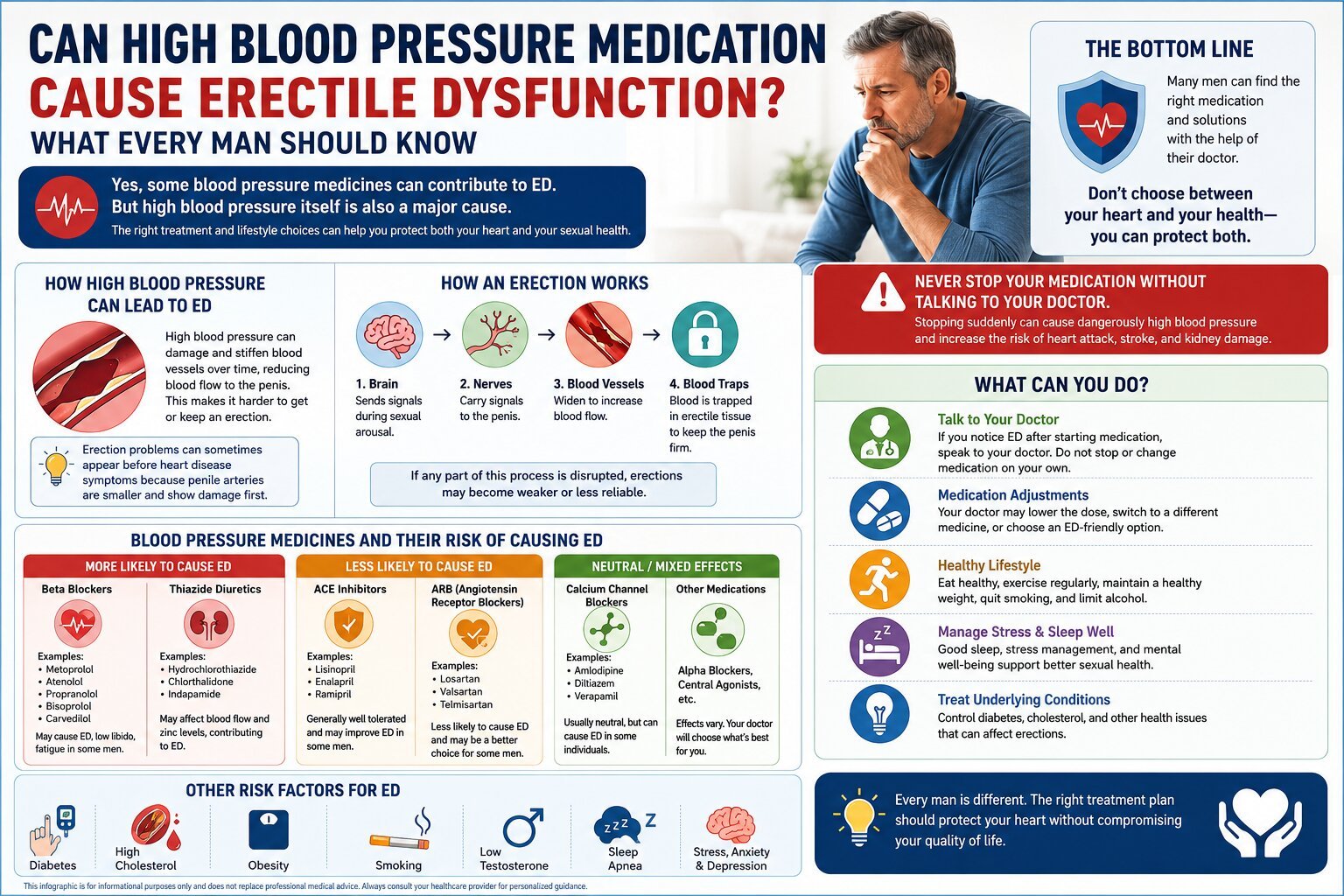
Healthy erections depend on great blood flow. If blood vessels become stiff or damaged because of high blood pressure, it becomes much harder for enough blood to reach the penis. Researchers have found that erection problems can sometimes appear before symptoms of heart disease because the arteries in the penis are much smaller than those supplying the heart. Damage often shows up there first.
Clinical Note
That doesn't mean every man with high blood pressure will develop ED, but the risk is definitely much higher compared with men whose blood pressure is healthy and controlled.
Which Blood Pressure Medicines Are More Likely to Cause ED?
This is one of the most common questions doctors hear from men who begin treatment for hypertension. The answer is yes—but it heavily depends on the medication. Some blood pressure medicines are more likely to affect erections than others.
Beta Blockers
Beta blockers (like Metoprolol, Atenolol, Propranolol, and Carvedilol) are commonly prescribed to slow the heart rate and reduce the heart's workload. Some men taking older beta blockers report more difficulty getting an erection, reduced interest in sex, and fatigue. If you notice changes after starting one, don't stop taking it yourself—discuss it with your doctor.
Diuretics (Water Pills)
Diuretics (like Hydrochlorothiazide, Furosemide, and Chlorthalidone) help lower blood pressure by removing extra salt and water from the body. These medicines are very effective, but some men experience erection problems due to reduced blood volume, changes in mineral balance, and fatigue from fluid loss.
Medicines That Have Less Effect on Sexual Health
The good news is that not all blood pressure medicines are strongly linked to ED. ACE Inhibitors (like Lisinopril, Enalapril) and ARBs (like Losartan, Valsartan) are generally not associated with erectile dysfunction. In fact, some studies suggest that ARBs may even have a favorable effect on sexual function for some men. Calcium Channel Blockers (like Amlodipine, Diltiazem) are also considered neutral when it comes to erections.
If ED develops while taking these "safer" medicines, your doctor will likely look for other causes, such as the effects of the high blood pressure itself, diabetes, high cholesterol, or low testosterone.
Is It the Medicine or High Blood Pressure Itself?
This is one of the hardest questions to answer because the two are so closely connected. Many men assume their medication caused their erection problems because the symptoms started right after beginning treatment. However, high blood pressure often damages blood vessels long before any symptoms appear.
Healthy erections require flexible, healthy arteries that can quickly deliver blood to the penis. High blood pressure slowly injures the inner lining of blood vessels, reducing their ability to expand properly. As this damage builds over time, erections become weaker.
In many cases, both factors are involved. High blood pressure has already reduced blood vessel function, and a particular medication may make symptoms more noticeable. This is why doctors look at your overall health before deciding what is most likely contributing to ED.
Other Causes of Erectile Dysfunction
Although blood pressure and blood pressure medicine are important, they are far from the only causes of ED. Several physical and emotional factors can affect erections, including:
- Diabetes: which can damage blood vessels and nerves.
- High cholesterol: which narrows arteries and reduces blood flow.
- Obesity: which increases the risk of hormone changes and poor circulation.
- Smoking: which damages blood vessels throughout the body.
- Low testosterone: which may reduce sex drive in some men. If this is suspected, testosterone replacement therapy can help.
- Sleep apnea: a condition that disrupts breathing during sleep and is linked with both high blood pressure and ED.
- Stress, anxiety, or depression: which can heavily interfere with sexual desire and performance.
Sometimes several of these factors occur together. A proper medical evaluation helps identify all the factors so they can actually be treated.
What You Can Do If You Notice ED After Starting Medicine
If you have noticed erection problems after beginning treatment, try not to panic. There are several practical steps you can take.
1. Don't Stop Your Medication
This is the most important step. Stopping blood pressure medicine without medical advice can increase your risk of a heart attack, stroke, heart failure, and dangerous increases in blood pressure. Always continue taking it until you've spoken with your healthcare provider.
2. Track Your Symptoms
Write down when the erection problems started, which medication you are taking, any recent dose changes, and other symptoms like fatigue or low sex drive. This information helps your doctor figure out if the medication is playing a role.
3. Ask About Other Options
Your doctor may decide to adjust your dose, switch you to a different blood pressure medicine, or recommend an ED treatment that is safe for you. If blood flow is the issue, regenerative therapies like the P-Shot or Shockwave Therapy may be excellent, drug-free options to repair blood vessels and improve erections.
4. Improve Your Lifestyle
The same habits that protect your heart also support healthy erections. Exercising regularly, eating a heart-healthy diet, maintaining a healthy weight, quitting smoking, and getting better sleep can all dramatically improve blood flow and your sexual health.
Conclusion
If you have been wondering, "Can high blood pressure medication cause erectile dysfunction?", the answer is that it can—but it's often only part of the picture. Some blood pressure medicines are more likely to affect erections than others, yet the underlying high blood pressure may already have been damaging your blood vessels long before treatment began.
The encouraging news is that you don't have to choose between protecting your heart and maintaining a healthy sex life. Many men find relief after working with their healthcare provider to review their medications, address other health conditions, and adopt heart-healthy lifestyle habits.
If you have noticed erectile dysfunction after starting blood pressure medication, don't ignore it—and don't stop taking your medicine on your own. Instead, have an open conversation with Dr. Nina Gupta. Together, you can identify the most likely cause, explore safe treatment options, and develop a plan that supports both your cardiovascular health and your overall well-being. Schedule a consultation today.
Key Takeaways
- Yes, some medications can contribute to ED, but not all blood pressure medicines have the same effect.
- Older beta blockers and some diuretics are more commonly linked to erection problems.
- ACE inhibitors, ARBs, and calcium channel blockers generally have less impact on sexual function.
- High blood pressure itself is a major cause of ED because it damages blood vessels and reduces blood flow.
- Never stop taking your prescribed blood pressure medication without talking to your healthcare provider.
- Persistent ED deserves a medical evaluation to identify the underlying cause and discuss appropriate treatments.