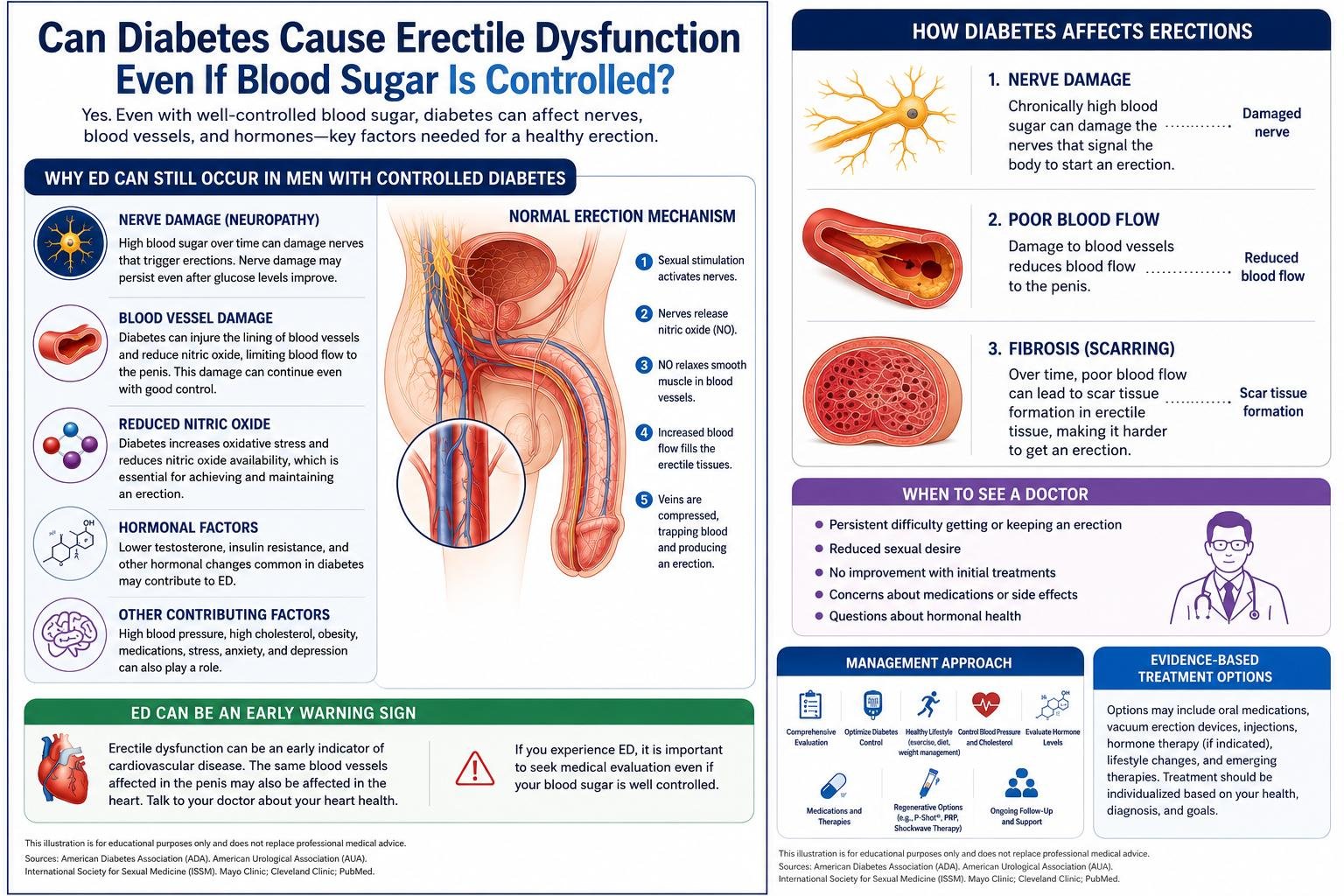
Diabetes and erectile dysfunction (ED) are closely linked. However, the connection is more complicated than you might think. A common myth is that once your blood sugar is under control, diabetes can no longer affect your sex life. While keeping a healthy A1C is great for your body, it doesn't always remove the risk of erectile dysfunction.
The reason is simple: diabetes affects more than just your blood sugar. Over time, it can damage blood vessels, nerves, and hormones. It can even affect your mental health. All of these are needed to get and keep an erection. Some of these changes happen slowly over years. They can still affect your erections even after your blood sugar improves.
The good news is that ED is highly treatable for men with diabetes. Knowing why it happens is the first step to finding the right treatment. At P-Shot Miami, Dr. Nina Gupta helps men with diabetes find treatments that go far beyond just managing blood sugar.
Why Do Men With Well-Controlled Diabetes Still Get ED?
Dr. Gupta often hears this question from men with diabetes: "My blood sugar is fine now. Why am I still having trouble getting or keeping an erection?" This is a very common concern.
You might be exercising, eating right, taking your medicine, and getting great test results. But even with these good habits, your erections may not be as firm or reliable as before.
The answer has to do with how diabetes affects the body over time. Controlling your blood sugar stops future damage. But it cannot always undo the damage that has already happened. Years of high blood sugar may have already harmed the delicate blood vessels and nerves needed for a healthy erection.
Think of diabetes like rust in a water pipe. Even if you clean the water, the rust doesn't just go away. In the same way, controlled blood sugar stops new damage but might not fix the old changes.
But you can still see improvement! Many men get great results from targeted treatments. These include the P-Shot, shockwave therapy, better lifestyle habits, and a full medical check-up.
How Does Diabetes Affect Erections?
A healthy erection needs several parts of your body to work together. If just one part isn't working right, ED can happen. Normal erections need:
- Healthy blood vessels to bring blood to the penis
- Veins that can trap blood to keep the erection firm
- Healthy nerves to connect the brain and the penis
- Balanced hormones, like testosterone
- A strong and healthy heart
- Good mental health and emotional well-being
When you get aroused, your brain sends signals through your nerves. These signals tell the blood vessels in your penis to relax and open up. Blood rushes in, and the veins close to trap the blood, making the penis firm. Diabetes can mess up almost every step of this process.
Because erections depend so much on good blood flow and healthy nerves, even a little bit of damage can cause problems. It can make erections weaker, take longer to happen, or become less reliable. This is why ED is often seen as an early warning sign for heart and blood vessel problems.
Clinical Note
The American Diabetes Association says men with diabetes are much more likely to get ED than men without diabetes. Symptoms also tend to show up 10 to 15 years earlier.
Blood Vessel Damage: The Most Common Cause of ED in Diabetes
Damage to blood vessels is the most common reason why diabetes causes ED. Your blood vessels are like a highway system for your blood. The blood vessels in the penis are very small—much smaller than the ones in your heart. Because they are so tiny, they often get damaged first.
Years of high blood sugar can hurt the inner lining of these vessels. This lining helps the blood vessels relax and widen when you get aroused. When it gets damaged, the vessels become stiff and can't open up fully. This means less blood reaches the penis, making erections weaker or harder to keep.
Even if your blood sugar gets better, this damage might remain. This is especially true if you have had diabetes for many years. Common signs of blood vessel damage include:
- Erections that aren't as firm as before
- Trouble keeping an erection during sex
- Taking longer to get an erection
- Fewer morning erections
- Feeling less confident in bed
These symptoms don't mean the damage is permanent. Many treatments can improve blood flow and give you better erections. These include PRP treatments, shockwave therapy, healthy lifestyle changes, and medication.
Key Takeaway
Controlling your diabetes protects your blood vessels from new damage. But it might not fix the damage that is already there. That's why seeing a doctor is so important if you still have ED.
Nerve Damage Can Affect Your Sex Life
Healthy nerves let your brain talk to your body. Without good nerve signals, your body won't know it's time for an erection. Over time, diabetes can damage these nerves. This condition is called diabetic neuropathy.
Unlike a sudden injury, nerve damage happens slowly over years. Many men don't notice it until it starts affecting their sex life. Men with nerve damage from diabetes may notice:
- Less feeling or sensitivity in the penis
- Erections happen less often
- Having a hard time getting turned on
- Erections that come and go randomly
- Wanting to have sex, but the body won't cooperate
Can nerve damage get better? It depends on how bad it is. Good blood sugar control, exercise, and a healthy heart can help stop it from getting worse. Some men notice slow improvements. Others may need treatments like the P-Shot to help restore their erections. Because nerve damage happens differently for everyone, it's best to get help early.
Nitric Oxide: A Tiny Molecule Needed for Strong Erections
One important piece of the puzzle is a tiny molecule called nitric oxide. When you get turned on, nitric oxide tells the muscles in your penis to relax. This lets the blood vessels open up quickly, filling the penis with blood and making it firm.
Diabetes can lower the amount of nitric oxide your body makes. Imagine trying to blow up a balloon while someone squeezes the opening. Air can get in, but it takes longer and the balloon never gets fully hard. The same thing happens in your penis when nitric oxide is low. Blood still flows, but not fast enough for a strong, lasting erection.
This is why many men with diabetes don't respond as well to normal ED pills. Keeping a healthy heart, exercising, eating well, and stopping smoking can help your body make more nitric oxide. Also, treatments like shockwave therapy are known to directly boost nitric oxide in the penis.
Inflammation: The Hidden Cause of ED
Diabetes isn't just about high blood sugar. There are other hidden problems that affect your sexual health. One of the biggest problems is long-term inflammation. This happens quietly inside your body, making it easy to miss until problems like ED appear.
Inflammation is how your body heals injuries. But with diabetes, the body stays slightly inflamed all the time, even when blood sugar is okay. This constant inflammation slowly damages your blood vessels and reduces nitric oxide. Since you need good blood flow for an erection, these small changes add up over time. They can lead to:
- Stiffer blood vessels that can't open wide
- Less nitric oxide in your body
- Changes in the tissues of the penis
- Slower healing and repair
- Erections slowly getting worse over time
The good news is that healthy habits can help lower inflammation. Regular exercise, eating well, staying at a healthy weight, and quitting smoking all make a huge difference. These healthy habits not only improve your erections but also protect your heart.
Hormone Changes Can Also Play a Role
Diabetes doesn't directly cause low testosterone, but the two often happen together. Studies show that men with type 2 diabetes are more likely to have low testosterone than men without diabetes.
Testosterone is the male sex hormone, but it does more than just control your sex drive. It affects your energy, muscles, mood, and overall health. While low testosterone won't stop erections on its own, it can lower your sex drive and make ED more noticeable. Our clinic offers testosterone replacement therapy in Miami to help men get their levels back to normal.
Common signs of low testosterone include:
- Less interest in sex
- Feeling tired all the time
- Losing muscle strength
- Mood swings or feeling grumpy
- Trouble getting or keeping erections
- Losing your drive and energy during the day
Many of these signs are similar to diabetes symptoms. This is why doctors check for more than just diabetes when looking at ED. A blood test can check your testosterone levels. If your hormones are unbalanced, fixing them can improve your sex drive, energy, and overall life.
ED is Usually Caused by More Than Just Diabetes
Diabetes is a big risk for ED, but it's rarely the only cause. Often, several health issues and habits work together to cause problems. Other common causes include:
- High blood pressure: Damages blood vessels and lowers blood flow to the penis.
- High cholesterol: Builds up in your vessels and makes them narrow.
- Being overweight: Often linked to inflammation and hormone problems.
- Sleep apnea: Lowers oxygen and reduces testosterone.
- Smoking: Hurts blood vessels and greatly increases ED risk.
- Medicines: Some blood pressure or depression pills can cause ED.
- Depression and anxiety: Mental health has a huge impact on sex.
- Not exercising: Exercise keeps your blood flowing and hormones balanced.
Many men have a few of these issues along with diabetes. That's why just focusing on blood sugar may not solve the problem. Treating the whole body—heart health, weight, stress, sleep, and medicine—is the best way to get ED treatment that works.
The Mental Side of ED
ED isn't just a physical problem—it can take a big emotional toll, too. Many men feel embarrassed, frustrated, or doubt themselves when erections aren't reliable. Sadly, these feelings can make ED even worse.
For example, if you struggle to keep an erection, you might worry about it happening again. This worry creates "performance anxiety." Your body reacts to this stress by releasing hormones that make it even harder to get an erection. Over time, fear of failure can destroy your confidence in bed.
Diabetes can also increase your chances of feeling anxious or depressed, which are both linked to ED. It's important to remember the mental side of things, because just fixing the physical symptoms might not be enough. Talking openly with your partner and doctor is very important. ED is a medical issue, not a personal failure. Talking about it helps you find the right treatment sooner.
Habits That Can Improve Your Erections
While some damage from diabetes can't be fully undone, healthy habits can greatly improve your erections and overall health. These habits work by boosting blood flow, lowering inflammation, and protecting your heart.
| Healthy Habit | How It Helps Your Erections |
|---|---|
| Cardio exercise (like walking or jogging) | Improves blood flow, heart health, and nitric oxide |
| Lifting weights | Helps keep testosterone levels healthy |
| Losing weight | Lowers inflammation in the body |
| Eating a healthy diet | Keeps blood vessels healthy and controls cholesterol |
| Quitting smoking | Heals blood vessels and improves circulation |
| Drinking less alcohol | Protects nerves and keeps hormones balanced |
| Getting good sleep | Helps your body make testosterone and recover |
| Managing stress | Lowers anxiety and boosts your confidence in bed |
Even small improvements in your daily habits can help your erections over time. While healthy habits might not fix everything on their own, they make treatments like the P-Shot work much better.
A Full Medical Check-Up is the First Step to Better Erections
If you have diabetes and struggle with ED, seeing a doctor is the most important step you can take. Because ED usually has more than one cause, finding out exactly what's wrong is key to picking the right treatment.
A good doctor will look at more than just your blood sugar. They will check to see if blood vessel damage, nerve issues, hormone levels, medicines, or heart health are causing the problem. During your visit, the doctor may ask about:
- How long you've had diabetes
- Your recent blood sugar levels
- The medicines you take and any side effects
- Your blood pressure and cholesterol
- Your testosterone levels (using a blood test)
- Your daily habits like diet, exercise, smoking, and drinking
- How well you sleep
- Any stress, anxiety, or depression you might feel
- Your overall heart health
Important
Because the blood vessels in the penis are small, ED can sometimes be an early warning sign of heart disease. This can happen years before you ever feel chest pain. Doctors often suggest checking your heart health along with your sexual health.
ED Treatments for Men With Diabetes
The great news is that ED is treatable for men with diabetes, even if you've had the problem for a long time. The best treatment depends on the cause of your ED, your overall health, and what works best for you.
1. ED Pills (PDE5 Inhibitors)
Pills like Viagra® and Cialis® help your blood vessels relax so more blood can flow into the penis. These pills work for many men with diabetes. However, they might not work as well if you already have nerve or blood vessel damage.
2. The P-Shot — Natural Healing Therapy
The P-Shot is a natural treatment that uses healing cells from your own blood. These cells are injected into the penis to repair damage, heal blood vessels, and improve your erections naturally. Because it actually repairs damage instead of just hiding the problem, the P-Shot is a great choice for men with diabetes. Many men see firmer erections and better feeling within a few weeks, and results can last 12 to 18 months.
3. Shockwave Therapy for ED
Shockwave therapy uses gentle sound waves to grow new blood vessels in the penis and boost nitric oxide. It does not use drugs or needles, and it works very well for men with blood flow issues. This makes it a top choice for men with diabetes.
4. Testosterone Therapy
If a blood test shows your testosterone is low, hormone therapy can help. A doctor will safely manage your treatment to bring your hormones back to a healthy level.
5. Vacuum Pumps
These are simple devices that pull blood into the penis using a vacuum. You then use a soft ring at the base of the penis to keep the blood trapped during sex.
6. Injections
If pills don't work, there are medicines you can inject directly into the penis to create an erection.
7. Penile Implants
If nothing else works, surgery for a penile implant offers a permanent solution. These implants let men have an erection whenever they want and have a very high success rate.
Can You Prevent ED if You Have Diabetes?
While you can't always stop ED completely, there are simple steps you can take to lower your risk or delay it. These steps include:
- Keeping your blood sugar in a healthy range
- Checking your blood pressure and cholesterol often
- Exercising regularly
- Staying at a healthy weight
- Eating a healthy diet
- Not smoking
- Drinking less alcohol
- Managing stress
- Getting enough sleep
- Seeing a doctor regularly at a men's health clinic
Taking action early is the secret. The faster you manage your diabetes and heart health, the better chance you have of keeping your blood vessels and nerves healthy. Even if you already have ED, these healthy habits will make your treatments work better.
Final Thoughts
Can diabetes cause ED even if your blood sugar is controlled? Yes. Keeping your blood sugar normal is the best way to protect your body, but it doesn't always undo the damage from the past.
Diabetes can affect the blood vessels, nerves, and hormones needed for an erection. Often, ED happens because of a mix of diabetes and other issues like high blood pressure, weight gain, smoking, or stress.
The good news is that you don't just have to live with ED. A full check-up at our Miami men's health clinic can find the root cause and help build a plan just for you. From healthy habits and pills to advanced treatments like the P-Shot and shockwave therapy, there are many great options.
If you're struggling with ED, don't ignore it. It isn't just a normal part of getting older or having diabetes. Talking with Dr. Nina Gupta can improve your sex life, protect your heart, and boost your confidence. Schedule a consultation today.
What We See in Our Practice
At P-Shot Miami, Dr. Nina Gupta works with many men who have diabetes. Often, they are frustrated because their blood sugar is perfect but they still have ED. By doing a full check-up and creating a custom treatment plan—using the P-Shot, shockwave therapy, and hormone balancing—many of our patients see real improvements in their erections and confidence. Results depend on your health, lifestyle, and how much nerve or vessel damage there is. Our goal is always to treat the whole person, not just the symptom.
Medical References
- American Diabetes Association (ADA). Standards of Medical Care in Diabetes — Sexual Dysfunction and Erectile Health.
- National Institutes of Health (NIH) — National Institute of Diabetes and Digestive and Kidney Diseases. Sexual and Urologic Problems of Diabetes.
- International Society for Sexual Medicine (ISSM). Patient Guidelines on Erectile Dysfunction and Vascular Health.
- American Urological Association (AUA). Diagnosis and Treatment Guideline for Erectile Dysfunction.
- Mayo Clinic. Erectile Dysfunction — Causes, Risk Factors, and Treatment Options.