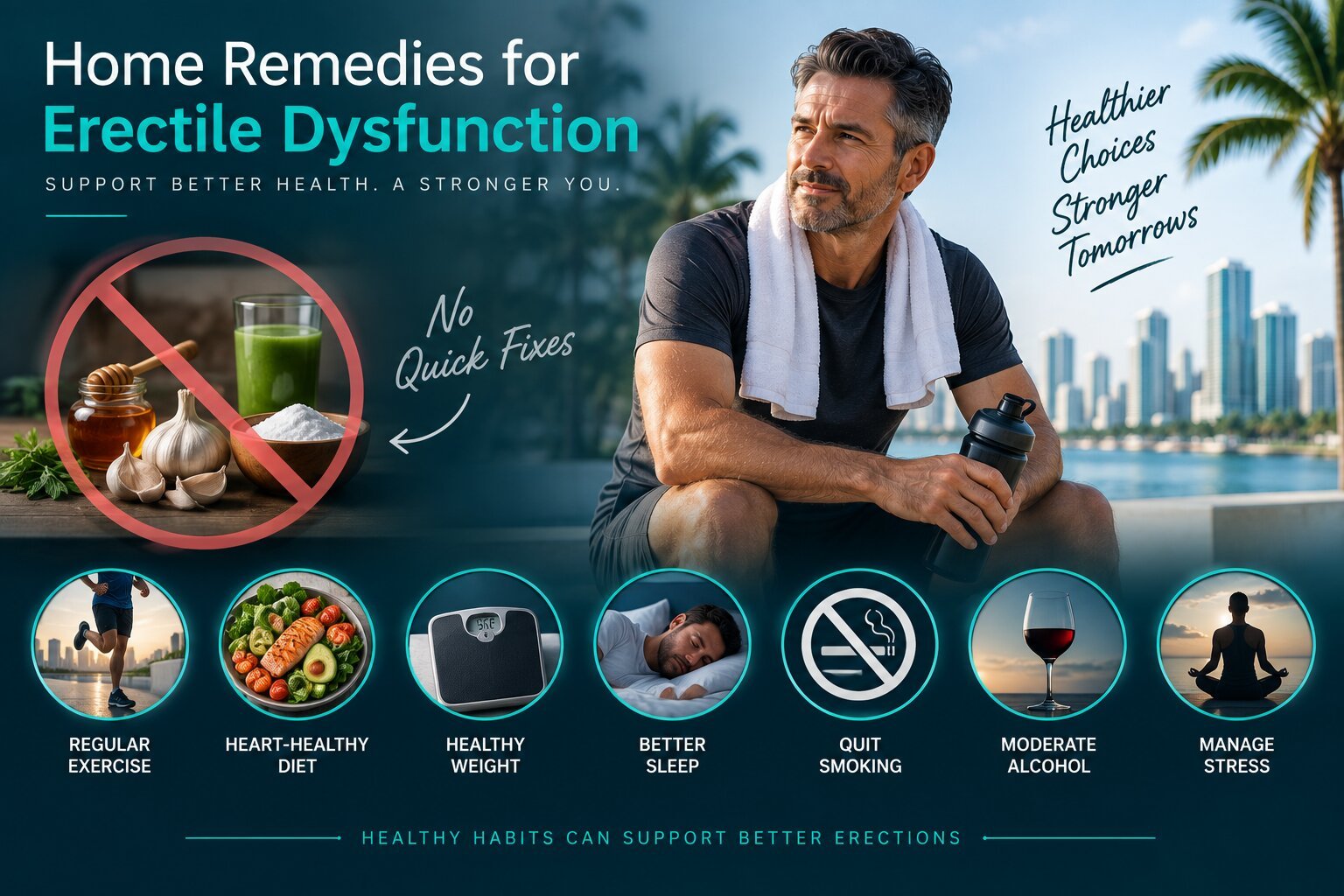
Key Takeaways: Home Remedies for ED
- Evidence-Based Fundamentals: Regular exercise (150 mins/week), a Mediterranean diet, healthy weight, restorative sleep, smoking cessation, and stress management are the most proven natural strategies for erectile health.
- No Instant Miracle Food: Kitchen experiments (garlic, baking soda, viral teas) do not cure organic ED; erections rely on a coordinated cardiovascular, nervous, and endocrine system.
- Vascular Early Warning: Persistent erectile dysfunction can be an early indicator of cardiovascular disease, diabetes, or hypertension.
- Investigational vs. Established: Clinical guidelines (EAU/AUA) support lifestyle modifications and PDE5 medications as first-line, while shockwave therapy offers modest benefit in selected vasculogenic cases, and PRP remains investigational.
If you’re searching for home remedies for erectile dysfunction, you’ll quickly discover that the internet is packed with advice. One page recommends a particular juice. Another promises that honey, garlic, baking soda, or an herbal supplement can restore erections almost instantly. The problem is that sexual health deserves more than marketing claims and kitchen experiments. Erectile dysfunction, commonly called ED, can have several different causes, and the most useful approach is to understand what may be affecting your erections in the first place.
The good news is that some lifestyle changes really can support better erectile function. Regular exercise, a heart-healthy diet, healthy weight management, adequate sleep, smoking cessation, moderation with alcohol, and stress reduction all make sense because erections depend on much more than sexual stimulation. Your blood vessels, nerves, hormones, cardiovascular system, brain, and psychological well-being all participate in the process. Improving those systems can therefore improve the conditions your body needs for a healthy erection.
That doesn’t mean a lifestyle change is an overnight cure. If ED is caused by diabetes, vascular disease, medication side effects, nerve problems, hormonal deficiency, Peyronie’s disease, or another medical condition, home strategies may not be enough on their own. Think of lifestyle changes as maintaining the engine rather than expecting one ingredient to rebuild a damaged part.
So, instead of asking, “What can I take at home for ED?”, a better question is: “Why have my erections changed?” That shift in perspective can help you avoid questionable supplements while potentially identifying a health issue that deserves medical attention.
What Is Erectile Dysfunction?
Erectile dysfunction is persistent difficulty getting or maintaining an erection that is firm enough for satisfactory sexual activity. It does not necessarily mean that erections have disappeared completely. Some men can get an erection but lose it during sex, while others notice that erections are less firm, take longer to develop, or occur less consistently than they did previously. A man might also notice fewer spontaneous or morning erections, although changes in morning erections alone cannot diagnose ED.
An occasional erection problem is not unusual. Stress, fatigue, alcohol, relationship tension, illness, or simply having an off day can temporarily affect sexual performance. The concern is when the problem becomes persistent, happens repeatedly, or represents a noticeable change from your usual sexual function.
Physical & Vascular Factors
Associated with high blood pressure, diabetes, cardiovascular disease, high cholesterol, smoking, pelvic injuries, and prescription medications.
Psychological & Lifestyle Factors
Associated with chronic stress, performance anxiety, relationship conflict, sleep deprivation, alcohol excess, and depressive mood states.
This is why treating ED is not simply about finding something that makes the penis respond temporarily. The goal is to understand the underlying factors and address them appropriately. For some men, that may involve lifestyle changes. For others, it may involve medication, laboratory testing, counseling, treatment of an underlying condition, or a comprehensive evaluation for erectile dysfunction treatment in Miami.
Can Lifestyle Changes Really Improve Erectile Dysfunction?
Yes—for some men.
Erectile dysfunction frequently shares risk factors with cardiovascular and metabolic conditions, including obesity, physical inactivity, diabetes, high blood pressure and abnormal cholesterol.
Regular physical activity, weight management and treatment of cardiovascular risk factors may improve erectile function, particularly when ED has a vascular or metabolic component.
Lifestyle changes may also improve overall cardiovascular health, but they do not eliminate the need for medical evaluation when erectile dysfunction is persistent, worsening or occurs suddenly.
7 Things You Can Do at Home to Improve Erectile Function
1. Exercise Regularly
If you want one lifestyle habit near the top of your list, make it regular physical activity. Erections are closely connected to vascular function. When you become sexually aroused, blood vessels supplying the penis need to relax and allow increased blood flow into erectile tissue. Anything that supports cardiovascular health can therefore be relevant to erectile health.
Exercise helps with several factors associated with ED, including cardiovascular fitness, blood pressure, body composition, insulin sensitivity, and overall metabolic health. It can also improve energy and mood, which may indirectly benefit sexual function.
Actionable Goal: Aim for approximately 150 minutes of moderate-intensity activity per week (such as brisk walking, cycling, or swimming) combined with 2 days of strength training.
Does Walking Help Erectile Dysfunction?
Regular walking may help erectile function, particularly when it contributes to improved cardiovascular fitness and overall vascular health. It is not an instant ED treatment, but it is accessible, inexpensive, and easy to incorporate into daily life. A brisk 30-minute walk on most days is a practical starting point.
2. Eat for Better Blood Flow
There is no single food that reliably cures erectile dysfunction. Watermelon, garlic, pomegranate, dark chocolate, beets, and other foods sometimes receive attention for their potential cardiovascular benefits, but eating one particular food will not correct every possible cause of ED.
A better strategy is to focus on an overall heart-healthy eating pattern. A Mediterranean-style diet is one proven model: emphasize vegetables, fruits, legumes, whole grains, nuts, seeds, wild fish, and extra virgin olive oil while minimizing ultra-processed foods, refined sugars, and inflammatory trans fats. Healthy arteries deliver blood efficiently to erectile tissues.
3. Lose Excess Weight If Needed
Being overweight does not automatically mean you will develop erectile dysfunction, and you do not need to have a particular body shape to have healthy sexual function. However, excess body fat often occurs alongside insulin resistance, type 2 diabetes, chronic hypertension, abnormal lipid panels, and hormonal changes.
Avoid crash dieting. Sustainable nutrition and exercise that improve waist circumference, blood pressure, and fasting blood glucose produce lasting improvements in systemic vascular responsiveness.
4. Stop Smoking
If you smoke, quitting is one of the most meaningful lifestyle changes you can make for vascular health. Smoking damages blood vessels, and healthy blood vessels are essential for normal erections. The arteries supplying erectile tissue need to respond appropriately during sexual stimulation.
While quitting smoking cannot guarantee that ED will disappear if vascular damage has already occurred, continuing to smoke adds a major ongoing risk factor to the equation.
5. Cut Back on Excessive Alcohol
Alcohol acts as a central nervous system depressant. Heavy alcohol consumption can interfere with sexual response, judgment, coordination, and the physiological processes involved in maintaining an erection.
If you consistently notice weaker erections after drinking, consider that pattern useful information. Moderating alcohol intake can benefit sexual function, sleep, mood, blood pressure, and metabolic health.
6. Improve Your Sleep
Sleep is often overlooked when men discuss erectile dysfunction, yet it influences energy, mood, stress, metabolic health, and hormonal function. Chronic sleep deprivation leaves you exhausted and less interested in sex.
Pay attention to signs of obstructive sleep apnea (OSA). Loud snoring, waking up gasping, morning headaches, and persistent daytime fatigue warrant clinical sleep evaluation, as addressing sleep apnea often supports broader health and erectile recovery.
7. Reduce Stress and Performance Anxiety
The brain is deeply involved in sexual arousal. When you feel anxious or stressed, your sympathetic nervous system triggers the "fight-or-flight" response, releasing hormones that constrict blood vessels—the exact opposite of what is needed for an erection.
If losing an erection once leads to hyper-vigilance during intimacy, performance anxiety is fueling the cycle. Stress management, individual counseling, or couples therapy can help break this frustrating feedback loop.
What Is the Fastest Way to Improve ED Naturally?
Medical Reality: There is no proven natural home remedy that reliably produces a strong erection overnight. Reversible lifestyle triggers (like drinking less alcohol, getting a full night's rest, or relieving acute situational anxiety) may produce quick improvements. However, biological vascular and metabolic health requires sustained consistency over weeks and months.
Can Pelvic Floor Exercises Help ED?
Pelvic floor exercises may help selected men with erectile or sexual-function concerns. The pelvic floor muscles contribute to urinary control and sexual function, so strengthening and coordinating them may have a role in some treatment plans.
However, proper technique is essential. The goal is not to repeatedly interrupt your urine stream. If you are unsure how to identify or exercise the appropriate muscles, a healthcare professional or pelvic-floor physical therapist can provide tailored guidance.
Diabetes, Blood Pressure, and Erectile Dysfunction
If you have diabetes, prediabetes, or chronic hypertension, erectile health requires targeted medical care:
- Diabetic Vascular Changes: Over time, elevated blood sugar can affect blood vessels and nerves involved in normal erections. Explore our clinical guide on diabetes and erectile dysfunction.
- Hypertension & Antihypertensive Drugs: Chronic high blood pressure damages arterial elasticity. Certain medications may also contribute to sexual side effects. Learn more about blood pressure medications and ED.
What About Low Testosterone and Supplements?
Low testosterone can contribute to sexual symptoms, but ED does not automatically mean testosterone is low. Testosterone is particularly relevant to libido, energy, and overall sexual drive, while erections themselves depend heavily on blood flow, nerve function, medications, and psychological factors.
As detailed in our medical review on low testosterone and erectile dysfunction, advertisements claiming "testosterone boosters" cure ED can be misleading. Appropriate diagnostic testing should always precede hormone therapy. When deficiency is confirmed, physician-supervised Testosterone Replacement Therapy (TRT) may be discussed.
Can Supplements Help Erectile Dysfunction?
Certain supplements—including L-arginine, L-citrulline and ginseng—have been studied for erectile function, but the evidence is considerably weaker than it is for established medical treatments.
Some studies suggest small improvements in men with mild ED, but supplements should not be expected to reliably reverse moderate or severe erectile dysfunction.
Supplements can also interact with medications or be inappropriate for certain medical conditions. Men taking blood-pressure medications, nitrates, anticoagulants or other prescription drugs should discuss supplements with their healthcare professional before using them for ED.
Caution Regarding "Herbal Viagra" and Kitchen Remedies
Be cautious with products marketed as "Herbal Viagra," "natural Cialis," or "instant erection pills." The word "natural" is not a guarantee of safety; several over-the-counter products have been found to contain undeclared synthetic compounds. Likewise, viral kitchen remedies like baking soda or honey mixtures have no scientific basis as ED cures.
Can You Increase Nitric Oxide Naturally?
Nitric oxide plays an important role in normal erectile physiology because it helps blood vessels relax. Rather than chasing unproven supplements, focus on habits that support long-term vascular health:
- Dietary Nitrates: Consuming leafy greens (spinach, arugula, kale), beets, and pomegranate.
- Regular Aerobic Exercise: Stimulates endothelial nitric oxide synthase (eNOS) production.
- Vascular Risk Management: Controlling blood pressure, managing blood sugar, and quitting smoking.
Morning Erections and Cardiovascular Health
Morning erections offer useful information about erectile function, although they are not a diagnostic test by themselves. Discover more in our article on morning erections and erectile health.
Because penile arteries measure only 1 to 2 mm in diameter, vascular damage frequently appears as erectile dysfunction before symptoms develop in larger coronary arteries. Learn how to evaluate ED and cardiovascular disease with your physician.
When Home Remedies Aren’t Enough: Clinical Options
Lifestyle changes should form the foundation of health, but when organic vascular, hormonal, or tissue factors are present, medical therapies may be evaluated:
Low-Intensity Shockwave Therapy
Low-intensity shockwave therapy has been studied primarily in men with vasculogenic erectile dysfunction, where impaired penile blood flow contributes to difficulty achieving or maintaining an erection.
Research suggests that some appropriately selected men may experience a modest improvement in erectile function following treatment. Results vary, however, and shockwave therapy should not be described as removing arterial plaque or permanently curing erectile dysfunction.
A medical evaluation can help determine whether vascular factors are contributing to ED and whether shockwave therapy for erectile dysfunction may be an appropriate option.
PRP and the P-Shot
Platelet-rich plasma (PRP) uses a concentrated portion of a patient’s own blood containing platelets and growth factors. PRP injections have been studied as a potential treatment for erectile dysfunction, particularly vasculogenic ED.
Some clinical studies have reported improvements in erectile-function scores, but results have not been consistent, and larger high-quality trials are still needed. PRP should therefore be considered an investigational approach for erectile dysfunction rather than an established or guaranteed treatment.
At P-Shot Miami, patients are evaluated individually to determine whether P-Shot treatment in Miami or another treatment approach may be appropriate.
Evidence-Based Treatment & Lifestyle Comparison
| Approach | Evidence Level | Best Suited For |
|---|---|---|
| Exercise & weight management | Good evidence | Men with cardiovascular/metabolic risk factors |
| Mediterranean-style diet | Supportive evidence | Overall vascular and metabolic health |
| Better sleep | Supportive | Men with poor sleep or sleep disorders |
| Smoking cessation | Strong health rationale | Smokers with erectile concerns |
| Pelvic-floor exercises | May help some men | Selected cases under physical guidance |
| L-arginine / Ginseng | Limited; benefits may be mild | Some men with mild ED |
| PDE5 medications (e.g. Sildenafil/Tadalafil) | Strong evidence | Many men with ED (first-line therapy) |
| Low-intensity shockwave | Modest benefit in selected patients | Primarily vasculogenic ED |
| PRP / P-Shot | Investigational | Evidence still developing in clinical trials |
A Simple 30-Day Plan for Better Erectile Health
- Week 1: Move & Hydrate: Begin 30 minutes of daily brisk walking and replace sugary beverages with water and green tea.
- Week 2: Mediterranean Nutrition: Introduce leafy greens, berries, nuts, olive oil, and fish into your weekly meals.
- Week 3: Sleep & Stress Reset: Enforce a strict 7–8 hour sleep schedule; avoid smartphone screens 1 hour before bedtime.
- Week 4: Track Trends & Evaluate: Observe changes in firmness, morning erections, and energy. If difficulties persist, schedule an in-depth medical evaluation.
When Should You See an ED Doctor in Miami?
Consider an evaluation when erectile difficulties continue for several weeks or months, become progressively worse, occur most of the time, or represent a significant change from your previous sexual function.
At our practice, Dr. Nina Gupta, MD provides an evidence-based clinical evaluation considering your cardiovascular risk factors, metabolic health, medications, lifestyle habits, and hormonal parameters to determine whether lifestyle modifications, established ED treatments, or specialized clinical therapies are most appropriate.
Frequently Asked Questions About Natural ED Remedies
Conclusion: Focus on the Cause, Not a Miracle Cure
If you're searching for home remedies for erectile dysfunction, resist the temptation to look for one ingredient that promises an instant solution. Start with the fundamentals: move regularly, eat for cardiovascular health, maintain a healthy weight, stop smoking, limit excessive alcohol, prioritize sleep, and manage stress.
Under the experienced medical guidance of Dr. Nina Gupta, MD, men throughout Miami, Aventura, and South Florida receive personalized, comprehensive care addressing both lifestyle factors and root medical causes.