Sexual health can be a difficult subject to discuss, even when a concern has started affecting your confidence, relationships, or everyday quality of life. Changes in erection quality, sensitivity, sexual performance, or desire may leave you searching for answers and wondering whether a treatment such as the P-Shot could help.
If you have been researching a P-Shot consultation in Miami, you have probably encountered plenty of promises about improved performance and regenerative medicine. What you need, however, is more than an attractive list of potential benefits. You need a clear understanding of the procedure, an honest discussion about the available evidence, and a medical evaluation that considers your individual health.
The P-Shot, commonly known as the Priapus Shot, uses platelet-rich plasma (PRP) prepared from a patient's own blood and injected into targeted areas of penile tissue. It is promoted as an option for certain sexual-health concerns, particularly erectile dysfunction, but the evidence remains limited, and it should not be presented as a guaranteed solution.
That is precisely why the consultation matters. Before considering an injection, you should understand what may be contributing to your symptoms, whether established treatments are appropriate, and what is currently known about penile PRP. At P-Shot Miami, Dr. Nina Gupta's consultation process is intended to review your medical history, discuss your goals, consider potential contributing conditions, and determine whether further evaluation or treatment may be appropriate.
A responsible P-Shot consultation is a diagnostic medical assessment, not a sales pitch. Its purpose is to uncover the underlying causes of erectile difficulty—such as vascular disease, metabolic issues, hormonal shifts, or medication side effects—and determine whether regenerative therapy, established medical care, or lifestyle modification is the safest and most effective path forward.
Understanding the P-Shot and Its Purpose
What Is the Priapus Shot?
The Priapus Shot, often shortened to P-Shot, is a medical procedure that uses platelet-rich plasma derived from a patient's own blood. Platelets contain concentrated biological signaling substances and growth factors (including VEGF, PDGF, and FGF) involved in the body's natural tissue repair processes.
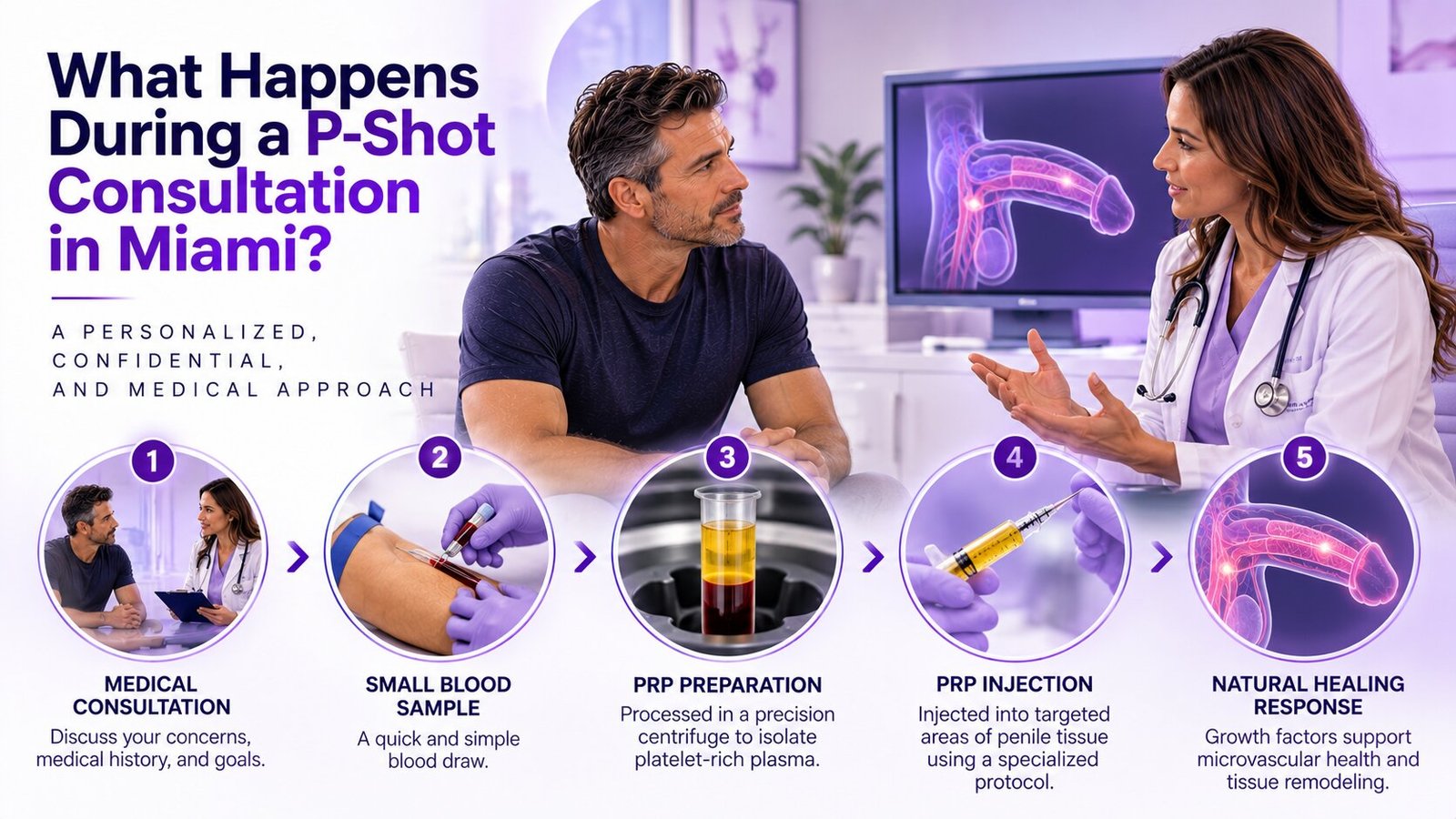
To prepare PRP, a clinician draws a small blood sample and processes it using a precision centrifuge system to separate the concentrated platelet-rich plasma from red blood cells and platelet-poor plasma. The resulting autologous material is then injected into selected areas of penile tissue (the corpus cavernosum and glans) according to a specialized protocol.
PRP has attracted interest across several fields of medicine, including orthopedics, wound healing, and aesthetics, because researchers are investigating whether concentrated platelets can support microvascular responses and tissue remodeling. However, a biological rationale does not automatically establish that a treatment produces guaranteed clinical outcomes. The effectiveness of PRP depends on the condition being treated, preparation techniques, baseline vascular health, and protocol consistency.
For men considering PRP for erectile dysfunction, this distinction is particularly important. A P-Shot should be understood as an emerging, investigational approach for erectile dysfunction rather than a proven cure. It should never be promoted as a guaranteed method of permanent enlargement, total sensation restoration, or an instant fix for complex erectile difficulties.
Why a Medical Consultation Matters
You might wonder why an in-depth medical consultation is necessary before a procedure that uses your own blood. Because PRP is autologous, the risk of allergic reaction or foreign-body rejection is minimal. However, using your own blood does not eliminate all procedural considerations, establish clinical effectiveness, or guarantee that an injection is appropriate for your specific condition.
Erectile dysfunction (ED) is rarely a standalone problem. It is a multi-system symptom that can stem from:
- Vascular insufficiency: Reduced arterial inflow or venous leak affecting blood retention.
- Metabolic disorders: Insulin resistance, diabetes, elevated lipid levels, and obesity.
- Cardiovascular disease: Atherosclerosis and hypertension.
- Endocrine imbalances: Low testosterone, elevated prolactin, or thyroid dysfunction.
- Neurological factors: Pelvic nerve compression, spinal issues, or post-surgical changes.
- Psychological contributors: Performance anxiety, stress, depression, or relationship conflicts.
Two men presenting with identical erection difficulties may have entirely different physiological causes. An injection that is being studied for mild vasculogenic ED may be completely ineffective for erectile loss caused by untreated diabetes, severe nerve injury, or high blood pressure medication.
During a P-Shot consultation in Miami, Dr. Nina Gupta examines these underlying factors rather than treating the symptom in isolation. The most valuable outcome of a consultation is not necessarily scheduling an injection—it may be uncovering an unrecognized cardiovascular issue, adjusting an interfering medication, or recommending an established primary treatment.
What to Expect During Your P-Shot Consultation
Discussing Your Symptoms and Personal Goals
Your consultation begins with a private, confidential discussion in a comfortable clinical setting. You do not need to prepare complex medical terminology. Simply explaining what you have experienced, how long it has been happening, and how it impacts your quality of life provides a clear starting point.
Dr. Gupta will guide the conversation with specific clinical questions:
- Is the primary difficulty achieving an initial erection, or maintaining firmness throughout intercourse?
- Do you experience nocturnal or morning erections?
- Does the issue occur consistently, or does it vary depending on stress, fatigue, or partner dynamics?
- Have you noticed changes in penile sensation, orgasmic intensity, or ejaculation volume?
- Is there any penile discomfort, narrowing, or curvature (which could indicate Peyronie's disease)?
Your personal goals are equally important. Some men are looking to reduce their reliance on oral ED pills; others want to address mild age-related decline or explore nonsurgical therapies before considering invasive options. Understanding your priorities allows Dr. Gupta to offer advice tailored directly to you.
Reviewing Your Medical History and Medications
A thorough health review is critical because erectile tissue is exquisitely sensitive to systemic health changes. Dr. Gupta reviews conditions including diabetes, hypertension, dyslipidemia, sleep apnea, cardiovascular history, and previous pelvic or prostate surgeries.
A comprehensive medication review is performed during every consultation:
Beta-blockers, thiazide diuretics, SSRI antidepressants, 5-alpha reductase inhibitors, and prostate medications can directly affect erectile firmness and libido.
Blood thinners (warfarin, apixaban, clopidogrel, daily aspirin) influence procedural bruising risk and require coordinated medical review.
Never stop prescribed cardiovascular medications, aspirin, or anticoagulants on your own to prepare for an elective procedure. Any adjustments must be coordinated safely with your prescribing physician.
Cardiovascular Health and Erectile Dysfunction
An erection is primarily a hydraulic vascular event. Penile arteries are significantly smaller in diameter (1–2 mm) than coronary arteries (3–4 mm) or carotid arteries. Consequently, endothelial dysfunction and microvascular constriction often manifest in penile circulation years before causing noticeable cardiovascular symptoms.
In urology and cardiology, erectile dysfunction is frequently recognized as an early warning sign for systemic vascular health. During your consultation, Dr. Gupta assesses cardiovascular risk factors, resting blood pressure, and activity tolerance. If symptoms suggest underlying cardiovascular disease, a referral to your primary care physician or a cardiologist will be recommended before performing an elective regenerative procedure.
Physical Examination and Diagnostic Testing
A focused physical examination may be performed to assess genital anatomy, skin integrity, testicular health, and vascular reflexes. If a patient reports pain with erection or noticeable bending, Dr. Gupta will evaluate for palpable plaques characteristic of Peyronie's disease.
Targeted laboratory testing may be recommended if metabolic or hormonal contributors are suspected:
Is the P-Shot Right for You?
Potential Candidates and Important Considerations
There is no universal checklist that guarantees a response to penile PRP. Candidacy depends on your specific symptoms, vascular baseline, medical history, and realistic understanding of clinical research:
- Good Potential Candidates: Men with mild-to-moderate vasculogenic ED, men looking to enhance tissue responsiveness alongside low-intensity shockwave therapy, men seeking nonsurgical options, and individuals with realistic expectations.
- Complex or Unlikely Candidates: Men with severe anatomical damage, complete nerve transection post-radical prostatectomy, unmanaged diabetes, or severe end-stage arterial disease.
When Treatment May Need to Be Delayed
Your safety is the absolute priority. An elective P-Shot procedure may need to be postponed if any of the following are present:
- Active systemic infection or localized skin lesions in the genital area.
- Severe, unmanaged medical conditions (e.g., uncontrolled hypertension or severe hyperglycemia).
- Severe platelet dysfunction, hematologic malignancies, or active anticoagulant therapy requiring clearance.
- Uninvestigated penile pain, unexplained structural changes, or acute cardiovascular symptoms.
Understanding the Evidence Behind Penile PRP
One of the most important components of an honest consultation is discussing what peer-reviewed research shows regarding PRP for erectile dysfunction.
Early clinical studies and pilot trials have reported improvements in International Index of Erectile Function (IIEF-5) scores among select participant cohorts. However, the wider medical community emphasizes that the current body of literature has recognized limitations:
- Study Heterogeneity: Clinical trials vary widely in centrifuge systems, platelet concentrations, injection protocols, and follow-up durations.
- Sample Sizes: Many published studies involve relatively small sample sizes, highlighting the need for larger, double-blind randomized controlled trials.
- Duration of Effect: Research is ongoing to establish exactly how long tissue responses persist and whether booster treatments are needed over time.
It is also vital to understand the difference between FDA clearance and FDA approval. Centrifuge systems used to process autologous blood are cleared by the FDA for medical PRP preparation; however, the P-Shot procedure itself is considered an elective, investigational application for erectile dysfunction.
Alternative Treatments for Erectile Dysfunction
The P-Shot is one modality within a comprehensive spectrum of sexual wellness therapies. During your consultation, Dr. Gupta will explain all established alternatives so you can make an informed comparison:
| Treatment Option | Primary Mechanism & Role | Key Clinical Considerations |
|---|---|---|
| Lifestyle & Metabolic Optimization | Cardiovascular exercise, Mediterranean nutrition, weight management, sleep hygiene, and smoking cessation. | Essential foundation for all vascular health; may take time to produce measurable changes. |
| Oral PDE5 Inhibitors (Sildenafil, Tadalafil) | Inhibits PDE5 enzyme to enhance nitric oxide signaling and smooth muscle relaxation during stimulation. | Well-established first-line medical therapy; contraindicated with nitrate medications. |
| Low-Intensity Shockwave Therapy (LI-ESWT) | Delivers acoustic acoustic waves to stimulate microvascular neovascularization and blood flow. | Non-invasive regenerative modality; often paired with PRP for synergistic microvascular support. |
| Vacuum Erection Devices (VED) | External mechanical vacuum creates negative pressure to draw arterial blood into corpora cavernosa. | Nonsurgical, drug-free; requires correct placement and technique. |
| Intracavernosal Injections (Trimix / Bimix) | Direct vasodilators (alprostadil, papaverine, phentolamine) injected prior to intercourse. | Highly effective for severe ED; requires injection training and monitoring for priapism. |
| Testosterone Replacement Therapy (TRT) | Restores physiological serum testosterone in men with confirmed hypogonadism. | Improves libido, energy, and mood; indicated only when clinical deficiency is confirmed by lab testing. |
| Penile PRP (Priapus Shot) | Autologous growth factors injected into erectile tissue to support biological repair processes. | Investigational regenerative therapy; autologous and non-surgical, but results vary individually. |
| Penile Prosthesis / Implants | Surgically implanted inflatable cylinders providing mechanical rigidity on demand. | Definitive surgical solution for refractory ED; permanent and irreversible. |
How to Prepare for Your P-Shot Consultation
A brief preparation before your visit ensures you get the most out of your consultation:
What to Bring
- A complete list of current prescription medications, OTC drugs, vitamins, and supplements.
- Recent laboratory test results (hormone panels, lipid panels, metabolic panels, or PSA tests from the past 12 months).
- Notes on past ED treatments you have tried (medications, dosages, effectiveness, and side effects).
- Your primary health questions and specific goals.
Questions to Ask
- What specific physiological factors appear to be contributing to my erectile difficulties?
- Am I a good candidate for the P-Shot, or should I explore another therapy first?
- What centrifuge system and protocol do you use to prepare PRP?
- What is the complete cost, and what follow-up care is included?
What Happens If You Decide to Proceed?
If, after a thorough medical review and discussion of realistic expectations, you and Dr. Gupta decide to proceed with the P-Shot, here is what the treatment entails:
- Blood Draw: A small sample of blood (approximately 15–20 mL) is drawn from your arm in a routine, comfortable manner.
- PRP Centrifugation: The blood is processed in an advanced Eppendorf centrifuge system, isolating high-concentration platelet-rich plasma and valuable biological growth factors.
- Topical Anesthetic Application: A potent, medical-grade topical numbing cream is applied to the penile shaft and glans for 20–30 minutes, ensuring the treatment is virtually painless.
- Physician-Administered Injections: Dr. Nina Gupta administers the concentrated PRP using a fine needle into precise anatomical locations within the corpus cavernosum and glans according to the certified Runels technique.
- Complementary Shockwave Therapy: At P-Shot Miami, an initial low-intensity acoustic wave treatment is included to stimulate local tissue perfusion and activate microvascular channels.
P-Shot Recovery, Safety, and Follow-Up
Because the P-Shot is minimally invasive and uses your own biological material, recovery is straightforward:
- Downtime: Most men return to normal daily work and routine activities immediately following the visit.
- Mild Side Effects: Temporary local pinpoint redness, mild tenderness, or minor bruising at injection sites may occur and typically resolves within 48 to 72 hours.
- Resuming Sexual Activity: Men are typically advised to wait approximately 24 to 48 hours before resuming sexual activity to allow injection sites to settle cleanly.
Contact the clinic promptly if you develop unexpected pain, fever, significant swelling, or spreading redness. In the exceedingly rare event of an erection lasting four hours or longer (priapism), immediate emergency medical evaluation is required.
How Much Does a P-Shot Cost in Miami?
Transparent pricing is a core standard of ethical medical care. At P-Shot Miami, the standard physician-performed Priapus Shot procedure costs $1,800.
This comprehensive fee includes:
- A comprehensive clinical evaluation and symptom review with Dr. Nina Gupta, MD.
- Full autologous PRP preparation using a high-yield Eppendorf centrifuge system.
- Physician-performed injection procedure by Dr. Gupta herself.
- One complimentary session of low-intensity shockwave therapy performed during the treatment visit.
- Clear post-procedure aftercare instructions and ongoing follow-up support.
Because penile PRP is an elective regenerative therapy, it is not covered by commercial health insurance. We encourage patients to explore our full P-Shot Cost & Pricing Guide for detailed financial transparency.
Choosing a Qualified P-Shot Provider
When undergoing a penile injection, who performs the procedure is paramount. Patients should verify:
Physician Performed
Ensure a licensed, experienced medical doctor administers your injections, rather than delegated non-medical staff.
Certified Training
Dr. Nina Gupta was trained directly by Dr. Charles Runels, MD, the inventor of the Priapus Shot protocol.
Board Certification
Dr. Gupta holds board certification from ABAARM and fellowship credentials from FAARM with 37 years of clinical experience.
Frequently Asked Questions About P-Shot Consultations
- American Urological Association (AUA). Erectile Dysfunction Guideline. AUA Clinical Guidelines.
- European Association of Urology (EAU). Management of Erectile Dysfunction Guidelines. EAU Guidelines.
- Sexual Medicine Society of North America (SMSNA). Patient Information and Position Statements on Restorative Therapies. SMSNA Guidance.
- PubMed Systematic Reviews. Clinical Evidence on Platelet-Rich Plasma (PRP) for Erectile Dysfunction. PubMed Research Database.
- Princeton IV Consensus Guidelines. Cardiovascular Risk and Erectile Dysfunction. PubMed: Princeton IV.
- U.S. Food and Drug Administration (FDA). How Can I Tell if a Medical Product Is FDA-Approved or Cleared? FDA Regulatory Guidance.
Conclusion: Take the First Step Toward Informed Sexual Health Care
Considering a P-Shot consultation in Miami can be an empowering opportunity to address concerns regarding erectile quality, stamina, and sexual confidence. However, the most vital first step is not rushing into an injection—it is gaining a clear understanding of what is driving your symptoms and learning which evidence-based therapies fit your individual physiology.
At P-Shot Miami, Dr. Nina Gupta, MD provides private, compassionate, physician-performed evaluations designed to give you clarity, medical safety, and realistic guidance.
If you are ready to explore your options with a board-certified physician, schedule a confidential consultation today.