As men grow older, it is natural to notice changes in energy levels, muscle strength, and sexual health. Because of these changes, testosterone therapy has become a popular topic among men looking to maintain their vitality. Many believe it is an effective anti-aging treatment that can restore youth and improve overall well-being. However, the reality is more complex.
While testosterone replacement therapy (TRT) can be highly beneficial for men diagnosed with low testosterone caused by a medical condition, it is not a guaranteed solution for normal aging. Understanding how testosterone works, who actually needs treatment, and the possible risks involved is essential before making a decision.
In this guide, we'll explain everything you need to know about testosterone therapy in simple language.
What Is Testosterone?
Testosterone is the primary male sex hormone, mainly produced in the testicles. It plays a vital role in the development and maintenance of male physical characteristics and overall health.
Testosterone is responsible for:
- Maintaining muscle mass and strength
- Supporting bone density
- Regulating body fat distribution
- Promoting facial and body hair growth
- Maintaining sex drive (libido)
- Supporting sperm production
- Helping produce red blood cells
Although testosterone is often associated with masculinity, it also contributes to mood, confidence, mental focus, and overall quality of life.
How Testosterone Levels Change with Age
Testosterone levels naturally rise during puberty and usually reach their highest point in early adulthood. After the age of 30 to 40, testosterone levels typically decline by around 1% each year.
This gradual decline is considered a normal part of aging. However, not every man experiences symptoms, and lower testosterone does not automatically mean treatment is necessary.
Doctors first determine whether low testosterone is caused by normal aging or by a medical condition called hypogonadism.
What Is Hypogonadism?
Hypogonadism is a condition in which the body cannot produce enough testosterone because of problems with the testicles or the pituitary gland, which controls hormone production.
Men with hypogonadism may experience:
- Low sex drive
- Erectile dysfunction
- Fatigue
- Loss of muscle mass
- Weak bones
- Infertility
- Mood changes
In these cases, testosterone replacement therapy (TRT) can significantly improve symptoms and overall health.
Common Symptoms of Low Testosterone
Many symptoms commonly linked to aging may also be signs of low testosterone. These include:
Sexual Changes
- Reduced sexual desire
- Fewer spontaneous erections
- Erectile dysfunction
- Fertility problems
Physical Changes
- Reduced muscle size/strength
- Increased body fat
- Lower bone density
- Reduced energy levels
- Loss of body hair
- Enlarged/tender breasts
Emotional Changes
- Reduced motivation
- Low self-confidence
- Difficulty concentrating
- Memory problems
- Depression or sadness
These symptoms are not always caused by testosterone deficiency. Conditions such as diabetes, thyroid disorders, depression, obesity, sleep apnea, or certain medications can produce similar symptoms.
How Low Testosterone Is Diagnosed
Doctors do not diagnose low testosterone based only on symptoms.
A proper diagnosis requires:
- A detailed medical history
- A physical examination
- Blood tests taken in the morning when testosterone levels are highest
In some cases, additional hormone tests may be needed to identify the underlying cause.
This helps ensure that the correct treatment is chosen rather than assuming aging is the only reason for symptoms.
What Is Testosterone Therapy?
Testosterone therapy, also known as testosterone replacement therapy (TRT), replaces the hormone when the body cannot produce enough naturally.
Common forms of testosterone therapy include:
| Treatment Type | Description |
|---|---|
| Injections | Administered every few weeks or months depending on the medication. |
| Skin Gels | Applied daily to the shoulders, arms, or abdomen. |
| Skin Patches | Deliver testosterone through the skin over 24 hours. |
| Pellets | Small pellets inserted under the skin that slowly release testosterone for several months. |
The right treatment depends on your lifestyle, medical condition, and doctor's recommendation.
Can Testosterone Therapy Slow Aging?
Many advertisements promote testosterone therapy as an anti-aging solution, but current medical evidence does not fully support this claim.
For men with confirmed hypogonadism, TRT can improve symptoms and quality of life. However, for otherwise healthy older men experiencing the natural decline of aging, the benefits remain uncertain.
Research suggests testosterone therapy may provide modest improvements in:
- Sexual desire
- Erectile function
- Some aspects of sexual satisfaction
There is limited evidence that it significantly improves:
- Energy levels
- Memory
- Physical performance
- Overall vitality
- Longevity
Because of this, major medical organizations do not recommend testosterone therapy solely to reverse normal aging.
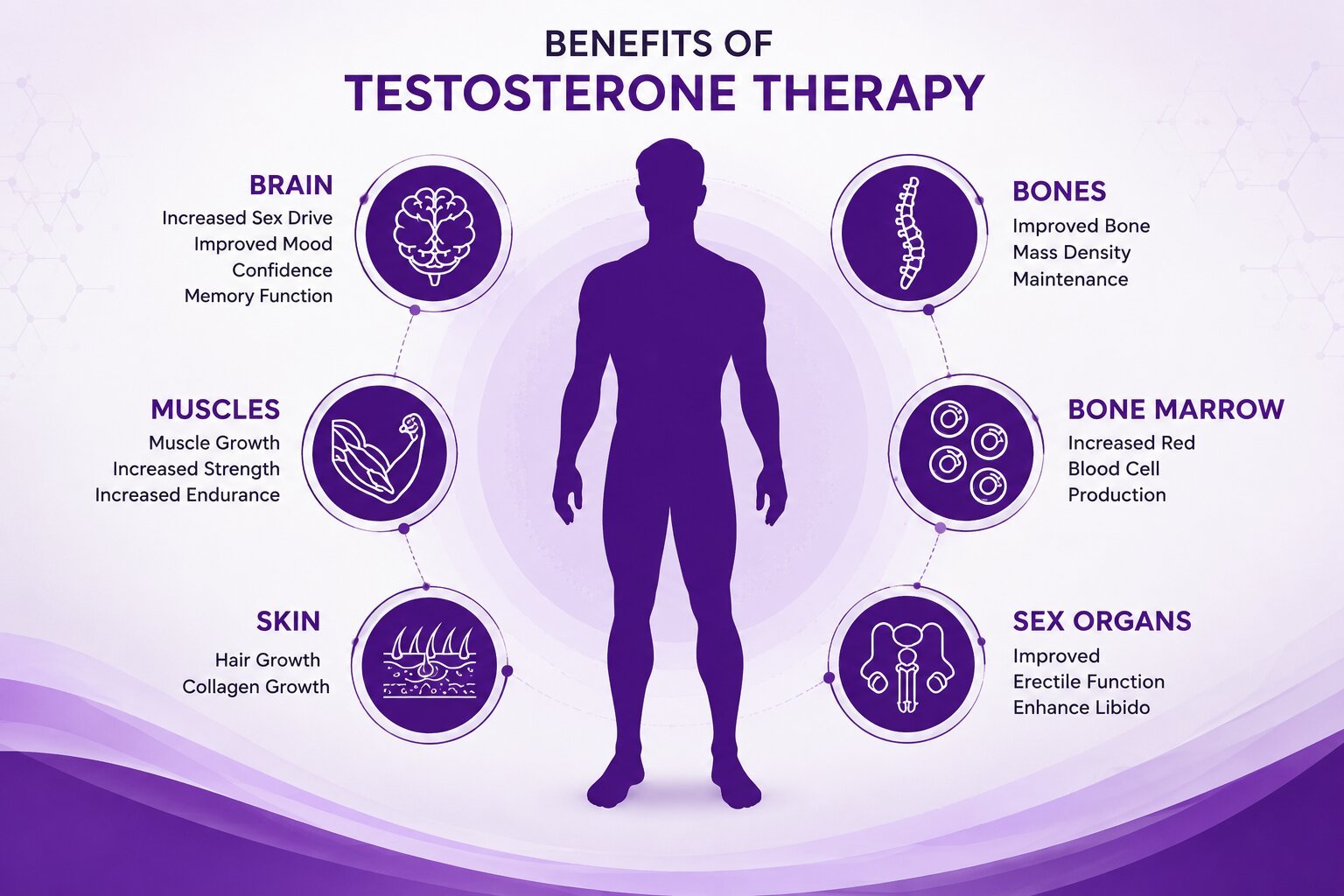
Potential Benefits of Testosterone Therapy
For men who genuinely have low testosterone due to a medical condition, TRT may offer several important benefits.
Improved Sexual Health
Many men report better libido and improved sexual performance after treatment.
Increased Muscle Mass
Testosterone supports muscle growth, making it easier to build and maintain lean muscle when combined with regular exercise.
Stronger Bones
Healthy testosterone levels help maintain bone density and may reduce the risk of osteoporosis.
Better Mood
Some men experience improvements in mood, motivation, and confidence once hormone levels return to normal.
Increased Red Blood Cell Production
Testosterone stimulates red blood cell production, which can improve oxygen delivery throughout the body.
Risks and Side Effects of Testosterone Therapy
Although testosterone therapy offers benefits for certain men, it also carries potential risks. Possible side effects include:
- Sleep Apnea: Testosterone therapy may worsen obstructive sleep apnea, a condition where breathing repeatedly stops during sleep.
- Skin Problems: Some men develop acne or skin irritation, especially when using gels or patches.
- Enlarged Prostate: TRT can stimulate the growth of the prostate, potentially worsening symptoms of benign prostatic hyperplasia (BPH).
- Breast Enlargement: Some men may develop enlarged or tender breast tissue.
- Reduced Fertility: External testosterone can reduce the body's natural sperm production and may cause the testicles to shrink. Men planning to have children should discuss fertility preservation with their healthcare provider before starting treatment.
- Increased Red Blood Cells: TRT can increase red blood cell production excessively, raising the risk of blood clots, stroke, or pulmonary embolism.
- Possible Heart Risks: Some studies have suggested a possible increase in cardiovascular risk, while others have found no significant effect. More high-quality research is still needed to determine the long-term safety of testosterone therapy.
Who Should Consider Testosterone Therapy?
Testosterone therapy may be appropriate for men who:
- Have symptoms of low testosterone
- Have consistently low testosterone confirmed by blood tests
- Have been diagnosed with hypogonadism
- Are under the care of a qualified healthcare provider
Men with normal testosterone levels generally should not use TRT simply to improve athletic performance or slow aging.
Lifestyle Changes That Support Healthy Testosterone
Before considering hormone therapy, healthy lifestyle habits can naturally support testosterone levels and improve overall well-being.
Helpful strategies include:
- Maintain a healthy body weight.
- Exercise regularly, especially strength training.
- Get 7–9 hours of quality sleep each night.
- Manage stress through relaxation techniques.
- Eat a balanced diet rich in protein, healthy fats, vitamins, and minerals.
- Limit excessive alcohol consumption.
- Avoid smoking.
These habits also improve heart health, energy levels, and overall quality of life.
Frequently Asked Questions
Conclusion
Testosterone therapy can be life-changing for men with clinically diagnosed low testosterone caused by hypogonadism, helping improve sexual function, muscle strength, bone health, and overall quality of life. However, it is not a proven anti-aging treatment for otherwise healthy older men experiencing the natural decline in testosterone that comes with age.
Because symptoms like fatigue, low mood, or reduced sexual desire can also stem from other medical conditions, a proper evaluation—including blood tests and a medical assessment—is essential before considering treatment. If testosterone therapy is recommended, ongoing monitoring is important to maximize benefits while reducing potential risks. The best approach is to make treatment decisions in partnership with a qualified healthcare professional based on your individual health needs rather than age alone.