Erectile dysfunction (ED) affects millions of men worldwide and becomes increasingly common with age, although it can occur at any stage of adulthood. While medications such as sildenafil (Viagra) and tadalafil (Cialis) remain widely prescribed, many men are searching for treatments that address the underlying cause of erectile dysfunction rather than providing only temporary symptom relief. That growing interest has brought shockwave therapy and GAINSWave into the spotlight.
At first glance, these two terms appear to describe competing treatments. Clinics often advertise them separately, and marketing materials sometimes make them sound like entirely different technologies. In reality, the relationship is more nuanced. Understanding that distinction is essential before deciding which option may be appropriate.
This comprehensive guide explains how each approach works, what current research says about effectiveness, who may benefit most, potential risks, expected costs, and the questions patients should ask before beginning treatment. By the end, you'll have a clear understanding of whether Shockwave Therapy or GAINSWave offers the better solution for your specific situation.
Understanding Erectile Dysfunction and Modern Treatment Options
Erectile dysfunction is defined as the persistent inability to achieve or maintain an erection sufficient for satisfactory sexual activity. Although occasional difficulties are normal, ongoing ED often signals an underlying medical condition rather than simply being part of aging.
One of the most common causes is vascular disease. Healthy erections depend on adequate blood flow into the penile tissues. Conditions such as diabetes, hypertension, obesity, high cholesterol, and smoking can damage blood vessels, reducing circulation over time. Psychological stress, anxiety, hormonal imbalances, neurological disorders, pelvic surgery, and certain medications may also contribute.
Traditional treatments—including oral medications, vacuum erection devices, penile injections, hormone replacement in selected cases, and penile implants—primarily focus on helping men achieve erections. While these therapies can be highly effective, they usually do not repair damaged blood vessels or reverse the underlying vascular problem.
This is why regenerative therapies have generated considerable interest. Instead of relying on medication before every sexual encounter, low-intensity shockwave therapy aims to stimulate tissue repair and improve blood vessel function. Although research continues to evolve, the concept of encouraging the body's own healing mechanisms appeals to many patients seeking longer-lasting improvement.
Why More Men Are Looking Beyond ED Medications
Oral medications work well for many men, but they aren't ideal for everyone. Some experience headaches, facial flushing, nasal congestion, indigestion, or visual disturbances. Others cannot safely take PDE5 inhibitors because they use nitrate medications for heart disease or have other contraindications.
Another limitation is convenience. Medications often need to be taken before sexual activity, and effectiveness varies depending on timing, food intake, alcohol consumption, and overall health. Some men also notice that these drugs become less effective as vascular disease progresses.
This has encouraged both physicians and patients to explore treatments designed to improve penile blood flow itself rather than temporarily enhancing erectile function. Shockwave therapy has emerged as one of the most widely discussed regenerative approaches, particularly for men with vasculogenic erectile dysfunction, where impaired circulation is the primary issue.
What Is Shockwave Therapy for Erectile Dysfunction?
Low-Intensity Extracorporeal Shockwave Therapy (LiSWT) is a non-invasive treatment that uses carefully controlled acoustic waves delivered to different areas of the penis. Unlike high-energy shockwaves used to break kidney stones, the energy levels for ED treatment are much lower and intended to stimulate healing rather than destroy tissue.
The therapy is believed to create microscopic mechanical stress within the treated tissues. That controlled stimulation activates biological repair processes, including the release of growth factors, improved blood vessel formation (angiogenesis), enhanced stem cell activity, and better endothelial function. Together, these changes may improve blood circulation and support healthier erectile function over time.
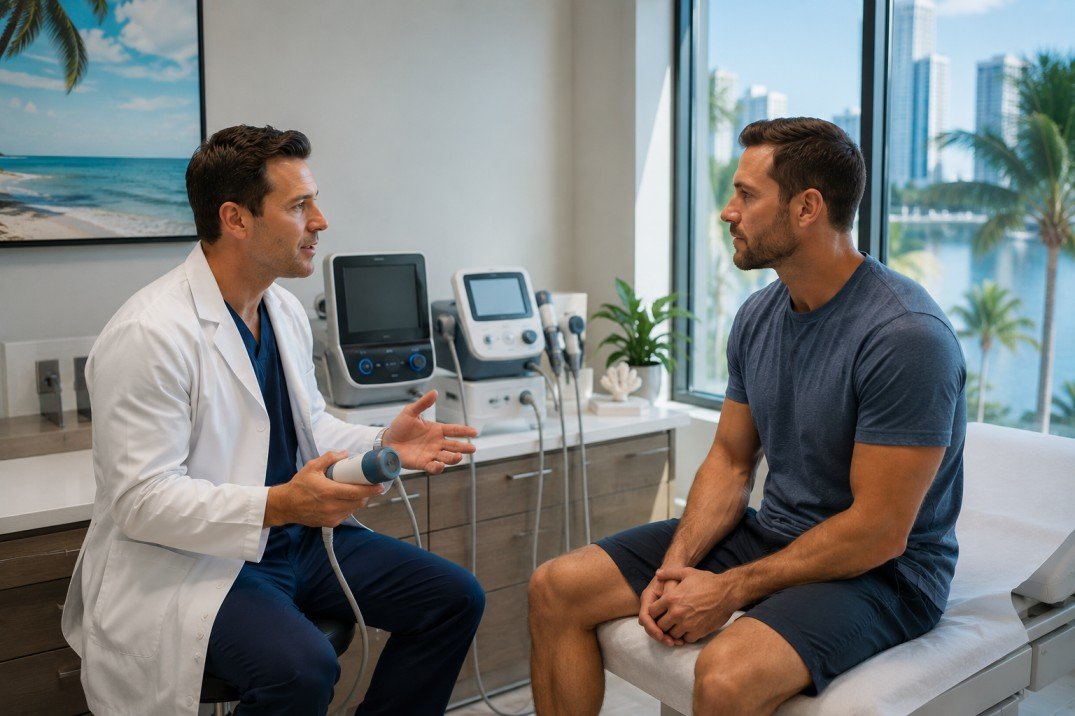
Treatment sessions are typically performed in an outpatient clinic. A handheld device delivers pulses to multiple treatment sites, and the procedure generally lasts between 15 and 30 minutes. Most patients describe the sensation as mild tapping or tingling, with little or no discomfort. Because no anesthesia or sedation is required, normal activities can usually be resumed immediately afterward.
Protocols vary between clinics, but many involve 6 to 12 treatment sessions spread across several weeks. Some physicians recommend maintenance treatments depending on individual response and ongoing vascular health.
How Low-Intensity Shockwave Therapy (LiSWT) Works
Healthy erections depend on a complex interaction between nerves, blood vessels, smooth muscle, and hormonal signals. LiSWT primarily targets the vascular component by encouraging the body to develop new microvascular networks.
Laboratory studies suggest that shockwaves stimulate the production of vascular endothelial growth factor (VEGF), nitric oxide synthase, and other molecules involved in blood vessel repair. Improved endothelial function allows arteries to dilate more effectively during sexual stimulation, increasing blood flow into erectile tissue.
Researchers also believe that shockwave therapy may reduce inflammation, enhance tissue remodeling, and improve oxygen delivery. These biological effects distinguish it from medications, which temporarily relax smooth muscle but do not attempt to regenerate damaged vascular structures.
It's important to recognize that outcomes differ among patients. Men with mild to moderate vasculogenic ED often experience better results than those with severe diabetes-related damage, advanced neurological disease, or extensive fibrosis following prostate surgery.
Scientific Evidence Supporting Shockwave Therapy
Clinical evidence has steadily expanded during the past decade. Numerous randomized controlled trials and systematic reviews have evaluated LiSWT for erectile dysfunction, particularly in men with vascular causes.
Several meta-analyses have reported statistically significant improvements in standardized measures such as the International Index of Erectile Function (IIEF) compared with sham treatments. Some studies also demonstrate improved penile blood flow measured by Doppler ultrasound.
Professional organizations remain cautiously optimistic. The European Association of Urology (EAU) notes that low-intensity shockwave therapy may benefit selected men with vasculogenic ED, especially those with mild to moderate disease. The Sexual Medicine Society of North America (SMSNA), however, emphasizes that while results are promising, more high-quality research is still needed before universal recommendations can be made.
The variability among studies stems partly from differences in treatment devices, energy settings, patient selection, and treatment schedules. This means that outcomes seen in one clinic cannot automatically be generalized to every provider.
What Is GAINSWave?
GAINSWave is often mistaken for a unique medical treatment, but it is more accurately described as a branded marketing and provider network that uses low-intensity extracorporeal shockwave therapy (LiSWT) for erectile dysfunction. In other words, GAINSWave is not a separate medical technology. Instead, it is a trademarked platform that licenses its brand to participating clinics, provides physician training, and promotes standardized treatment protocols using approved acoustic wave devices.
This distinction is one of the most misunderstood aspects of ED treatment. A patient searching online might believe they're choosing between two completely different therapies when comparing "Shockwave Therapy" and "GAINSWave." In reality, a GAINSWave clinic is providing a form of shockwave therapy. The primary differences often involve the specific device being used, the clinic's protocol, provider experience, and the level of patient support rather than a fundamentally different treatment mechanism.
GAINSWave has significantly increased public awareness of regenerative ED treatments through consumer education and nationwide marketing. Many clinics appreciate the recognition associated with the brand, while patients may feel more confident visiting a provider that follows standardized training requirements. That said, excellent shockwave therapy is not exclusive to GAINSWave-affiliated clinics. Many urologists and sexual medicine specialists use FDA-cleared shockwave devices outside the GAINSWave network and follow evidence-based protocols tailored to individual patients.
The key takeaway is simple: GAINSWave is a brand built around shockwave therapy—not a different therapy altogether. Understanding this helps patients focus on what truly matters: the quality of the equipment, the qualifications of the provider, and the available clinical evidence.
Is GAINSWave a Treatment or a Brand?
The answer is clear: GAINSWave is a brand. The underlying treatment remains low-intensity shockwave therapy (LiSWT). This is similar to how different fitness franchises may use comparable exercise methods while operating under different brand names. The branding creates consistency in marketing and training but does not change the biological principles behind the treatment.
Patients should therefore avoid making decisions based solely on brand recognition. Instead, ask practical questions such as:
- What shockwave device is being used?
- Is it a focused or radial shockwave system?
- What scientific evidence supports this specific device?
- Does the provider specialize in men's sexual health or urology?
- How many ED patients has the clinic treated?
These questions often provide far more meaningful information than whether a clinic displays the GAINSWave logo.
How GAINSWave Sessions Are Performed
A typical GAINSWave session closely resembles standard LiSWT performed at other clinics. The patient lies comfortably while a handheld applicator delivers low-intensity acoustic waves to multiple treatment areas around the penis and, in some protocols, the surrounding tissues.
Most appointments last 15 to 30 minutes and require no anesthesia. Patients generally describe the sensation as light tapping or mild vibration rather than pain. Once the session is complete, there is no recovery period, allowing individuals to return to work, exercise, or other daily activities immediately.
Treatment plans usually involve 6 to 12 sessions, although recommendations vary depending on the patient's age, severity of ED, and underlying health conditions. Some clinics also combine shockwave therapy with lifestyle counseling, hormone evaluation, platelet-rich plasma (PRP), or medications when clinically appropriate. While combination approaches are becoming more common, it's important to recognize that many of these strategies still require additional high-quality research to determine their long-term effectiveness.
Shockwave Therapy vs GAINSWave: Key Differences
The comparison between Shockwave Therapy vs GAINSWave is less about two competing treatments and more about understanding how treatment delivery differs between providers. Since GAINSWave itself uses shockwave therapy, the real distinctions often involve the equipment, provider expertise, protocol, and overall patient experience. Patients who understand these differences are better equipped to choose a clinic based on evidence rather than advertising claims. The goal should always be receiving treatment from a qualified provider using validated technology with realistic expectations regarding outcomes.
Technology and Devices Used
Not every shockwave machine is identical. One clinic may use a focused shockwave device supported by multiple clinical studies, while another may rely on a radial acoustic wave system with less published evidence for erectile dysfunction. Both may advertise "shockwave therapy," yet the technology can differ substantially.
Some of the better-known medical device manufacturers include companies such as Storz Medical, Direx, and Dornier, each offering systems with varying technical characteristics. Research has not yet established a single "best" device, but studies suggest that treatment outcomes may depend on factors such as energy density, pulse frequency, treatment locations, and the total number of shockwaves delivered.
For this reason, patients should ask providers about the specific equipment being used instead of assuming all shockwave machines perform equally.
Treatment Protocols
Clinical protocols remain an evolving area of research. While many providers recommend 6 to 12 sessions, there is currently no universally accepted schedule. Some studies have evaluated twice-weekly treatments for three weeks, followed by a break and another treatment cycle. Others use different frequencies or total treatment numbers.
GAINSWave providers often follow protocols recommended within their network, which may create greater consistency across participating clinics. Independent physicians, however, may customize protocols based on emerging evidence, individual patient characteristics, and clinical judgment.
The most important factor is not necessarily the number of treatments but whether the protocol aligns with published clinical evidence and the patient's underlying cause of ED.
Provider Training and Certification
One of the advantages promoted by the GAINSWave network is standardized provider education. Participating clinics receive training on treatment techniques, patient communication, and protocol implementation. This may help create a more consistent patient experience across locations.
That said, certification through a branded network should not replace medical expertise. Board-certified urologists, sexual medicine specialists, and physicians with extensive experience treating erectile dysfunction often bring valuable diagnostic skills that go beyond administering shockwave therapy. They can identify hormonal issues, cardiovascular disease, neurological conditions, or medication-related causes that may require additional treatment.
When selecting a provider, consider both formal training and clinical experience. A physician who regularly manages complex ED cases may offer a more comprehensive evaluation than a clinic focused solely on delivering a branded therapy.
Effectiveness Comparison
When patients ask, "Which works better: Shockwave Therapy or GAINSWave?" the evidence-based answer is that neither has an inherent advantage simply because of its name. Since GAINSWave is a branded application of shockwave therapy, effectiveness depends on the quality of the treatment itself rather than the branding.
Clinical success varies according to several factors, including patient selection, severity of erectile dysfunction, underlying health conditions, treatment protocol, and the technology used. Men with mild to moderate vasculogenic ED consistently show the most promising outcomes across published studies. Those with severe diabetes-related vascular damage, advanced nerve injury, or significant penile fibrosis generally experience less predictable results.
Many studies report meaningful improvements in erectile function scores, with some men regaining spontaneous erections or responding better to oral ED medications after completing treatment. Improvements often develop gradually over several weeks as tissue remodeling and blood vessel formation occur. Unlike medications that produce temporary effects, shockwave therapy aims to create longer-lasting physiological changes, although durability varies among individuals.
It is also important to recognize that no treatment guarantees success. Some patients experience substantial improvement, others notice modest benefits, and a smaller group may not respond at all. Setting realistic expectations is essential, and providers should avoid promising permanent cures or guaranteed outcomes.
What Clinical Research Says
The scientific literature on low-intensity shockwave therapy has expanded significantly over the past decade. Multiple randomized controlled trials, systematic reviews, and meta-analyses have found improvements in erectile function compared with placebo (sham) treatments, particularly among men with vasculogenic ED.
For example, pooled analyses published in peer-reviewed journals have demonstrated statistically significant gains in International Index of Erectile Function (IIEF) scores following LiSWT. Several studies have also shown improvements in penile blood flow measured through Doppler ultrasound, supporting the proposed mechanism of enhanced vascular health.
However, researchers continue to highlight important limitations. Studies differ in device type, energy settings, patient populations, and follow-up periods, making direct comparisons challenging. Major professional organizations—including the European Association of Urology (EAU) and the Sexual Medicine Society of North America (SMSNA)—acknowledge the encouraging evidence while emphasizing that additional large-scale, standardized trials are needed before LiSWT becomes a universally recommended first-line therapy.
The current body of evidence supports cautious optimism rather than certainty. Patients should view shockwave therapy as a promising regenerative option backed by growing research, not as an established cure for every form of erectile dysfunction.
Which Patients Benefit the Most?
Clinical evidence consistently suggests that the ideal candidates for shockwave therapy share several characteristics:
| Patient Profile | Expected Response |
|---|---|
| Mild to moderate vasculogenic ED | Most favorable outcomes |
| Men responding partially to PDE5 inhibitors | Often experience additional improvement |
| Early-stage vascular disease | Better long-term potential |
| Severe diabetes-related ED | Variable response |
| Post-prostatectomy nerve injury | Less predictable results |
| Peyronie's disease with ED | May improve pain; erectile outcomes vary |
Lifestyle also plays a major role. Patients who quit smoking, maintain a healthy weight, exercise regularly, and manage conditions such as diabetes or hypertension often create a healthier environment for vascular repair. Shockwave therapy works best when combined with broader strategies to improve cardiovascular and metabolic health rather than being viewed as a standalone solution.
Benefits and Potential Risks
One of the biggest reasons shockwave therapy has attracted attention is that it attempts to improve the underlying vascular health of the penis rather than simply producing a temporary erection. For men with blood flow-related erectile dysfunction, this regenerative approach is appealing because it may provide benefits that extend beyond the treatment session itself. At the same time, like any medical intervention, it is important to balance the potential advantages with realistic expectations and an understanding of the possible limitations.
Unlike surgery or injectable therapies, low-intensity shockwave therapy is non-invasive. There are no incisions, no general anesthesia, and little to no downtime after treatment. Most patients can drive themselves to the appointment, complete the session in under 30 minutes, and immediately return to work or other daily activities. This convenience makes it an attractive option for individuals who prefer to avoid more invasive procedures.
The therapy may also reduce reliance on oral ED medications in some patients. Clinical studies have shown that men who previously experienced only partial benefit from PDE5 inhibitors such as sildenafil or tadalafil sometimes respond better after completing a course of shockwave therapy. Others regain sufficient erectile function to engage in sexual activity with less frequent medication use. While these outcomes are encouraging, responses vary widely and should never be guaranteed.
Another important advantage is the favorable safety profile reported in published research. Serious complications are uncommon when treatment is performed by trained healthcare professionals using appropriate devices and protocols. Mild discomfort during treatment, temporary redness, slight swelling, or brief tenderness are among the most frequently reported side effects. These symptoms generally resolve without medical intervention within a short period.
Patients should also recognize the limitations. Shockwave therapy is not appropriate for every cause of erectile dysfunction. Men whose ED results primarily from severe nerve damage, advanced diabetes-related tissue injury, untreated hormonal disorders, or significant psychological factors may require additional or alternative treatments. Likewise, individuals should be cautious of clinics advertising guaranteed cures, permanent results, or unrealistic success rates. The scientific evidence is promising, but no reputable medical organization currently considers shockwave therapy a universal cure for erectile dysfunction.
Advantages
The potential benefits of shockwave therapy extend beyond convenience. Many patients are drawn to its ability to target the biological mechanisms involved in healthy erections. Some of the commonly reported advantages include:
| Potential Benefit | Explanation |
|---|---|
| Non-invasive treatment | No surgery, injections, or anesthesia required |
| Minimal recovery time | Normal activities usually resume immediately |
| May improve blood flow | Encourages angiogenesis and healthier vascular function |
| Can enhance response to ED medications | Some men become more responsive to PDE5 inhibitors |
| Well-tolerated | Most patients experience little discomfort |
| Potential for longer-lasting improvement | Aims to support tissue repair rather than temporary symptom relief |
While these advantages make the therapy attractive, outcomes differ among individuals based on age, overall health, and the underlying cause of erectile dysfunction.
Possible Side Effects
Compared with many other ED treatments, low-intensity shockwave therapy has demonstrated an excellent safety record in clinical trials. Reported adverse effects are generally mild and temporary.
Potential side effects may include:
- Mild tenderness during or shortly after treatment
- Temporary redness of the skin
- Minor swelling
- Brief bruising in rare cases
- Temporary sensitivity in treated areas
Severe complications are uncommon in published studies. Nevertheless, treatment should always begin with a comprehensive medical evaluation to determine whether shockwave therapy is appropriate for the patient's specific condition.
Cost Comparison
Cost is often one of the first questions patients ask when considering shockwave therapy or GAINSWave. Unfortunately, there is no universal pricing structure, and expenses can vary considerably depending on geographic location, clinic reputation, provider expertise, and the number of treatment sessions included in the package.
In the United States, a complete course of therapy commonly ranges between $2,000 and $6,000, although some clinics charge more. Individual sessions may cost $300 to $600, but many providers offer discounted pricing for bundled treatment plans.
Because low-intensity shockwave therapy for erectile dysfunction is still considered investigational or elective by many insurance providers, most health insurance plans do not currently cover the treatment. Patients should therefore expect out-of-pocket expenses unless coverage policies change in the future.
When comparing clinics, the lowest price should not automatically determine the best value. Patients should consider several factors, including:
| Factor | Why It Matters |
|---|---|
| Provider qualifications | Experienced specialists may achieve better outcomes |
| Type of shockwave device | Clinical evidence varies among devices |
| Number of sessions included | Some packages include follow-up treatments |
| Initial medical evaluation | Comprehensive diagnosis improves treatment planning |
| Follow-up care | Ongoing monitoring helps assess progress |
It is also worth asking whether additional services—such as hormone testing, penile Doppler ultrasound, or follow-up consultations—are included in the quoted price. A seemingly higher upfront cost may provide more comprehensive care and better long-term value.
Who Is an Ideal Candidate?
Not every man with erectile dysfunction is an ideal candidate for shockwave therapy, and identifying the underlying cause of ED remains the most important step before beginning treatment. A thorough medical evaluation should include a review of cardiovascular health, medications, hormone levels when appropriate, lifestyle factors, and psychological contributors.
Current evidence suggests that the best candidates are men with mild to moderate vasculogenic erectile dysfunction, meaning ED caused primarily by reduced blood flow rather than severe nerve damage or structural abnormalities. Men who still achieve occasional spontaneous erections or who experience partial success with oral medications often demonstrate the most favorable outcomes.
Candidates may include individuals who:
- Have mild or moderate vascular ED
- Want a non-invasive treatment option
- Prefer to reduce dependence on ED medications
- Are committed to improving overall cardiovascular health
- Understand that results vary and may take several weeks to develop
Conversely, shockwave therapy may be less effective for men with advanced diabetes-related vascular disease, extensive nerve injury following prostate surgery, untreated low testosterone, severe Peyronie's disease with significant curvature, or ED caused primarily by psychological factors. These patients may benefit from additional therapies, lifestyle changes, counseling, medication adjustments, or surgical interventions depending on the underlying diagnosis.
The most successful treatment plans often combine regenerative therapy with broader health improvements. Regular exercise, smoking cessation, weight management, blood pressure control, diabetes management, and heart-healthy nutrition all contribute to better vascular function. Since erectile dysfunction frequently reflects cardiovascular health, improving overall wellness may enhance both treatment outcomes and long-term quality of life.
Conclusion
The debate surrounding Shockwave Therapy vs GAINSWave often creates the impression that men must choose between two competing erectile dysfunction treatments. In reality, GAINSWave is a branded platform that delivers low-intensity shockwave therapy, meaning the underlying medical approach is fundamentally the same. The more meaningful differences lie in the provider's expertise, the technology being used, adherence to evidence-based treatment protocols, and the quality of patient care.
Current research indicates that low-intensity shockwave therapy shows promising results, particularly for men with mild to moderate vasculogenic erectile dysfunction. By promoting blood vessel formation and improving vascular function, the therapy seeks to address one of the root causes of ED rather than simply managing symptoms. While many patients report meaningful improvements in erectile function and satisfaction, outcomes remain variable, and additional high-quality research is still underway.
Choosing the right clinic should involve more than comparing advertisements or brand names. Patients should seek evaluation from a qualified urologist or sexual medicine specialist, ask about the specific device being used, review the available clinical evidence, and discuss realistic expectations based on their individual medical history. An informed decision—combined with healthy lifestyle changes and appropriate medical care—offers the best chance of achieving lasting improvements in sexual health.
What We See in Our Practice
In our practice, we’ve found that regenerative therapies for erectile dysfunction can yield life-changing results when performed by an experienced physician who truly understands the underlying vascular biology. We prioritize evidence-based protocols tailored to each patient over generalized, branded approaches. Furthermore, we often combine acoustic wave technologies with the regenerative power of the P-Shot (Platelet-Rich Plasma) to not only stimulate angiogenesis but also deliver concentrated growth factors directly to the tissue. This synergy frequently produces superior and longer-lasting outcomes compared to shockwave therapy alone.
Medical References
- European Association of Urology (EAU). Guidelines on Male Sexual Dysfunction.
- Sexual Medicine Society of North America (SMSNA). Position Statement on Restorative Therapies for ED.
- Journal of Sexual Medicine. Meta-analyses on the efficacy of low-intensity extracorporeal shockwave therapy for erectile dysfunction.
- Translational Andrology and Urology. Reviews comparing various shockwave devices and protocols for vascular ED.