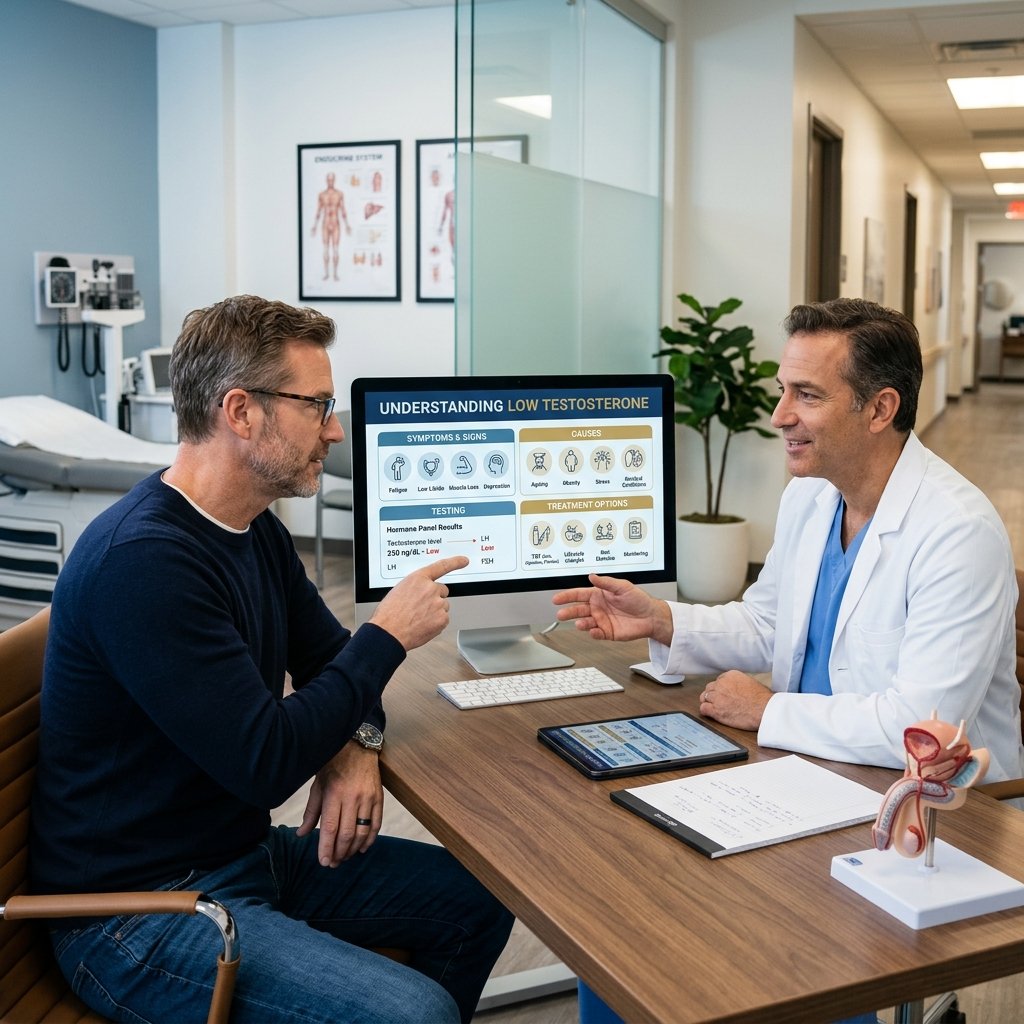
Feeling constantly tired, noticing a drop in your sex drive, struggling to build muscle despite regular workouts, or experiencing erectile dysfunction can all be frustrating experiences. While these symptoms can stem from many different health conditions, one possible cause is low testosterone, often referred to as Low T. Testosterone is the primary male sex hormone, and it plays a vital role in much more than sexual health. It helps regulate energy levels, mood, muscle mass, bone strength, sperm production, red blood cell formation, and overall well-being.
Low testosterone is more common than many men realize. According to estimates from the American Urological Association (AUA) and other medical organizations, testosterone levels naturally decline with age, but younger men can also develop testosterone deficiency due to medical conditions, obesity, medications, or hormonal disorders. The key point is that symptoms alone are not enough to diagnose Low T. A proper diagnosis requires both consistent symptoms and laboratory testing confirming below-normal testosterone levels.
The good news is that Low T is treatable. Depending on the underlying cause, treatment may include lifestyle modifications, managing contributing medical conditions, testosterone replacement therapy (TRT) for appropriate candidates, and targeted therapies that address sexual performance concerns. Some men with erectile dysfunction related to poor blood flow may also discuss regenerative treatments—such as the Priapus Shot® (P-Shot®)—with their healthcare provider. While the P-Shot does not increase testosterone levels, it may help improve erectile function in selected patients by using platelet-rich plasma (PRP) to support tissue healing.
This guide explains everything you need to know about Low T, including its symptoms, causes, diagnosis, available treatments, and how therapies like the P-Shot may fit into a comprehensive men's health plan.
Understanding Testosterone and Why It Matters
Testosterone is the body's primary androgen, or male sex hormone. It is produced mainly in the testes, with smaller amounts produced by the adrenal glands. Although women also produce testosterone, men naturally have much higher levels, and the hormone plays a central role in male development and lifelong health.
During puberty, testosterone drives many of the physical changes associated with becoming an adult, including deepening of the voice, increased muscle mass, facial and body hair growth, enlargement of the penis and testes, and the initiation of sperm production. However, testosterone remains just as important throughout adulthood. It helps maintain muscle strength, supports healthy bones, contributes to normal fat distribution, regulates mood and energy, and is essential for healthy sexual desire and reproductive function.
Because testosterone receptors are located throughout the body, low levels can affect multiple systems at once. A man with Low T may notice fatigue, reduced motivation, difficulty concentrating, decreased muscle mass, increased body fat, lower libido, or erectile dysfunction. These symptoms often develop gradually, making them easy to overlook or attribute solely to aging.
It is also important to understand that testosterone works alongside other hormones and body systems. Healthy erections, for example, depend not only on testosterone but also on good blood flow, healthy nerves, psychological well-being, and cardiovascular health. This is why a comprehensive evaluation is essential rather than assuming every symptom is caused by hormone deficiency.
The Role of Testosterone in Men's Health
Healthy testosterone levels support numerous biological functions, including:
- Maintaining sexual desire (libido)
- Supporting normal erectile function
- Stimulating sperm production
- Preserving muscle mass and strength
- Maintaining bone density
- Supporting red blood cell production
- Regulating mood and motivation
- Contributing to memory and concentration
- Helping maintain healthy body composition
Rather than striving for the highest possible testosterone level, the goal is to maintain normal physiological levels appropriate for age and overall health. Both low and excessively high testosterone levels can have negative health effects.
What Is Low Testosterone (Low T)?
Low testosterone—also known as male hypogonadism—occurs when the body does not produce enough testosterone to meet normal physiological needs. This condition can result from problems within the testes (primary hypogonadism), issues involving the pituitary gland or hypothalamus (secondary hypogonadism), or a combination of both.
Diagnosing Low T involves more than a single blood test. Most medical guidelines recommend confirming the diagnosis with two separate morning testosterone measurements, since hormone levels naturally fluctuate throughout the day. Physicians also evaluate symptoms, medical history, medications, and other laboratory findings before recommending treatment.
One common misconception is that every man with a slightly lower testosterone level requires therapy. In reality, many men maintain good health and experience no symptoms despite modest age-related declines. Treatment decisions should focus on the combination of symptoms plus consistently low laboratory values, not numbers alone.
Low testosterone is also not the only explanation for fatigue, low libido, or erectile dysfunction. Conditions such as diabetes, thyroid disorders, depression, sleep apnea, obesity, and cardiovascular disease can produce similar symptoms and should be evaluated before treatment begins.
Normal vs. Low Testosterone Levels
While reference ranges vary between laboratories, many healthcare providers consider total testosterone levels below approximately 300 ng/dL—combined with compatible symptoms—as one factor supporting a diagnosis of testosterone deficiency.
Additional tests may include:
- Free testosterone
- Luteinizing hormone (LH)
- Follicle-stimulating hormone (FSH)
- Prolactin
- Thyroid function tests
- Complete blood count (CBC)
- Comprehensive metabolic panel
These tests help identify whether low testosterone is caused by testicular dysfunction, pituitary disorders, chronic illness, or other medical conditions.
Common Signs and Symptoms of Low Testosterone
The symptoms of Low T often develop gradually, making them easy to dismiss as stress, aging, or a busy lifestyle. Because testosterone affects multiple body systems, symptoms may appear in several areas at the same time. Some men notice changes in sexual health first, while others experience fatigue, declining strength, or mood changes before recognizing any hormonal problem.
It is also important to remember that these symptoms are not specific to Low T. Many other medical conditions—including thyroid disease, depression, sleep disorders, anemia, diabetes, and cardiovascular disease—can produce similar complaints. That is why laboratory testing and medical evaluation remain essential before making a diagnosis.
Physical Symptoms
Common physical symptoms may include:
- Persistent fatigue
- Reduced muscle mass
- Loss of strength
- Increased abdominal fat
- Decreased exercise performance
- Reduced bone density
- Hot flashes (in severe cases)
- Reduced body hair growth
These changes often occur gradually over months or years rather than appearing suddenly.
Sexual Health Symptoms
Testosterone plays a key role in male sexual function. Men with Low T may experience:
- Reduced libido
- Fewer spontaneous or morning erections
- Erectile dysfunction
- Reduced sexual satisfaction
- Decreased semen volume
- Fertility concerns in some cases
It is worth noting that erectile dysfunction is often multifactorial. Vascular disease, diabetes, stress, medications, and neurological conditions frequently contribute alongside hormonal changes.
Emotional and Cognitive Symptoms
Low testosterone may also affect emotional well-being and cognitive performance. Some men report:
- Irritability
- Reduced motivation
- Difficulty concentrating
- Brain fog
- Mild depressive symptoms
- Lower self-confidence
Because these symptoms overlap with many other health conditions, they should always be evaluated in the context of a complete medical assessment.
What Causes Low Testosterone?
Low testosterone can develop for many different reasons, and identifying the underlying cause is one of the most important steps in creating an effective treatment plan. In some men, testosterone production gradually decreases as part of the aging process. In others, the problem stems from an underlying medical condition, medication, or lifestyle factor that may be reversible.
Doctors generally classify testosterone deficiency into two categories:
- Primary hypogonadism: The testes are unable to produce sufficient testosterone despite receiving normal hormonal signals from the brain.
- Secondary hypogonadism: The hypothalamus or pituitary gland does not send adequate hormonal signals to stimulate testosterone production.
Some men have a combination of both, particularly as they age or develop chronic health conditions.
Age-Related Decline
Testosterone naturally declines with age, typically beginning around the third or fourth decade of life. Research suggests that total testosterone decreases by roughly 1% per year in many men, although the rate varies considerably. Importantly, not every older man develops symptoms or requires treatment.
Many age-related factors contribute to this decline, including reduced physical activity, increased body fat, poorer sleep quality, chronic inflammation, and changes in hormone regulation. Because these factors are often modifiable, healthy lifestyle habits can play a significant role in preserving testosterone levels as men age.
Medical Conditions and Lifestyle Factors
Several medical conditions are associated with lower testosterone production, including:
- Obesity
- Type 2 diabetes
- Metabolic syndrome
- Chronic kidney disease
- Liver disease
- Pituitary disorders
- Testicular injury or infection
- Chemotherapy or radiation therapy
- Genetic conditions such as Klinefelter syndrome
Lifestyle factors also matter. Chronic stress, excessive alcohol use, smoking, poor sleep, untreated obstructive sleep apnea, and prolonged opioid or corticosteroid use can all contribute to testosterone deficiency.
Because many of these causes are treatable, physicians often recommend addressing reversible risk factors before considering long-term hormone therapy.
How Low Testosterone Is Diagnosed
Diagnosing Low T involves much more than checking a single blood test. Testosterone levels naturally fluctuate throughout the day and can be temporarily lowered by illness, inadequate sleep, excessive exercise, or certain medications. To improve accuracy, most clinical guidelines recommend obtaining two separate morning testosterone measurements, typically before 10 a.m., when testosterone concentrations are highest.
Healthcare providers also perform a comprehensive medical evaluation that includes:
- Review of symptoms
- Medical and family history
- Medication review
- Physical examination
- Assessment of cardiovascular and metabolic health
- Evaluation for fertility goals
If testosterone levels are consistently low, additional laboratory tests may help determine the underlying cause. These may include luteinizing hormone (LH), follicle-stimulating hormone (FSH), prolactin, thyroid function tests, and other hormone studies. Depending on the findings, imaging studies or referral to an endocrinologist or urologist may also be appropriate.
Proper diagnosis is essential because treating the underlying cause—such as obesity, sleep apnea, or medication side effects—may improve testosterone levels without the need for lifelong hormone replacement.
Blood Tests and Medical Evaluation
A complete evaluation may include:
| Test | Purpose |
|---|---|
| Total Testosterone | Measures overall testosterone level |
| Free Testosterone | Evaluates biologically active testosterone when indicated |
| LH & FSH | Helps distinguish primary from secondary hypogonadism |
| Prolactin | Screens for pituitary disorders |
| Thyroid Function | Rules out thyroid disease |
| CBC | Evaluates red blood cell count before TRT |
| PSA (when appropriate) | Assesses prostate health in selected patients |
Healthcare providers interpret these results alongside symptoms rather than relying on laboratory values alone.
Treatment Options for Low Testosterone
Treatment depends on why testosterone is low, the severity of symptoms, laboratory findings, age, overall health, and future fertility goals. Not every man with mildly reduced testosterone requires medication. In many cases, addressing lifestyle factors or underlying medical conditions significantly improves hormone levels and symptoms.
The most effective treatment plan is individualized and developed after a comprehensive medical evaluation.
Lifestyle Changes
Healthy lifestyle habits remain the foundation of testosterone optimization. Evidence-based strategies include:
- Maintaining a healthy body weight
- Performing regular resistance and aerobic exercise
- Getting 7–9 hours of quality sleep
- Managing chronic stress
- Eating a balanced diet rich in protein, healthy fats, zinc, and vitamin D
- Limiting excessive alcohol consumption
- Quitting smoking
Research consistently shows that weight loss in overweight and obese men can increase natural testosterone production, sometimes substantially. Even modest improvements in body composition may positively affect hormone levels, energy, and sexual health.
Testosterone Replacement Therapy (TRT)
For men with confirmed hypogonadism who continue to experience symptoms despite addressing reversible causes, testosterone replacement therapy (TRT) may be recommended. TRT is available in several forms:
- Topical gels
- Skin patches
- Intramuscular injections
- Long-acting injectable formulations
- Subcutaneous pellets
Potential benefits may include improved libido, increased energy, better mood, improved muscle mass and strength, increased bone density, and enhanced overall quality of life.
However, TRT is not appropriate for everyone. Men who are actively trying to conceive should discuss alternatives because external testosterone can suppress sperm production. Regular monitoring—including testosterone levels, blood counts, and other appropriate health checks—is also necessary throughout treatment.
Complementary Treatments for Sexual Health
Even after testosterone levels are optimized, some men continue to experience erectile dysfunction because healthy erections depend on more than hormones. Blood vessel health, nerve function, cardiovascular fitness, psychological well-being, and underlying medical conditions all influence erectile performance.
For men whose ED is primarily related to poor penile blood flow, physicians may recommend additional therapies alongside lifestyle improvements or TRT. Options can include:
- PDE5 inhibitors (such as sildenafil or tadalafil)
- Vacuum erection devices
- Penile injections
- Low-intensity shockwave therapy (for selected patients)
- The Priapus Shot® (P-Shot®)
The right treatment depends on the underlying cause of erectile dysfunction rather than testosterone levels alone.
Can the P-Shot® Help Men with Low Testosterone?
Many men searching for treatment for Low T are also looking for ways to improve sexual performance. It's important to understand that the P-Shot® is not a treatment for low testosterone, and it does not increase testosterone levels. Instead, it is a regenerative procedure that may help certain men experiencing erectile dysfunction or reduced sexual performance.
The Priapus Shot® (P-Shot®) uses platelet-rich plasma (PRP) derived from the patient's own blood. After a small blood sample is collected, it is processed to concentrate platelets, which contain growth factors involved in tissue repair. The PRP is then injected into specific areas of the penis by a trained healthcare provider.
The goal of the P-Shot is to support the body's natural healing response and potentially improve blood vessel function and tissue health. Some men report improvements in erectile firmness, sensitivity, sexual confidence, and overall sexual satisfaction.
Clinical research on PRP for erectile dysfunction is still evolving. While some early studies have shown promising results—particularly for men with mild to moderate ED—larger, high-quality clinical trials are still needed to determine long-term effectiveness and identify which patients benefit most. Because of this, professional medical societies generally consider PRP for ED to be an emerging or investigational therapy.
If you have Low T and erectile dysfunction, your healthcare provider may recommend treating both issues separately. For example:
| Condition | Potential Treatment |
|---|---|
| Confirmed Low Testosterone | Lifestyle changes, TRT (when appropriate) |
| Erectile Dysfunction from poor blood flow | PDE5 inhibitors, shockwave therapy, or P-Shot® in selected patients |
| Combined Low T + ED | Individualized treatment plan addressing both hormone levels and vascular health |
The best results often come from a comprehensive men's health approach that addresses hormone balance, cardiovascular health, lifestyle habits, and sexual function together rather than relying on a single treatment.
Conclusion
Low testosterone is a common but often misunderstood condition that can affect sexual health, energy levels, mood, muscle strength, bone health, and overall quality of life. While testosterone naturally declines with age, persistent symptoms should never be ignored or self-diagnosed. A thorough medical evaluation—including symptom assessment and repeated laboratory testing—is essential for identifying true testosterone deficiency and determining the underlying cause.
Treatment should always be personalized. For some men, improving sleep, losing excess weight, exercising regularly, and managing chronic medical conditions may restore healthier testosterone levels. Others with confirmed hypogonadism may benefit from testosterone replacement therapy (TRT) under the supervision of an experienced healthcare provider.
If erectile dysfunction remains a concern after addressing hormone health—or if poor blood flow is a contributing factor—additional treatments may also be considered. One option to discuss with your provider is the Priapus Shot® (P-Shot®), which uses platelet-rich plasma (PRP) derived from your own blood with the goal of supporting natural tissue healing and enhancing erectile function. While research is still developing, it may be an appropriate option for carefully selected patients as part of a broader men's sexual health strategy.
The best outcomes come from treating the whole person—not just a laboratory number. Working with a qualified men's health specialist ensures that hormone balance, cardiovascular health, lifestyle factors, and sexual wellness are all addressed through a personalized, evidence-informed treatment plan.
What We See in Our Practice
In our practice, we often see men who are frustrated that just fixing their testosterone levels didn't entirely resolve their sexual performance issues. That's because healthy erections depend on robust vascular health as well. While optimizing systemic hormones like testosterone is a crucial foundation, we frequently achieve the most comprehensive results by pairing TRT with targeted regenerative therapies like the P-Shot. This synergistic approach allows us to address both the hormonal drive and the localized tissue repair, ultimately delivering a complete restoration of confidence and vitality.
Medical References
- American Urological Association (AUA). Guidelines on the Evaluation and Management of Testosterone Deficiency.
- The Endocrine Society. Clinical Practice Guideline on Testosterone Therapy in Men with Hypogonadism.
- Journal of Sexual Medicine. Studies assessing the efficacy of Platelet-Rich Plasma (PRP) in treating erectile dysfunction.
- Mayo Clinic. Low testosterone (male hypogonadism): Symptoms, causes, and diagnosis.