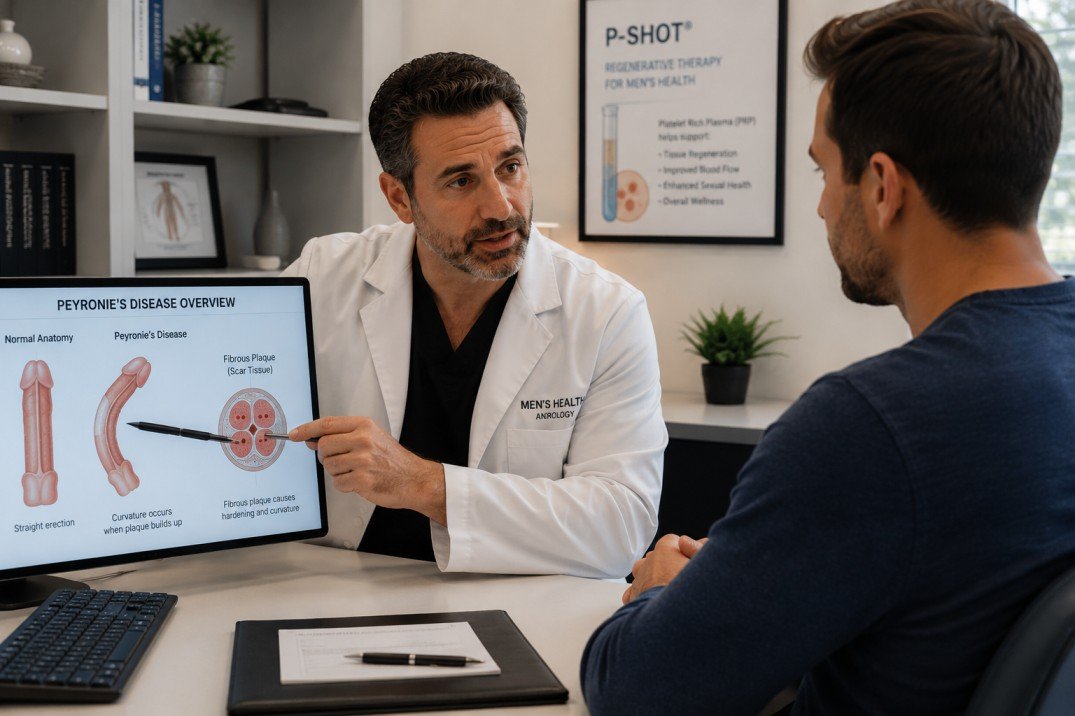
Understanding Peyronie’s Disease
Peyronie’s disease is a condition that affects thousands of men every year, yet it remains one of the most misunderstood disorders in sexual medicine. Many men notice the first signs gradually—a slight bend during erections, discomfort during intimacy, or subtle changes in penile shape. Over time, these symptoms can become more noticeable, affecting sexual performance, self-confidence, and overall quality of life. Because Peyronie’s disease involves scar tissue formation inside the penis, it can alter the way erectile tissue expands, resulting in curvature, shortening, narrowing, or even erectile dysfunction.
One of the biggest challenges patients face is determining which treatment option is most appropriate. As regenerative medicine continues to gain popularity, the P-Shot (Priapus Shot) has emerged as a promising non-surgical option for men seeking alternatives to medications, injections, or surgery. A question that frequently arises during consultations is simple yet important: How many P-Shot sessions are needed for Peyronie’s disease?
The answer is not always straightforward because every case is unique. Factors such as the severity of curvature, duration of symptoms, overall vascular health, age, and treatment goals all influence the recommended number of sessions. Unlike treatments designed to deliver immediate structural correction, the P-Shot works by supporting the body's natural healing and regenerative processes. This means results often develop gradually over time and may require a series of treatments to achieve optimal outcomes.
Understanding how treatment plans are structured can help patients set realistic expectations and make informed decisions. Before discussing session numbers, it is important to understand both Peyronie’s disease and the regenerative principles that make the P-Shot a compelling treatment option.
What Causes Peyronie’s Disease?
Peyronie’s disease typically develops when scar tissue, known as plaque, forms within the connective tissue of the penis. While the exact cause is not always clear, many experts believe that repeated microtrauma during sexual activity is a common contributing factor. In some men, even minor injuries can trigger an abnormal healing response that leads to excessive collagen deposition and plaque formation.
Genetics may also influence susceptibility. Men with connective tissue disorders such as Dupuytren’s contracture appear to have a higher risk of developing Peyronie’s disease. Additional risk factors include aging, diabetes, smoking, cardiovascular disease, and certain autoimmune conditions that affect tissue healing and inflammation.
What makes Peyronie’s disease particularly complex is that it is fundamentally a disorder of wound healing. The body attempts to repair tissue damage but does so in a way that creates rigid scar tissue rather than flexible healthy tissue. This is one reason regenerative therapies such as PRP have attracted attention. Instead of focusing solely on the scar tissue itself, these treatments aim to improve the biological environment surrounding the affected area.
Because the underlying issue involves tissue repair, many clinicians believe that multiple regenerative treatment sessions may be necessary to encourage meaningful biological changes. Just as a chronic injury often requires repeated rehabilitation sessions rather than a single appointment, Peyronie’s disease treatment may involve a series of interventions over time.
Common Symptoms and Progression
The symptoms of Peyronie’s disease vary considerably from one patient to another. Some men experience only mild curvature with minimal discomfort, while others develop severe deformities that significantly interfere with sexual activity. Common symptoms include:
- Penile curvature during erection
- Pain during erections
- Loss of penile length
- Narrowing or indentation of the shaft
- Erectile dysfunction
- Reduced sexual confidence
The disease generally progresses through two stages. The first is the acute phase, during which plaque forms and changes continue to occur. Curvature may worsen, and pain is often more noticeable. The second is the stable phase, where the condition stops progressing but the existing deformity remains.
The stage of Peyronie’s disease plays a major role in determining treatment recommendations. Patients in the earlier stages may respond differently to regenerative therapies than those with long-standing stable plaque. As a result, the number of P-Shot sessions recommended often varies based on disease progression.
What Is the P-Shot?
The P-Shot, short for Priapus Shot, is a regenerative procedure that uses Platelet-Rich Plasma (PRP) obtained from the patient’s own blood. The treatment is based on the idea that concentrated platelets contain growth factors capable of supporting tissue repair, blood vessel formation, and cellular regeneration.
The process begins with a routine blood draw. The sample is then placed in a centrifuge, where the platelet-rich portion is separated and concentrated. This PRP is injected into specific areas of penile tissue using carefully targeted techniques. Because the treatment uses the patient’s own biological material, the risk of allergic reactions or rejection is extremely low.
The popularity of the P-Shot extends beyond Peyronie’s disease. It is also used to address erectile dysfunction, sexual performance concerns, and general penile wellness. In the context of Peyronie’s disease, the primary goal is to support healthier tissue function and create conditions that may encourage more favorable tissue remodeling.
One reason patients often ask about the number of sessions is that PRP works differently from many conventional treatments. Rather than delivering immediate structural changes, it stimulates biological processes that unfold gradually over weeks and months. This regenerative timeline explains why multiple treatments are frequently recommended.
Understanding Platelet-Rich Plasma (PRP)
PRP has been used in numerous medical specialties, including orthopedics, sports medicine, dermatology, and wound care. Platelets contain growth factors such as:
- Platelet-Derived Growth Factor (PDGF)
- Vascular Endothelial Growth Factor (VEGF)
- Transforming Growth Factor-Beta (TGF-β)
- Epidermal Growth Factor (EGF)
These substances help coordinate healing responses throughout the body. When introduced into targeted tissue, they may stimulate cellular activity, improve blood flow, encourage tissue repair, and support regeneration.
In Peyronie’s disease, where abnormal healing contributes to scar formation, PRP offers a unique approach. Rather than attempting to force mechanical correction, it seeks to improve the biological conditions that influence tissue behavior. This philosophy aligns with broader trends in regenerative medicine, where therapies are increasingly designed to support natural healing rather than simply suppress symptoms.
Because regenerative changes occur gradually, a single treatment may not always provide the level of stimulation necessary to achieve meaningful improvements. This is one of the primary reasons many providers recommend treatment protocols involving multiple sessions.
How the P-Shot Works for Peyronie’s Disease
The P-Shot is designed to support tissue quality, vascular function, and regenerative activity. While research is still evolving, many specialists believe PRP may help improve circulation, enhance tissue oxygenation, and create a healthier healing environment within penile tissue.
It is important to understand that the P-Shot is not generally viewed as a one-time miracle solution. Biological healing is a process, not an event. Just as athletes often require multiple rehabilitation sessions to recover from an injury, men with Peyronie’s disease may benefit from repeated regenerative stimulation over time.
The goal of multiple sessions is to reinforce the regenerative response. Each treatment provides another opportunity to introduce growth factors and encourage tissue repair mechanisms. This cumulative effect is one reason why treatment plans often involve more than a single appointment.
The exact number of sessions depends on several variables, including the severity of symptoms and how the patient responds to treatment. Understanding these factors is essential when discussing realistic treatment expectations.
Why Session Numbers Matter
One of the most common misconceptions about regenerative medicine is the belief that a single treatment should solve every problem. In reality, tissue healing often occurs in stages. Regenerative therapies work by influencing biological processes that require time to develop.
For Peyronie’s disease patients, the number of P-Shot sessions recommended is often based on achieving sufficient regenerative stimulation while allowing the body adequate time to respond. Some men experience noticeable improvements after a single treatment, while others require a series of sessions before meaningful changes become apparent.
This variability is not a sign that the treatment is ineffective. Rather, it reflects the complex nature of tissue healing and the unique characteristics of each patient’s condition. Providers who specialize in regenerative medicine generally tailor treatment plans based on individual circumstances rather than applying a universal protocol.
Understanding why session numbers matter can help patients approach treatment with realistic expectations and a greater appreciation for the regenerative process.
The Difference Between Single and Multiple Treatments
When men first hear about the P-Shot for Peyronie’s disease, many naturally wonder whether one treatment is enough. The reality is that regenerative medicine rarely follows a one-size-fits-all model. Unlike surgery, which produces an immediate structural change, the P-Shot relies on biological mechanisms that unfold gradually. Growth factors released by platelet-rich plasma stimulate cellular communication, tissue repair, blood vessel formation, and regenerative activity. These processes often continue for weeks after treatment and may build upon one another when multiple sessions are performed.
A single P-Shot session may be appropriate for some patients, particularly those with very mild symptoms, recent onset of Peyronie’s disease, or treatment goals focused primarily on enhancing tissue health and circulation. Some men report improvements in erection quality, sensitivity, or overall penile wellness after just one procedure. However, Peyronie’s disease often involves established scar tissue and long-standing changes within the penile structure. In these cases, a single treatment may not provide enough regenerative stimulation to create optimal results.
Multiple treatments allow clinicians to reinforce the healing response over time. Think of it like watering a newly planted tree. One watering session may help initially, but ongoing support is often necessary to encourage healthy growth. Similarly, repeated PRP treatments may help sustain regenerative activity and create a more favorable environment for tissue remodeling.
Another reason multiple sessions are common is that practitioners often evaluate progress after each treatment and adjust the protocol accordingly. Some patients respond quickly, while others require additional sessions to achieve meaningful improvements. This individualized approach helps maximize potential benefits while avoiding unnecessary procedures.
Factors That Influence Treatment Plans
No two Peyronie’s disease patients are exactly alike. The recommended number of P-Shot sessions depends on a variety of factors that influence tissue healing and regenerative capacity.
Some of the most important considerations include:
| Factor | Impact on Treatment |
|---|---|
| Severity of Curvature | More severe cases often require additional sessions |
| Duration of Disease | Long-standing plaque may need extended treatment |
| Erectile Function | Coexisting ED may influence protocol recommendations |
| Age | Healing responses can vary with age |
| Overall Health | Cardiovascular and metabolic health affect tissue repair |
| Lifestyle Habits | Smoking, poor diet, and inactivity may reduce responsiveness |
| Treatment Goals | Functional goals differ among patients |
For example, a healthy patient with mild curvature and recently diagnosed Peyronie’s disease may respond more quickly than someone with severe curvature that has been present for many years. Similarly, men who maintain good vascular health often demonstrate stronger regenerative responses because healthy blood flow supports tissue repair.
Clinicians specializing in PRP treatments generally evaluate all of these factors before recommending a treatment plan. Rather than promising a specific number of sessions to every patient, they create customized protocols designed around individual needs and treatment objectives.
How Many P-Shot Sessions Are Typically Recommended?
While there is no universal answer, many regenerative medicine providers follow a general framework when recommending P-Shot treatments for Peyronie’s disease. Most patients fall into one of three broad categories: mild, moderate, or severe disease. The number of sessions often increases as disease complexity increases.
It is important to remember that these are general guidelines rather than rigid rules. Actual treatment recommendations should always be determined through consultation with a qualified provider who can assess the specifics of each case.
Mild Cases of Peyronie’s Disease
Patients with mild Peyronie’s disease often have relatively small degrees of curvature, minimal plaque formation, and limited impact on sexual function. In these cases, the primary goals may include supporting tissue health, improving circulation, preventing progression, and enhancing erectile quality.
Many providers begin with one to three P-Shot sessions spaced several weeks apart. This schedule allows the body time to respond to each treatment while maintaining ongoing regenerative stimulation. Patients are then reevaluated to determine whether additional therapy is necessary.
Men in this category sometimes experience favorable outcomes because tissue changes have not yet become deeply established. Early intervention may provide opportunities to influence healing patterns before more severe structural alterations develop. This possibility is one reason many specialists encourage patients to seek evaluation as soon as symptoms appear rather than waiting for the condition to worsen.
Although mild cases may require fewer treatments overall, providers often recommend periodic follow-up evaluations to monitor progress and determine whether maintenance therapy could be beneficial.
Moderate Cases of Peyronie’s Disease
Moderate Peyronie’s disease typically involves more noticeable curvature, larger plaque formations, and greater interference with sexual activity. Erectile dysfunction may also begin to emerge as a secondary concern.
For these patients, treatment plans often include three to six P-Shot sessions distributed over several months. The rationale is that more established tissue changes may require repeated regenerative stimulation to encourage meaningful improvements. Multiple treatments also provide opportunities to monitor progress and refine the therapeutic approach.
Moderate cases frequently benefit from combination therapy. Many providers pair the P-Shot with Shockwave Therapy, traction devices, or other supportive treatments to maximize outcomes. By addressing multiple aspects of tissue health simultaneously, clinicians may be able to enhance overall effectiveness.
Patients in this category should understand that improvements often occur gradually. While some changes may become noticeable within weeks, significant benefits may continue developing over several months as tissue remodeling processes unfold.
Severe or Long-Standing Cases
Severe Peyronie’s disease presents the greatest challenge for any treatment strategy. Patients in this category may have significant curvature, substantial plaque formation, marked penile shortening, or advanced erectile dysfunction. The disease may also have been present for many years.
In these situations, providers often recommend a more extensive treatment protocol that may involve six or more sessions depending on individual circumstances. The goal is not necessarily complete reversal of the condition but rather meaningful improvement in tissue health, function, and quality of life.
Patients with severe disease often require a multimodal approach. The P-Shot may be combined with Shockwave Therapy, traction therapy, hormone optimization, lifestyle interventions, and other regenerative treatments. Surgery may still be considered for some patients, but many men prefer to explore non-surgical options before pursuing operative correction.
Because severe cases involve extensive tissue changes, expectations should remain realistic. Regenerative medicine may provide important benefits, but outcomes vary based on disease severity and individual biological factors.
Combining P-Shot With Other Therapies
One reason the question of session numbers can be difficult to answer is that the P-Shot is frequently used as part of a broader treatment strategy. Many clinicians believe regenerative outcomes are enhanced when PRP is combined with complementary therapies that support blood flow, tissue remodeling, and overall penile health.
Rather than viewing the P-Shot as a standalone intervention, modern treatment protocols often integrate multiple approaches designed to work together. This comprehensive philosophy reflects the understanding that Peyronie’s disease affects numerous biological systems simultaneously.
Shockwave Therapy
Shockwave Therapy has become one of the most common companions to the P-Shot. Low-intensity acoustic waves stimulate blood vessel formation, improve circulation, and activate healing pathways within penile tissue.
The combination is attractive because the therapies target regeneration through different mechanisms. PRP supplies concentrated growth factors, while Shockwave Therapy encourages tissue responsiveness and vascular development. Together, they may create a more favorable environment for healing and recovery.
Many providers schedule Shockwave Therapy sessions between PRP treatments to maintain ongoing regenerative stimulation. This integrated approach has become increasingly popular among specialists treating Peyronie’s disease.
Penile Traction Therapy
Traction devices are designed to apply gentle, consistent stretching forces to penile tissue. Research suggests that traction therapy may help improve curvature, preserve length, and support tissue remodeling when used appropriately.
When combined with PRP, traction therapy may enhance the body's ability to adapt to regenerative changes. The two approaches address different aspects of Peyronie’s disease, potentially producing complementary effects.
Patients should only use traction devices under professional guidance to ensure proper technique and safety.
Lifestyle and Vascular Health Optimization
The success of regenerative medicine often depends on the overall health of the patient. Tissue repair requires adequate blood flow, oxygen delivery, and metabolic support. Lifestyle factors therefore play an important role in treatment outcomes.
Providers frequently encourage patients to:
- Improve cardiovascular fitness
- Maintain a healthy weight
- Stop smoking
- Control blood sugar levels
- Follow a nutrient-rich diet
- Manage stress effectively
These interventions may seem unrelated to Peyronie’s disease at first glance, but they directly influence vascular health and regenerative capacity. Patients who optimize these factors often place themselves in a better position to benefit from PRP treatments.
What Results Can Patients Expect?
One of the most important aspects of any treatment discussion involves setting realistic expectations. The P-Shot is not typically viewed as an overnight solution. Regenerative therapies work gradually, supporting biological processes that unfold over time.
Many patients report improvements in erectile quality, blood flow, sensitivity, and overall sexual confidence before they notice structural changes. These functional benefits can have a meaningful impact on quality of life, even when curvature improvements are modest.
The degree of improvement varies based on numerous factors, including disease severity, treatment adherence, overall health, and the use of complementary therapies. Understanding these variables helps patients approach treatment with a balanced perspective.
Timeline for Improvement
While individual experiences differ, many men begin noticing subtle changes within several weeks of treatment. Improvements may continue developing for months as regenerative processes remain active.
Typical timelines often include:
| Time After Treatment | Potential Changes |
|---|---|
| 2–4 Weeks | Improved circulation and sensitivity |
| 1–3 Months | Enhanced erectile function and tissue quality |
| 3–6 Months | Ongoing tissue remodeling and functional improvements |
| 6+ Months | Assessment of long-term outcomes |
Because regeneration takes time, patience is essential. Patients who commit to the full treatment plan often have the best opportunity to achieve favorable results.
Realistic Expectations
One of the most important elements of successful Peyronie’s disease treatment is maintaining realistic expectations. The growing popularity of regenerative medicine has generated considerable excitement, but it is important for patients to understand what the P-Shot can and cannot do. While PRP therapy may support tissue repair, improve blood flow, and enhance overall penile health, it should not be viewed as a guaranteed cure for every case of Peyronie’s disease.
The degree of improvement varies significantly from one individual to another. Some men notice measurable reductions in discomfort, improved erectile function, and enhanced sexual confidence. Others may experience more subtle benefits related to circulation, tissue quality, or overall penile wellness. In many cases, patients report that improvements in sexual performance and confidence occur before any visible changes in curvature become apparent.
A useful way to think about regenerative medicine is to compare it to physical rehabilitation after an injury. Rehabilitation does not instantly restore full function after one session. Instead, progress occurs gradually as the body responds to repeated therapeutic stimulation. The same principle applies to the P-Shot. Each session contributes to an ongoing biological process designed to encourage healthier tissue behavior.
Patients who approach treatment with patience and realistic goals are often more satisfied with their outcomes. Rather than focusing exclusively on curvature measurements, many specialists encourage men to evaluate broader indicators of progress, including erection quality, comfort during intimacy, penile sensitivity, and overall quality of life. These factors frequently have a significant impact on daily well-being and relationship satisfaction.
It is also important to recognize that regenerative therapies work best when combined with healthy lifestyle habits. Good cardiovascular health, proper nutrition, regular exercise, and avoidance of smoking all contribute to stronger healing responses. Men who actively support their overall health often create a more favorable environment for regenerative treatments to succeed.
Choosing the Right Provider
The number of P-Shot sessions required is only part of the equation. Equally important is selecting a qualified provider with experience in Peyronie’s disease and regenerative medicine. The quality of the evaluation, treatment planning process, PRP preparation technique, and follow-up care can all influence the patient experience and potential outcomes.
Peyronie’s disease is a highly individualized condition. Two men with similar degrees of curvature may require completely different treatment strategies depending on their symptoms, goals, vascular health, and disease stage. An experienced provider understands these nuances and develops a customized treatment plan rather than applying a generic protocol.
Patients should seek clinics that perform comprehensive assessments and take the time to explain all available treatment options. The best providers focus on education, transparency, and realistic expectation setting. They understand that successful treatment involves a partnership between physician and patient, with decisions guided by both clinical evidence and individual circumstances.
When evaluating a clinic, patients may wish to ask questions regarding:
- Experience treating Peyronie’s disease
- PRP preparation methods
- Recommended treatment schedules
- Combination therapy options
- Follow-up protocols
- Expected outcomes based on individual circumstances
For men interested in learning more about regenerative therapies, treatment planning, and PRP-based approaches to sexual wellness, resources such as Dr. Nina Gupta at P-Shot Miami provide valuable information regarding the P-Shot and modern regenerative medicine techniques.
Importance of Customized Treatment Protocols
One reason there is no universal answer to the question of how many P-Shot sessions are needed is that successful treatment depends heavily on personalization. Medicine is increasingly moving away from standardized solutions and toward individualized care. Regenerative medicine is a prime example of this trend.
A customized protocol takes into account factors such as:
| Patient Factor | Impact on Treatment Strategy |
|---|---|
| Age | Influences regenerative capacity |
| Severity of Curvature | Determines treatment intensity |
| Disease Duration | Affects expected response timeline |
| Erectile Function | May require complementary therapies |
| Vascular Health | Impacts tissue healing |
| Lifestyle Habits | Influences overall outcomes |
| Treatment Goals | Guides protocol design |
Some patients achieve their goals after only a few sessions, while others benefit from longer treatment plans. Regular reassessment allows providers to adjust recommendations based on observed progress rather than relying on predetermined schedules.
This flexibility is one of the strengths of regenerative medicine. Treatment evolves alongside the patient's response, creating opportunities to optimize outcomes while minimizing unnecessary procedures.
Conclusion
The question "How many P-Shot sessions are needed for Peyronie’s disease?" does not have a single answer that applies to every patient. The number of treatments depends on multiple factors, including disease severity, duration of symptoms, erectile function, vascular health, age, and individual treatment goals.
In general:
| Severity Level | Typical Number of Sessions |
|---|---|
| Mild Cases | 1–3 Sessions |
| Moderate Cases | 3–6 Sessions |
| Severe Cases | 6+ Sessions or Combination Protocols |
These figures should be viewed as guidelines rather than guarantees. Regenerative medicine is highly individualized, and the most effective treatment plans are tailored to each patient's unique circumstances.
The P-Shot has become an increasingly popular option because it focuses on supporting tissue regeneration, improving blood flow, and enhancing overall penile health. Many providers combine PRP with complementary therapies such as Shockwave Therapy, traction therapy, and lifestyle optimization to maximize potential benefits.
For men seeking non-surgical approaches to Peyronie’s disease, the P-Shot offers a promising regenerative strategy. While results vary, many patients appreciate the minimally invasive nature of treatment and the opportunity to address the condition proactively rather than waiting for symptoms to worsen.
The best way to determine the appropriate number of sessions is through a comprehensive evaluation with an experienced provider who can assess your specific condition and develop a personalized treatment plan.
What We See in Our Practice
At P-Shot Miami, we never recommend a "one size fits all" number of sessions. We frequently find that men with mild curvature and good baseline erectile function may respond remarkably well to an initial sequence of 2-3 sessions. However, for those with long-standing plaque or coexisting ED, we often customize a longer protocol that integrates Shockwave Therapy. We continually assess progress and adjust the treatment intervals to maximize the regenerative benefits for every individual.
Medical References
- National Institutes of Health (NIH) - U.S. National Library of Medicine. Research on Platelet-Rich Plasma applications in sexual medicine.
- American Urological Association (AUA). Guidelines for the diagnosis and management of Peyronie's disease.
- Sexual Medicine Society of North America (SMSNA). Insights on treatment intervals and protocols for regenerative therapies.
- International Society for Sexual Medicine (ISSM). Patient information on setting realistic expectations for P-Shot and other PRP treatments.