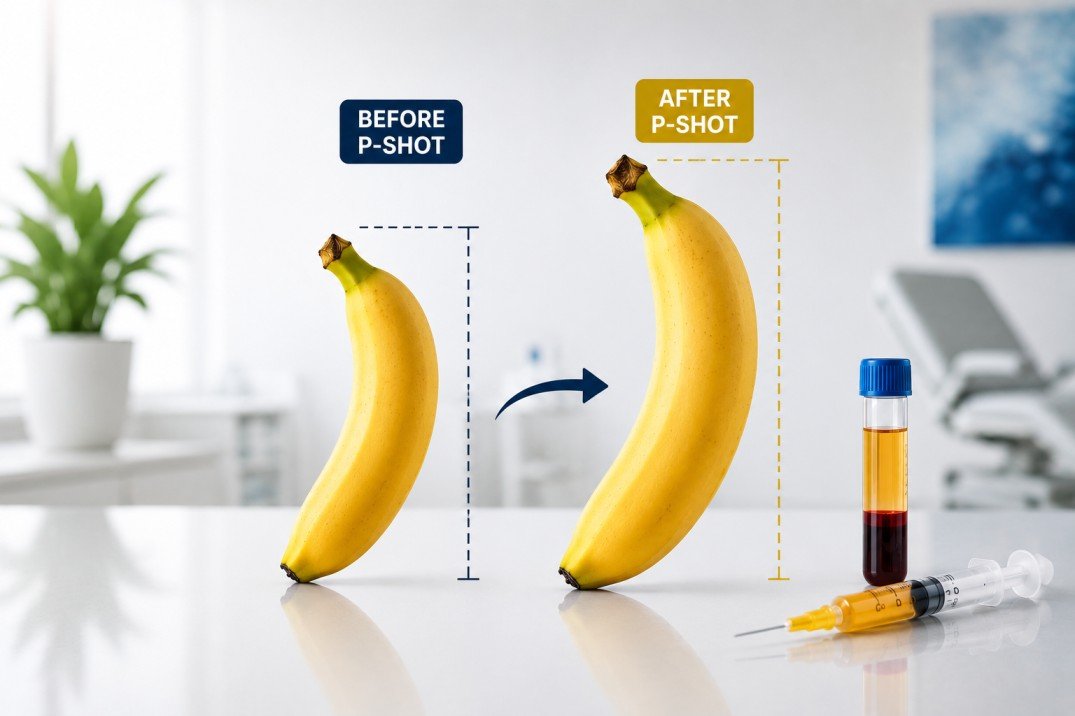
The question “Does P Shot increase size?” has exploded across search engines, men’s health forums, and cosmetic clinic websites in recent years. With growing interest in non-surgical male enhancement procedures, the P-Shot, also known as the Priapus Shot, has become one of the most talked-about treatments in the world of sexual wellness. Clinics often market it as a revolutionary option that may improve erectile function, enhance sensitivity, and potentially increase penis size. But does it really work the way advertisements claim?
For many men, size is deeply tied to confidence, masculinity, and sexual performance. That emotional connection is exactly why procedures promising enhancement attract so much attention. The internet is flooded with before-and-after stories, dramatic testimonials, and bold marketing claims. Some clinics suggest gains in girth and length, while others focus more on erection quality and blood flow. The challenge is separating genuine medical possibilities from exaggerated expectations.
The reality is more nuanced than the hype. The P-Shot is not a magical enlargement procedure that instantly transforms anatomy overnight. Instead, it is a platelet-rich plasma (PRP) injection treatment designed to stimulate tissue regeneration and improve circulation. Some men report modest size increases, particularly in girth, but outcomes vary significantly from person to person. Factors such as age, overall vascular health, existing erectile function, and individual biology all play a role in determining results.
Understanding how the P-Shot works—and what it realistically can and cannot do—is essential before spending money or committing to treatment. This article dives deep into the science, benefits, risks, expected outcomes, and myths surrounding the P-Shot so you can make an informed decision based on facts instead of marketing promises.
Understanding the P-Shot Procedure
The P-Shot has become one of the most recognizable names in regenerative male enhancement treatments. Unlike traditional surgical enlargement procedures, this treatment uses components derived from the patient’s own blood to stimulate healing and tissue response. The concept sounds futuristic, almost like science fiction, but it’s rooted in a real medical technique already used in orthopedics, sports medicine, and cosmetic dermatology.
What makes the P-Shot especially attractive to many men is the promise of enhancement without scalpels or major downtime. Surgery can feel intimidating, expensive, and risky. The P-Shot, by comparison, is marketed as minimally invasive and relatively quick. Most sessions are completed in under an hour, which adds to its appeal for men looking for discreet solutions.
Still, the treatment’s popularity has created confusion. Some people believe it’s purely for enlargement, while others think it’s only for erectile dysfunction. In reality, clinics often position it as a multipurpose treatment aimed at improving several aspects of sexual health simultaneously. That broad marketing approach has helped fuel both interest and skepticism.
To understand whether the P-Shot can actually increase size, it’s important first to understand exactly what it is and how it’s performed. The details matter because expectations often become unrealistic when people rely solely on advertising headlines or social media anecdotes.
What Does “P-Shot” Actually Mean?
The term P-Shot stands for Priapus Shot, named after Priapus, the Greek god associated with male fertility and exaggerated masculinity. The procedure uses platelet-rich plasma (PRP) taken from the patient’s own blood. PRP contains concentrated growth factors that may help stimulate tissue repair and improve circulation.
Doctors begin by drawing a small amount of blood from the patient’s arm, similar to a standard lab test. That blood is then spun in a centrifuge to separate platelet-rich plasma from other blood components. The resulting PRP solution is injected into specific areas of the penis after applying a numbing agent.
The theory behind the treatment is that growth factors in PRP encourage new blood vessel formation and tissue rejuvenation. Improved circulation may lead to stronger erections, enhanced sensitivity, and potentially fuller erectile tissue expansion during arousal. Some clinics claim this improved expansion can contribute to modest increases in length or girth over time.
What makes the P-Shot especially attractive is that it uses the body’s own biological material. Many patients view this as more natural than synthetic fillers or implants. Since PRP comes directly from the patient, allergic reactions are rare. That said, “natural” does not automatically mean guaranteed or risk-free, and results remain inconsistent across individuals.
How the Procedure Is Performed
The actual P-Shot procedure is relatively straightforward, though experiences can differ slightly depending on the clinic. Most treatments begin with a consultation where the doctor evaluates the patient’s medical history, erectile function, and enhancement goals. Honest communication during this stage is crucial because unrealistic expectations often lead to disappointment later.
After drawing blood and preparing the PRP, the penis is typically numbed using a local anesthetic cream or injection. This minimizes discomfort during the treatment. Once numbness takes effect, the doctor injects the PRP into targeted regions of penile tissue using a fine needle. The injections themselves usually take only a few minutes.
Some clinics combine the P-Shot with additional therapies such as shockwave treatment or penis pumps to potentially maximize results. Patients are often instructed to avoid sexual activity for a short period after treatment, though recovery is generally quick compared to surgical procedures. Mild swelling, bruising, or sensitivity may occur temporarily.
Does the P-Shot Increase Penis Size?
This is the central question most men ask before considering the procedure. The short answer is: possibly, but usually modestly and inconsistently. The P-Shot is not officially approved as a penis enlargement treatment in the same way certain medical procedures are approved for specific conditions. Most evidence supporting enlargement claims comes from anecdotal reports, clinic case studies, and limited small-scale research.
Many clinics advertise increases in girth more commonly than length. That distinction matters because the physiological mechanisms behind these changes are different. Enhanced blood flow and tissue expansion may create a fuller appearance during erections, but this does not necessarily mean permanent structural growth.
The psychological component also plays a role. Men who experience improved erections often perceive themselves as larger because fuller erections naturally create greater size and firmness. In some cases, the improvement is more about erectile quality than actual tissue enlargement.
At the same time, some men genuinely report measurable gains. These changes may result from improved vascular response, collagen production, or enhanced tissue elasticity. The challenge is that results are unpredictable, and there is currently no universal guarantee of enlargement.
What Research and Clinics Claim
Clinical evidence surrounding the P-Shot remains limited compared to mainstream medical procedures. Most published studies focus on erectile dysfunction rather than enlargement specifically. Some small studies suggest PRP therapy may improve erectile function, especially in men with mild vascular issues, but definitive long-term data is still lacking.
Clinics frequently claim gains ranging from 0.5 to 1 inch in girth or length, though these numbers vary widely. Some websites present dramatic testimonials, but anecdotal experiences should not be treated as scientific proof. Human biology differs enormously, and what works for one person may not work for another.
A review of PRP therapies published in sexual medicine journals has noted promising potential but also emphasized the need for larger controlled trials. Medical experts generally agree that PRP may improve blood flow and tissue health, but claims of significant permanent enlargement remain controversial.
Temporary vs Permanent Size Changes
One of the biggest misconceptions surrounding the P-Shot is the idea that it permanently enlarges the penis in the same way surgery or implants might alter physical structure. In reality, most changes associated with the procedure tend to be subtle, gradual, and heavily dependent on erectile quality. This distinction matters because many men approach the treatment expecting dramatic transformations after a single appointment. That expectation rarely matches reality.
Temporary improvements are far more common than permanent structural enlargement. Since the P-Shot may improve circulation and vascular responsiveness, erections can appear fuller and firmer. Think of it like inflating a balloon more completely than before. The balloon itself has not fundamentally changed, but improved filling creates a larger appearance. For many men, this enhanced erectile function leads to perceived gains in both length and girth during arousal.
Some clinics suggest that repeated PRP stimulation may encourage collagen production and tissue remodeling over time. This could theoretically contribute to longer-lasting changes, particularly in girth. However, there is no universal medical consensus confirming predictable permanent growth. Men who report lasting results often combine the P-Shot with lifestyle improvements, vacuum therapy, or other enhancement protocols, making it difficult to isolate the effects of PRP alone.
Maintenance treatments are another clue that results are not always permanent. Many clinics recommend follow-up sessions every 12 to 18 months to sustain improvements. If enlargement were consistently permanent, ongoing treatments would not be emphasized so heavily. This doesn’t mean the procedure is ineffective; it simply means its primary strength may lie more in tissue health and erection quality than dramatic enlargement.
How the P-Shot Works Inside the Body
To understand why some men experience changes after a P-Shot, it helps to look beneath the surface and explore the biology involved. The penis is essentially a vascular organ, meaning blood flow plays a critical role in both erection quality and overall appearance. Anything that improves circulation, tissue repair, or vascular responsiveness can potentially influence performance and fullness.
The P-Shot operates on regenerative medicine principles. Rather than adding foreign materials into the body, it attempts to stimulate the body’s natural repair systems. This is where platelet-rich plasma becomes important. PRP contains growth factors believed to assist in healing damaged tissue and encouraging cellular activity.
What makes this especially interesting is that PRP has already been used in sports medicine for tendon injuries, cosmetic procedures for skin rejuvenation, and hair restoration therapies. The same logic is now being applied to sexual wellness. The theory is simple: if PRP can help repair tissue elsewhere in the body, perhaps it can also improve penile tissue function.
Still, theories and guaranteed outcomes are two different things. The body’s response to PRP varies significantly from person to person. Some men respond strongly, while others notice only mild changes. Age, health conditions, smoking habits, hormone levels, and cardiovascular health all influence results.
The Science Behind Platelet-Rich Plasma
Platelets are tiny components in the blood primarily known for helping wounds clot and heal. What many people don’t realize is that platelets also contain powerful proteins and growth factors involved in tissue regeneration. When concentrated into PRP, these growth factors become significantly more potent than they are in normal blood circulation.
Among the most discussed growth factors in PRP are platelet-derived growth factor (PDGF), vascular endothelial growth factor (VEGF), and transforming growth factor-beta (TGF-β). These compounds may help stimulate new blood vessel formation and support tissue repair. In theory, increased vascularization could improve erectile response and tissue expansion during arousal.
The science sounds promising, but the actual degree of benefit remains difficult to predict. PRP does not magically create entirely new anatomy. Instead, it may optimize tissue performance and healing potential. Men with mild vascular erectile dysfunction may notice stronger erections because healthier blood flow allows erectile tissue to engorge more effectively.
Some researchers believe PRP could improve nerve sensitivity as well. Enhanced sensation may contribute indirectly to stronger arousal responses and better sexual experiences. This combination of improved circulation, sensitivity, and tissue responsiveness is why many men report enhanced confidence after treatment, even if size increases remain modest.
Blood Flow, Tissue Repair, and Erectile Function
Erections depend heavily on blood flow. When arousal occurs, blood rushes into specialized chambers within the penis called the corpora cavernosa. If circulation is weak or blood vessels are compromised, erections may become softer, smaller, or more difficult to maintain. This is why cardiovascular health and erectile quality are deeply connected.
The P-Shot aims to improve this process by potentially enhancing blood vessel function and tissue responsiveness. Better circulation can create firmer erections that maximize natural size during arousal. For some men, especially those with mild erectile dysfunction, this improvement can feel dramatic even if actual structural enlargement is limited.
Tissue repair is another possible benefit. Minor damage from aging, diabetes, poor circulation, or lifestyle factors may impair erectile performance over time. PRP may help support healing mechanisms that improve tissue elasticity and responsiveness. Imagine restoring flexibility to an old rubber band—it may not become brand new, but it can function more effectively than before.
Who Typically Gets a P-Shot?
The P-Shot attracts a surprisingly broad range of men. Contrary to stereotypes, it is not only sought by older men dealing with erectile dysfunction. Younger men, performance-focused individuals, and even men without major sexual issues sometimes pursue the treatment out of curiosity or confidence concerns.
Sexual wellness has become increasingly normalized in recent years. Men are more open about discussing performance, satisfaction, and self-image than in previous generations. This cultural shift has fueled demand for procedures promising enhancement without surgery.
Another factor driving popularity is the rise of social media marketing. Clinics frequently showcase testimonials and transformation stories that create the impression that enhancement is both common and highly successful. This can lead men to explore treatments they may never have considered otherwise.
Men Seeking Better Performance
A large percentage of P-Shot patients are primarily focused on erectile function rather than size itself. Men experiencing mild erectile dysfunction, weaker erections, or reduced stamina often seek treatments that might improve performance without relying entirely on medication like Viagra or Cialis.
Aging is a common factor here. Testosterone levels, circulation quality, and tissue elasticity naturally change over time. Even healthy men may notice differences in erection quality as they get older. The P-Shot is often marketed as a regenerative alternative that supports natural function rather than temporarily forcing blood flow through medication.
Performance anxiety also plays a major role. Sexual confidence can become a psychological feedback loop. Stronger erections increase confidence, and greater confidence can improve sexual performance further. Some men report that simply feeling proactive about their sexual health boosts self-esteem significantly.
Men Looking for Cosmetic Enhancement
Cosmetic motivation is another major driver behind the P-Shot’s popularity. Many men pursue the treatment hoping for visible enlargement, even if they already function normally. This reflects broader societal pressures surrounding body image and masculinity.
Pornography, unrealistic media portrayals, and online comparison culture have dramatically influenced male expectations. Men often compare themselves against exaggerated standards that do not reflect average anatomy. As a result, even men within completely normal size ranges may feel inadequate.
Clinics understand these insecurities and often tailor marketing accordingly. Phrases like “boost confidence,” “maximize size,” and “unlock your full potential” appeal directly to emotional concerns rather than strictly medical needs. This type of messaging can blur the line between wellness treatment and cosmetic enhancement advertising.
Realistic Results You Can Expect
When men research the P-Shot, they often encounter dramatic claims that sound almost too good to be true. Some websites imply massive enlargement, instant performance upgrades, and life-changing transformations after a single treatment. The truth is much more grounded. Most men who undergo the P-Shot experience moderate improvements rather than extreme changes, and those improvements often center more on erection quality than sheer size.
Managing expectations is one of the most important parts of the process. A realistic understanding of outcomes helps men evaluate whether the procedure aligns with their goals. For someone hoping to gain several inches permanently, the P-Shot will almost certainly feel disappointing. For someone seeking better erections, increased sensitivity, and a modest enhancement in fullness, the experience may feel worthwhile.
Results also unfold differently for each individual. Some men report noticeable improvements within days, while others see gradual changes over several weeks as tissue healing and blood vessel formation occur. Biology doesn’t move on a predictable schedule, especially in regenerative medicine.
Another major factor is subjective perception. Sexual confidence strongly affects how men view their bodies and performance. Improved firmness alone can create the impression of increased size because stronger erections naturally maximize natural dimensions. This psychological component should not be underestimated.
Average Reported Gains in Length and Girth
Most anecdotal reports and clinic estimates suggest that any measurable increase from the P-Shot tends to occur more in girth than in length. Men commonly report gains ranging from 0.25 to 1 inch in circumference, although results vary dramatically. Length improvements, when they occur, are typically smaller and often tied to stronger erections rather than true structural growth.
To understand why girth changes are more common, imagine the penis as a sponge-like vascular structure. Improved blood flow can help erectile tissue expand more fully during arousal, leading to thicker erections. Since girth depends heavily on vascular engorgement, enhanced circulation can produce visible fullness more easily than permanent elongation.
Length is more complex because penile anatomy is anchored internally within the pelvis. The P-Shot does not surgically alter ligaments or tissue structures responsible for baseline length. This is why claims of dramatic permanent length gains should be approached carefully. Some men may gain slight visible length due to better erection quality or improved tissue elasticity, but major increases are uncommon.
Why Results Vary Between Individuals
No two bodies respond identically to regenerative therapy. This is one of the biggest reasons why P-Shot outcomes vary so widely. Age is a major factor. Younger men with healthier circulation and stronger regenerative capacity often respond better than older individuals with advanced vascular issues.
Lifestyle habits matter enormously as well. Smoking, excessive alcohol use, obesity, diabetes, high blood pressure, and poor cardiovascular health can all impair blood vessel function. Since the P-Shot relies heavily on vascular response, unhealthy habits may reduce effectiveness significantly. On the other hand, men who exercise regularly and maintain strong cardiovascular health often report better outcomes.
Hormone levels also play a role. Testosterone influences libido, erectile function, tissue health, and overall sexual performance. Men with low testosterone may not experience optimal results unless hormonal imbalances are addressed simultaneously.
Benefits Beyond Size Increase
Although size dominates online discussions about the P-Shot, many patients report that the most meaningful improvements involve sexual performance, sensation, and confidence rather than pure enlargement. In fact, some men who experience little or no measurable size increase still describe the treatment as beneficial overall.
This broader perspective matters because sexual wellness is multifaceted. Erections, sensitivity, stamina, confidence, and emotional comfort all contribute to satisfying intimacy. Focusing only on inches can obscure the larger picture of sexual health.
The P-Shot’s potential regenerative effects may influence several areas simultaneously. Improved circulation can support stronger erections, while enhanced nerve responsiveness may increase sensitivity. Together, these changes can create a more satisfying sexual experience even if anatomy remains largely unchanged.
Improved Erections and Sensitivity
One of the most commonly reported benefits of the P-Shot is improved erection quality. Men frequently describe erections as firmer, fuller, and easier to maintain after treatment. This may be particularly valuable for individuals with mild erectile dysfunction or age-related performance decline.
Improved blood flow is likely the primary reason behind these changes. Healthy erections require efficient circulation, and PRP’s growth factors may help support vascular function. Better circulation allows erectile tissue to fill more completely, which can enhance both rigidity and visual appearance.
Sensitivity improvements are another major reason men pursue the procedure. Some patients report increased pleasure during sexual activity and stronger orgasms after treatment. Enhanced nerve responsiveness may contribute to these experiences, though research on this aspect remains limited.
Confidence and Psychological Effects
The psychological side of sexual enhancement is impossible to ignore. Confidence plays a huge role in how men experience intimacy, perceive their attractiveness, and interact in relationships. Even modest physical improvements can create significant emotional shifts.
Risks, Side Effects, and Safety Concerns
Because the P-Shot uses the patient’s own blood, many clinics market it as extremely safe. While it is generally considered less invasive than surgery, “minimally invasive” does not mean risk-free. Every medical procedure carries potential complications, and patients should understand both common side effects and more serious concerns before proceeding.
One challenge in evaluating safety is the lack of large-scale long-term research. PRP itself has been used safely in many medical fields, but standardized protocols for penile injections are still evolving. This means outcomes and risks can vary depending on provider experience and technique.
Another issue is the rapid growth of aesthetic clinics offering sexual wellness treatments. Not all providers have specialized urology or sexual medicine training. Choosing an inexperienced clinic can increase the likelihood of complications or unsatisfactory results.
Common Side Effects After the Procedure
Most side effects associated with the P-Shot are mild and temporary. Swelling, bruising, redness, and tenderness around injection sites are relatively common during the first few days after treatment. Some men also report temporary sensitivity changes or mild discomfort during erections.
Since needles are involved, minor bleeding or pinpoint marks may appear immediately after injections. These effects typically resolve quickly without intervention. Many patients return to normal activities within a day or two.
Temporary lumpiness or uneven swelling can occasionally occur as the PRP distributes through tissue. This usually improves naturally as healing progresses. Following post-treatment instructions carefully helps minimize irritation and supports recovery.
Potential Risks and Medical Warnings
Although serious complications from the P-Shot are relatively uncommon, they can happen, especially when the procedure is performed by inexperienced providers or in poorly regulated clinics. One of the biggest concerns in the regenerative medicine industry is inconsistency. Unlike highly standardized surgical procedures, PRP therapies can vary significantly depending on technique, equipment, and practitioner expertise.
Infection is one possible risk whenever injections are involved. Even though PRP comes from the patient’s own blood, bacteria can still enter the body if sterile practices are not followed correctly. Signs such as severe swelling, fever, unusual discharge, or worsening pain should never be ignored after treatment.
Comparing the P-Shot With Other Male Enhancement Options
The P-Shot exists within a rapidly growing market of male enhancement treatments. Men today are exposed to countless options ranging from supplements and pumps to fillers and surgery. Each approach has different goals, risks, costs, and levels of effectiveness.
Understanding how the P-Shot compares with these alternatives helps create a more balanced perspective. Some treatments focus primarily on temporary enlargement, while others aim to improve erectile function or permanently alter anatomy. No single solution works best for everyone.
What makes the P-Shot unique is its regenerative approach. Instead of mechanically enlarging tissue or inserting foreign substances, it attempts to stimulate the body’s natural healing systems. For some men, that feels more appealing and less intimidating than surgery or synthetic fillers.
P-Shot vs Penis Pumps and Fillers
Penis pumps are among the oldest non-surgical enhancement tools available. These vacuum devices work by drawing blood into the penis, temporarily increasing erection size and firmness. Pumps are commonly used for erectile dysfunction and penile rehabilitation after prostate surgery.
Compared to the P-Shot, pumps are significantly cheaper and completely non-invasive. However, their effects are generally temporary. Once blood flow returns to normal, size typically returns to baseline. Some men use pumps alongside the P-Shot in hopes of enhancing results, though evidence supporting combined protocols remains limited.
| Treatment | Main Goal | Typical Results | Longevity | Invasiveness |
|---|---|---|---|---|
| P-Shot | Regeneration & performance | Mild girth/fullness improvement | 12–18 months | Minimally invasive |
| Penis Pump | Temporary erection enhancement | Temporary size increase | Short-term | Non-invasive |
| Dermal Fillers | Cosmetic girth enlargement | Moderate to significant girth gains | 1–2 years | Minimally invasive |
P-Shot vs Surgical Enlargement
Surgical penile enlargement procedures are typically the most aggressive option available. These surgeries may involve ligament release, fat transfer, grafting, or implants designed to alter penile structure directly. Unlike the P-Shot, surgery can create more substantial physical changes, particularly in flaccid length.
Cost, Recovery, and Maintenance
Financial considerations play a major role in deciding whether the P-Shot is worth pursuing. Unlike medically necessary procedures often covered by insurance, the P-Shot is generally classified as an elective cosmetic or wellness treatment. That means patients usually pay entirely out of pocket.
Costs can add up quickly, especially when clinics recommend multiple sessions or ongoing maintenance treatments. Men attracted by initial promotional pricing sometimes underestimate the long-term financial commitment involved.
Average Pricing Around the World
The price of a P-Shot varies widely depending on location, provider experience, clinic reputation, and whether additional therapies are included. In the United States, a single session commonly ranges from $1,200 to $3,500. High-end clinics in major cities may charge even more, particularly if they bundle PRP with shockwave therapy or hormone consultations.
| Region | Average Cost Per Session |
|---|---|
| United States | $1,200–$3,500 |
| United Kingdom | £800–£2,000 |
| Europe | €1,000–€2,500 |
| Asia | $600–$1,800 |
How Long Results Typically Last
Most clinics suggest that P-Shot results can last anywhere from 12 to 18 months, though this varies greatly between individuals. Some men report benefits fading sooner, while others maintain improvements longer, particularly when paired with healthy lifestyle habits.
Conclusion
So, does the P-Shot increase size? The most honest answer is: sometimes, modestly, and not for everyone. While some men report increases in girth or slight length improvements, the procedure is far more consistent at enhancing erection quality, blood flow, sensitivity, and overall sexual confidence than creating dramatic permanent enlargement.
The science behind platelet-rich plasma is legitimate and increasingly respected within regenerative medicine. PRP may help improve tissue health and vascular function, which can positively influence sexual performance. However, current evidence does not support the exaggerated marketing claims often seen online promising massive growth or guaranteed transformation.
For many men, the greatest value of the P-Shot lies in improved erections, stronger confidence, and enhanced sexual wellness rather than inches gained. Men who approach the treatment with realistic expectations tend to feel more satisfied than those chasing extreme cosmetic changes.
Safety also depends heavily on provider quality. Choosing an experienced medical professional—preferably one specializing in urology or sexual medicine—is critical for minimizing risks and maximizing potential benefits.
Ultimately, the P-Shot is best viewed as a regenerative enhancement tool rather than a miracle enlargement procedure. It may optimize function, improve fullness, and support confidence, but it is not magic. Understanding that balance is the key to making an informed and healthy decision.